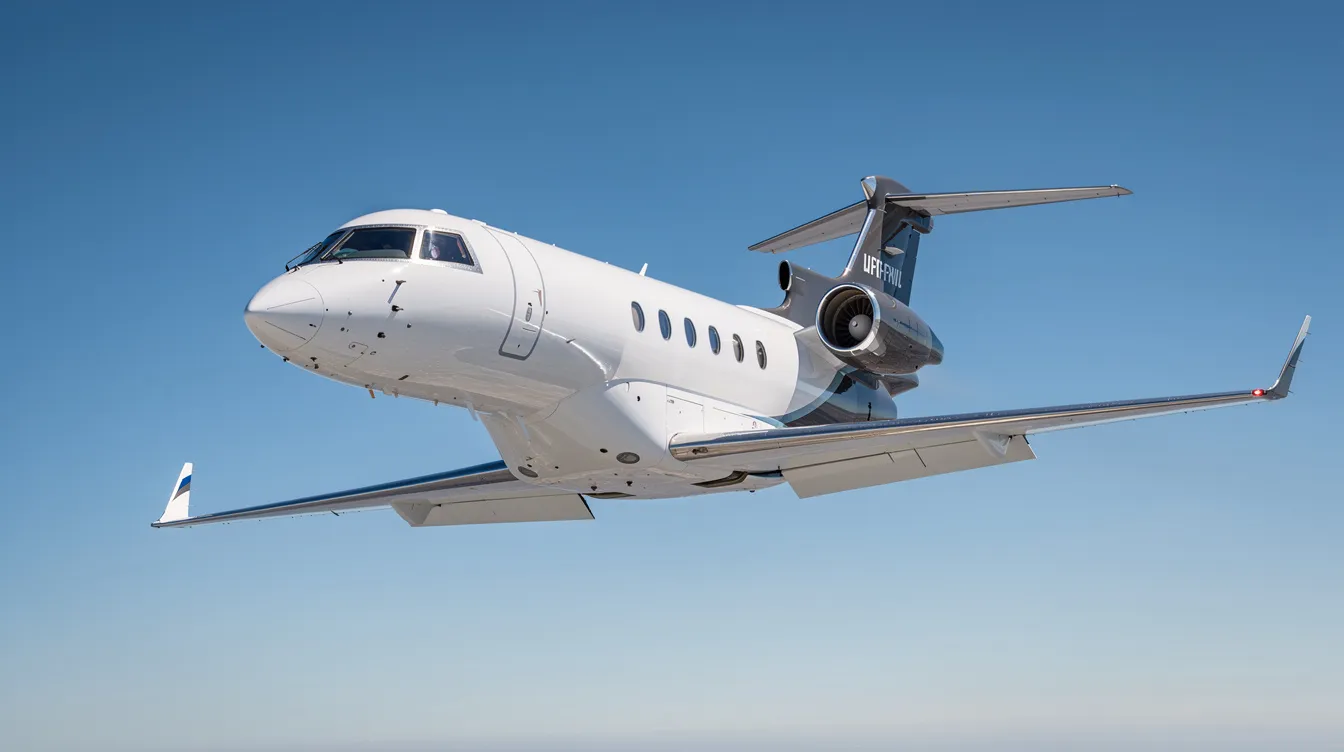
For executives and frequent business travelers, the question of which small business jet fits best is no longer academic-it's a competitive decision with real consequences for time, access, and productivity. This guide is designed for executives and frequent business travelers seeking to maximize time, access, and productivity by choosing the optimal small business jet for their needs in 2026. This guide compares the top light jets and very light jets available in 2026, breaks down what separates them, and shows how to access them without buying one.
Why Small Business Jets Are A Strategic Advantage In 2026
Choosing the best small business jet is not about indulging in luxury. It is about reclaiming hours that commercial airlines consume through security queues, connections, and ground transportation to secondary terminals. On typical business routes of 300 to 1,500 nautical miles-think New York to Chicago at roughly 640 nm, or London to Geneva at around 230 nm-flying private on a light jet can cut door-to-door travel time by two to four hours per trip. Multiply that across 30 or 40 annual trips and the compounding advantage becomes difficult to ignore.
Small business jets are optimized for regional hops where commercial aviation is slowest relative to distance. Privacy and productivity are major advantages of small jets: an airborne boardroom replaces the middle seat. Light jets and very light jets unlock access to more than 5,000 smaller airports that commercial airliners cannot serve, shaving further time off the last mile to your final destination.
Small jets enable faster access to multiple regional locations in a single day-a capability that transforms how deals get done. And because small business jets offer agility without major capital outlays, you don't need to own a private aircraft to benefit. BlackJet's Jet Card members get guaranteed access to optimized aircraft classes, including light jets and midsize jets, without shouldering hangars, crew salaries, or maintenance schedules.
This article will answer "What is the best small business jet?" directly, then compare top models by cruise speed, range, cabin comfort, fuel efficiency, and access model-ownership versus Jet Card.
The Quick Answer: Best Small Business Jets Right Now
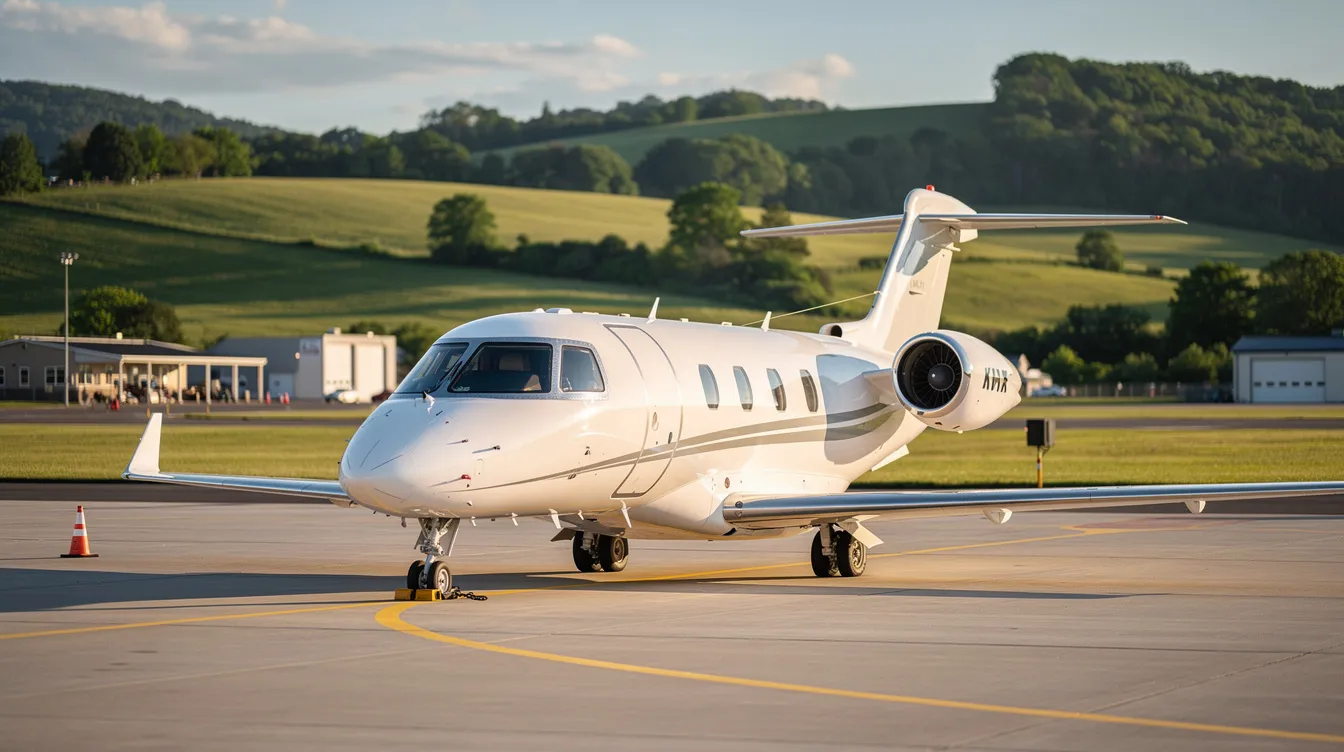
If you need a fast answer, here are the standout small business jets in 2026, each earning its "best" label for a different reason:
Embraer Phenom 300E - best overall light jet for speed, range, and charter availability
Cessna Citation M2 Gen2 - best entry-level light business jet for short corporate hops and single pilot operations
Cessna Citation CJ3+ - best light jet for range-critical nonstop missions
Cessna Citation CJ4 Gen2 - fastest and longest-range option in the light jet category
Cirrus Vision Jet G2+ - best personal business jet with class-leading safety technology
HondaJet Elite II - best blend of quiet cabin and fuel efficiency for four to five passengers on 1,000–1,500 nm legs
Pilatus PC-24 - best short-field workhorse for accessing unpaved or constrained runways
Small business jets span very light jets to light jets, and "best" depends on your mission profile: owner-pilot versus crewed charter, typical stage length, and passenger count. Readers exploring broader small private jets luxury travel options will find similar themes around matching aircraft class to actual mission profiles. Light jet acquisitions cost between approximately $5 million to $12 million, so the financial stakes are real whether you buy or access jets through a program.
BlackJet members typically fly crewed light jets like the Citation CJ3+ and Phenom 300E instead of owning, sidestepping capital exposure and maintenance burdens while still accessing the right aircraft for each trip.
What Counts As A "Small Business Jet" Today?
In 2026, a "small business jet" refers to very light jets and light jets designed for sub-three-hour segments with four to eight passengers, ranges of roughly 800 to 2,500 nautical miles, and a typical cruise speed between 300 and 450 knots. Within the broader universe of types of private jets for every traveler, small jets occupy the sweet spot for regional business missions.
Very light jets comprise models such as the Cirrus Vision Jet, Eclipse 550, and Embraer Phenom 100EV. VLJs are designed for single-pilot operation and have a maximum takeoff weight under 10,010 pounds. Very light jets typically seat four to six passengers with ranges of 1,000 to 1,200 miles.
Light jets step up in capability: twin engines, more cabin space, greater payload. The Citation CJ series, HondaJet Elite II, and Phenom 300E all fall here. Light jets typically accommodate six to eight passengers with a range of 1,953 nautical miles or more.
Compared to super midsize jets-which usually carry 10 to 11 passengers over a range of 3,420 nautical miles-or large cabin jets that handle transatlantic flights with spacious interiors for comfort, small jets make more sense for regional business travel where operating costs and airport flexibility matter more than intercontinental range. A broader view of the best small private aircraft for every need reinforces how mission profile should drive category choice from pistons through light jets. Smaller maximum takeoff weight translates directly to lower fuel burn, reduced landing fees, and access to runways that most aircraft in heavier categories cannot use.
Best Overall Light Jet For Business: Embraer Phenom 300E
The Phenom 300E has been the best-selling light jet for 13 consecutive years, and for good reason. Professional pilots and charter operators alike regard it as the benchmark in the light business jet market for speed, range, and dispatch reliability.
The numbers speak for themselves: range of approximately 2,010 nautical miles with NBAA IFR reserves, a cruise speed of Mach 0.80 (around 460 knots true airspeed), seating for six to eight passengers, and a service ceiling above 45,000 feet. Its first flight came in 2008, with the 300E upgrade arriving in 2018 and bringing the Prodigy Touch flight deck-a set of advanced avionics that enhance pilot workload management and safety during complex approaches.
The Phenom 300E climbs fast to high cruise altitudes, where efficient performance and smoother air combine to deliver strong fuel efficiency for its speed class. In the cabin, passengers get a flat-floor feel, large windows, a fully enclosed lavatory, and enough baggage capacity for multi-city roadshows.
This jet is a mainstay in charter fleets and Jet Card programs. BlackJet members regularly fly the Phenom 300E for fast multi-city business trips where schedule reliability and cabin refinement both matter.
Best Entry-Level Light Jet: Cessna Citation M2 Gen2
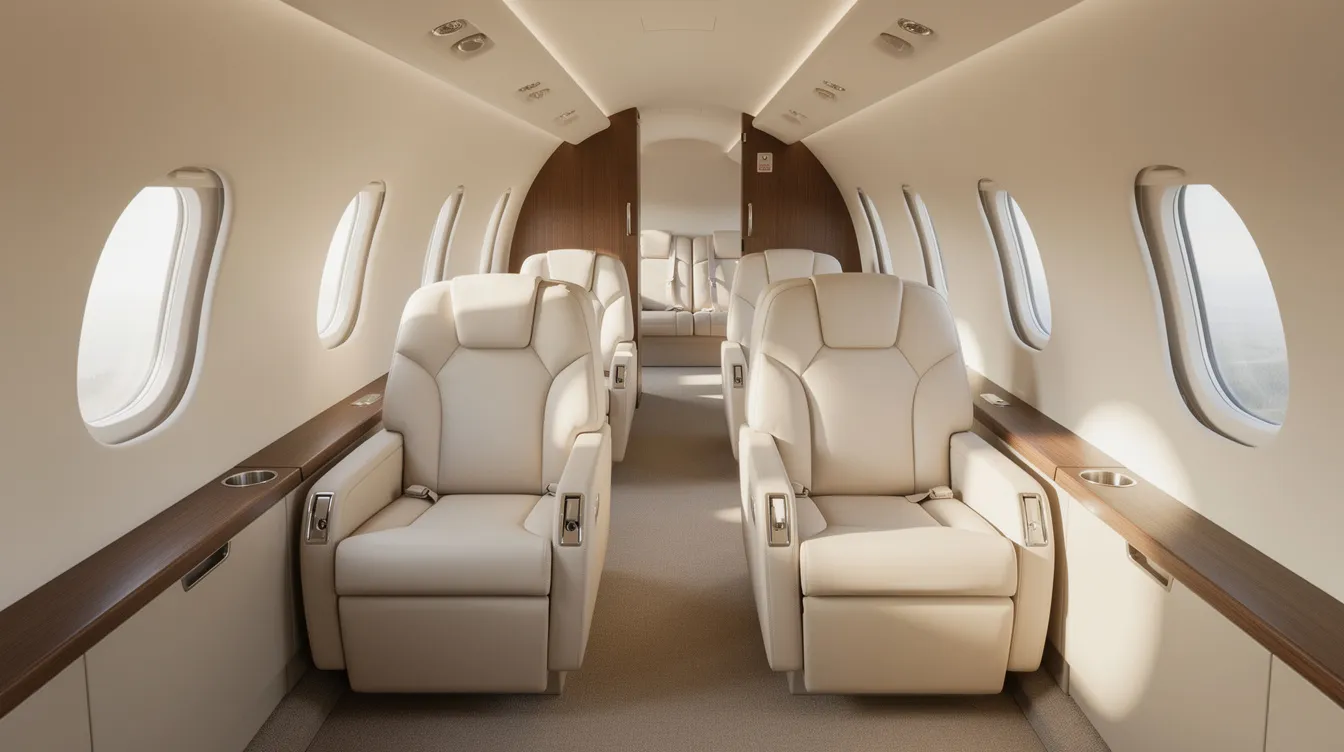
The Citation M2 Gen2 from Textron Aviation is the refined entry point into business jets for executives flying one to five passengers on trips up to approximately 1,550 nautical miles. First M2 deliveries began in 2013; the Gen2 update arrived in 2022 with improved cabin dimensions, USB-A and USB-C charging, wireless charging pads, and upgraded cabin lighting.
Key specs: cruise speed around 404 knots, service ceiling FL410, maximum takeoff weight approximately 10,700 pounds, takeoff distance of roughly 3,210 feet, and landing distance of about 2,590 feet. In January 2026, the FAA certified a version with Garmin autothrottle-cutting-edge avionics that further reduce pilot workload.
Many pilots and owners prefer jets with single-pilot certification to reduce crew costs, and the M2 Gen2 delivers exactly that. Single-pilot operations can reduce crew costs meaningfully for owner operators transitioning from turboprop aircraft or high-performance pistons. Highly reliable aircraft like Cessna's Citation series cater to owner-operators who want modern avionics without stepping into a more complex flight deck.
The M2 Gen2 is favored for short corporate hops where fuel efficiency and runway performance outweigh the need for a large cabin. Citation M2-class jets often form the entry tier in BlackJet's light jets offerings for cost-conscious yet time-sensitive members.
Best Light Jet For Range: Cessna Citation CJ3+ and CJ4 Gen2
The Cessna Citation CJ family occupies a critical position in business aviation: long-range capability without stepping into the midsize jet class.
CJ3+: Range of approximately 2,040 nautical miles, cruise speed around 416 knots, seating for six to eight, and Garmin G3000 modern avionics. Certified in 2014 as an upgrade to the CJ3 with improved avionics and cabin, the CJ3+ remains a workhorse for charter clients and private owners alike.
CJ4 Gen2: Range extends to roughly 2,165 nautical miles at a cruise speed of approximately 451 knots-making it the fastest in the light jet category. With seating for up to nine passengers and a Gen2 refresh in 2021, it bridges the gap between light and midsize categories without the cost penalty.
Greater flexibility for travel profiles is offered by this jet flexibility and range. Executives needing nonstop flights like Toronto to Miami, London to Marrakesh, or Los Angeles to Chicago find the CJ family eliminates fuel stops that would otherwise fragment the day.
Both models balance fuel efficiency, dispatch reliability, and cabin practicality. They populate Jet Card programs across the industry, including BlackJet's partner fleets, because they consistently deliver on the routes business travelers actually fly.
Best Personal Business Jet: Cirrus Vision Jet G2+
The Cirrus Vision Jet is the first certified single-engine personal jet, with nearly 600 built by late 2026. It dominates the VLJ niche by combining approachable ownership with technologies that filter into the broader small jet ecosystem.
Specifics: first flight in 2008, FAA certification in 2016, range of approximately 1,200 nautical miles in the G2+ variant, cruise speed around 300 knots, and seating for up to six passengers (five adults plus two children in the optional third-row configuration). The composite airframe keeps weight low, with a maximum takeoff weight near 6,000 pounds, enabling short runways-ground roll of roughly 1,910 feet and landing distance of about 1,622 feet.
The Vision Jet's headline safety features set it apart. The Cirrus Airframe Parachute System (CAPS) is a whole-aircraft parachute that has saved hundreds of lives across the Cirrus fleet. Safe Return autoland allows the aircraft to land itself in an emergency. These systems exceed the safety redundancies found in many comparable aircraft and most business jets in higher categories.
On fuel efficiency, the single Williams FJ33 engine (built by Pratt & Whitney Canada) delivers lower hourly burn than many twin-engine light private jets, making it attractive for owner operators flying 100 to 200 hours annually. While the Vision Jet is rarely found in charter fleets or Jet Card programs, its technology demonstrates how innovation in the VLJ segment drives standards upward across private aviation-including into the aircraft chosen by BlackJet for its members.
Best Small Jet For Quiet Cabin And Comfort: HondaJet Elite II
The HondaJet Elite II stands apart in the light business jet market thanks to its unconventional over-the-wing engine mount design. By placing engines above the fuselage rather than on the tail, Honda achieved measurably lower cabin noise, reduced aerodynamic drag, and freed interior volume-a rare engineering trifecta.
Specs: first HondaJet HA-420 certified in December 2015, Elite II introduced in 2022 with extended range of approximately 1,547 nautical miles, cruise speed of 422 knots, service ceiling of FL430, and seating for up to six passengers plus a fully enclosed lavatory. Takeoff distance runs about 3,699 feet; landing distance approximately 2,717 feet. Combined baggage capacity reaches 62 cubic feet.
The HondaJet Elite II has advanced safety systems and low cabin noise that make it a favorite for short to mid-range executive missions. Cabin environment considerations include noise suppression and connectivity-executives can hold conversations at normal volume, take calls, or rest without the fatigue that plagues noisier comparable aircraft.
HondaJet-class aircraft fit naturally into high-frequency Jet Card usage because their fuel efficiency translates to lower CO₂ emissions per passenger-mile compared to similar jets in the midsize jet category and above.
Best "Workhorse" Light Jet For Charter: Cessna Citation CJ Series
The Cessna CitationJet lineage stretches back to the Citation I and Citation II of the 1970s, evolving through CJ1+, CJ2+, CJ3, and CJ4 into one of the most trusted families in business aviation. When people search for the best small business jet, the answer often turns out to be whichever CJ is available on the day they need to fly.
Core strengths of the CJ series:
Proven reliability across tens of thousands of flight hours
Simple, maintainable systems that keep operating costs predictable
Low operating costs relative to competing light jets
Strong short-runway performance that unlocks access to secondary airports where commercial airlines don't operate
Short-field performance allows jets to access smaller airports, and runway performance is important for accessing smaller regional airports-two areas where the CJ family excels. The CJ2+ and CJ3 are frequent fixtures in charter fleets, providing charter clients with a consistent cabin experience regardless of which operator dispatches the flight.
For many corporate travelers, "best small business jet" simply means the most available, reliable CJ-type jet on the day they need private flights. That predictability is exactly why CJ-series light jets populate BlackJet's partner fleets and deliver a repeatable standard across trips.
Turbojet vs VLJ vs Light Jet: Matching Category To Your Mission
Choosing the right aircraft category starts with honest answers about where you actually fly-not where you might fly once a year.
Here's a practical framework by distance band:
Up to 500 nm: Turboprop aircraft like the Pilatus PC-12 NGX or high-performance pistons offer strong cost efficiency
500–1,000 nm: VLJs like the Cirrus Vision Jet or Phenom 100EV deliver speed gains over turboprops without the hourly cost of a full light jet
1,000–2,000+ nm: Light jets like the CJ3+, Phenom 300E, or HondaJet Elite II provide the speed, range, and cabin comfort to make same-day round trips practical, while buyers focused on budget can look at the cheapest private aircraft options and alternative access models that still meet mission requirements
Passenger count matters as well. For one to three passengers, a VLJ or small jet often suffices, but once you reach four to seven, the trade-off between cabin space and fuel efficiency tilts toward a proper light jet. Pilatus PC-24 offers unmatched short-field capabilities, suitable for remote job sites where even standard light jets can't operate-making it a crossover between turboprop aircraft and true jets.
Operating costs can vary widely based on factors like usage and location, so matching the aircraft category to your actual mission profile prevents routinely overbuying capacity or range. A detailed private jet price list overview helps frame how aircraft category and access model interact on total cost. Most BlackJet members default to light jets for reliable schedule adherence and cabin comfort, knowing that the right aircraft for 80 to 90 percent of their trips is the one that consistently performs without compromise.
Fuel Efficiency And Environmental Impact Of Small Business Jets
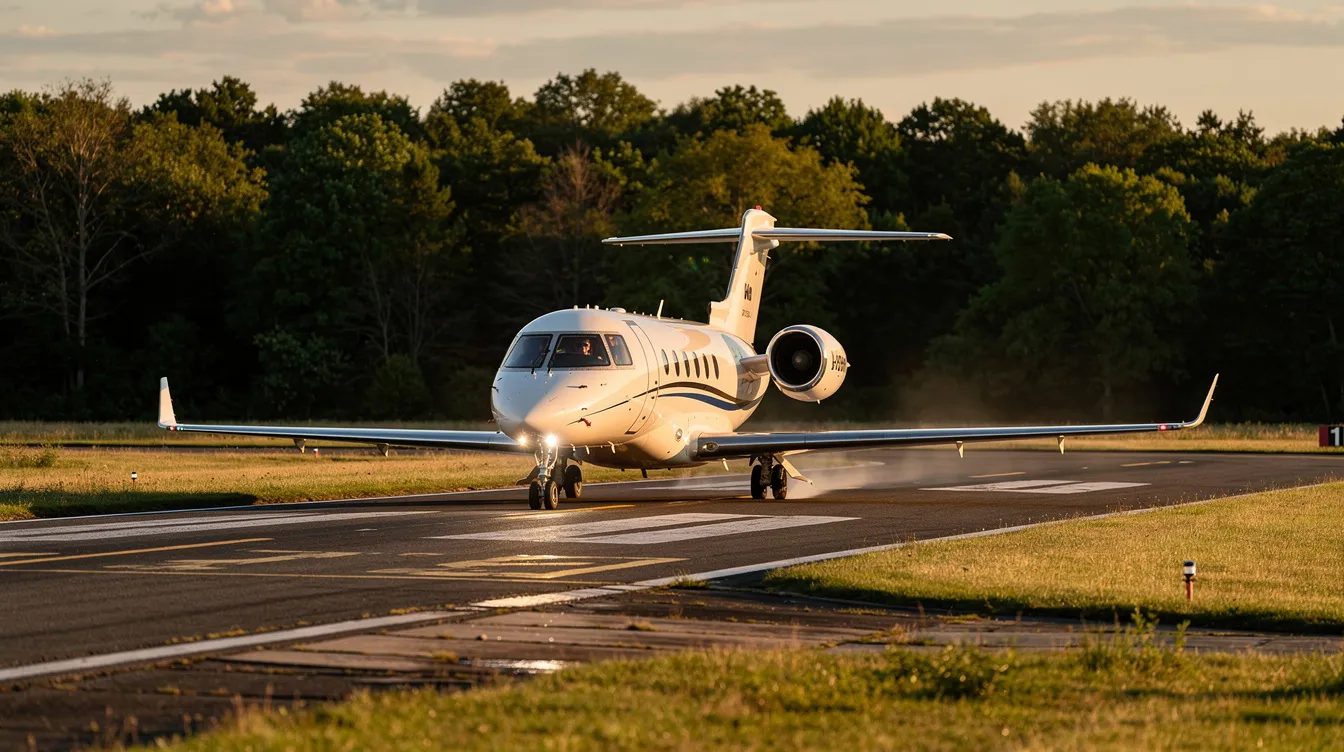
Private aviation faces legitimate environmental scrutiny, and fuel efficiency has moved from a talking point to a procurement criterion for many business travelers.
The numbers offer context. Very light jets burn roughly 50 to 80 gallons per hour depending on load and altitude. Light jets like the Phenom 300E and HondaJet Elite II consume more in absolute terms but remain far below the 200-plus gallons per hour burned by super midsize jets and ultra long range jets. Per passenger-mile, a well-loaded light jet often compares favorably to a half-empty midsize jet or even certain first-class commercial routes.
Sustainable aviation fuel (SAF) reduces carbon emissions significantly compared to conventional Jet-A, and its availability is expanding across major FBOs. Carbon-neutral programs are increasingly standard in private aviation. BlackJet operates carbon-neutral flights through verified carbon offsets and SAF-ready fleet partners-at no extra cost to members. Carbon offsetting programs are becoming a baseline expectation in aviation, and BlackJet has made them default rather than optional.
Modern jets can achieve lower emissions profiles than older models through better aerodynamics, FADEC-controlled engines, and lighter composite airframes. Even in general aviation, aircraft like the Diamond DA40 NG are designed for fuel efficiency and sustainability, demonstrating that the industry trend runs across all segments, including the cheapest private jet options that prioritize low operating costs alongside performance. Flying efficient light jets with high utilization via a Jet Card can be meaningfully more sustainable than owning an underused large cabin jet that sits in a hangar 90 percent of the year.
Cabin Experience: Small Jet, Big Impact
Cabin comfort varies significantly across small business jets, and the differences matter more than many buyers expect. Even in compact light jets, well-designed interiors can turn a two-hour flight into productive work time or genuine rest-the opposite of what most aircraft cabins in commercial aviation deliver, especially when paired with premium private jet card programs that curate consistently high cabin standards.
Key comparisons:
Vision Jet: Innovative V-tail layout with panoramic windows and a surprisingly open feel for a single engine VLJ; best for owner operators who value views and simplicity
HondaJet Elite II: Quietest cabin in class, generous legroom, premium audio, fully enclosed lavatory-ideal for focused work or client-facing travel
Phenom 300E: Flat-floor feel with the most cabin space among light jets, large windows, club seating, and practical baggage volume for multi-day trips
Citation CJ3+: Functional business cabin with club and forward-facing seat configurations, Wi-Fi availability, and USB/110V power
Airborne boardrooms allow businesses to conduct meetings mid-flight-a reality in most business jets equipped with Wi-Fi, noise suppression, and club seating. BlackJet curates aircraft and operators so that Jet Card members can expect business-grade cabin dimensions even on light jets, whether the mission calls for heads-down work or a more relaxed family trip where a large cabin feel is desirable.
Safety, Certification, And Technology In Small Business Jets
Modern small jets meet rigorous aviation safety standards that can match or exceed the safety levels of commercial airlines when operated by top-tier providers with proper certification and training.
Aircraft-level technologies now standard in this class include:
Synthetic vision and cutting-edge avionics (Garmin G3000, Prodigy Touch flight deck)
Autothrottle systems (newly certified on the Citation M2 Gen2)
Safe Return emergency autoland (Cirrus Vision Jet G2+)
Cirrus Airframe Parachute System for whole-aircraft recovery
Envelope protection that prevents pilot-induced loss of control
High altitude capability enabling cruise above weather and turbulence
Operator-level safety matters just as much as aircraft technology. Industry certifications include ARGUS Platinum, Wyvern Wingman, and IS-BAO. BlackJet goes further: fewer than 30 percent of U.S. Part 135 operators meet the BlackJet Certified standard, which individually verifies operator, aircraft, pilot qualifications, maintenance history, and dispatch reliability. Safety certification is part of real-time flight support services that BlackJet provides on every trip.
For reference, aircraft like the Challenger 3500 achieve a dispatch reliability of 99.8 percent, and the Gulfstream G700 maintains a cabin altitude below 3,000 feet at cruising altitude-benchmarks that illustrate how seriously the business jet industry takes safe operation. Single pilot operations in some light jets demand experienced, type-rated professional pilots with stringent SOPs-a non-negotiable in any reputable Jet Card program.
Ownership vs Charter vs Jet Card: The Smarter Way To Access Small Jets
The best small business jet decision is as much about access model as about the airframe itself. Three primary paths exist, each suited to different usage profiles.
Ownership makes sense above 200 to 300 flight hours per year with predictable routes and a desire to control a specific hull. But operating economics of small jets should include maintenance, fuel, and insurance costs-expenses that often total 20 to 30 percent of purchase price annually. Operating costs include factors like fuel burn and maintenance programs that persist whether you fly or not.
On-demand charter offers flexible, pay-as-you-go access for travelers flying fewer than 50 to 75 hours per year, and understanding what charter flights really mean helps clarify when this model beats ownership or Jet Cards. Rates vary by market conditions, and availability can tighten during peak periods. For an overview, see our Jet Card vs Charter comparison.
Jet Cards sit in the middle and increasingly dominate for frequent flyers. Jet cards provide prepaid access to private jets. Jet card programs typically offer 25-hour or 50-hour options, and a detailed look at 50 hour jet card cost and value can clarify whether that tier matches your utilization. Jet cards eliminate ownership complexities and maintenance responsibilities. Clients can access various aircraft types through jet card programs, and jet cards ensure fixed hourly rates for predictable costs.
Jet Card programs offer prepaid access to private jets with guaranteed availability, safety vetting, and-in BlackJet's case-carbon-neutral flights included at no added cost. For frequent flyers comparing providers, the best jet cards for regular travelers break down how benefits and costs vary across programs. For a 25-hour light jet card, deposits run approximately $200,000, with hours that never expire. Compare that to purchasing even a Phenom 100EV at roughly $4.75 million, plus millions more over the aircraft's lifecycle in fixed costs.
Cost And Exceptional Value: What Small Business Jets Really Save You
The real value of the best small business jet isn't measured in hourly rates alone. It's measured in time recovered, flexibility gained, and business opportunities that wouldn't exist on a commercial schedule.
Consider the cost spectrum. A new Cirrus Vision Jet runs approximately $3.3 to $3.5 million. A HondaJet Elite II lists at $6.9 to $7.5 million. A Phenom 300E approaches $10.5 million. Add annual fixed costs-depreciation, hangar, crew, insurance-and ownership demands serious utilization to justify the capital. For executives flying 50 to 150 hours per year, Jet Cards deliver exceptional value by converting those fixed ownership costs into predictable variable costs.
Business jets serve a wide array of industries, from manufacturing to executive travel, and the economics scale differently in each. Tax and depreciation considerations, along with utilization risk, often make outright ownership less attractive than it appears on paper for many high-net-worth travelers, especially once you understand how to maximize your jet card tax deductions within a well-structured access strategy.
At the senior executive level, even one reclaimed business day per month-avoiding layovers, connections, and ground transportation delays-can generate returns that dwarf the cost difference between a Jet Card and commercial first class, especially once you understand jet card cost per hour and how predictable pricing compares to ad hoc charter. When you compare small business jets against ultra long range jets that can fly over 7,500 nautical miles nonstop, the per-trip economics of light jets on regional routes look even more compelling. You don't need a transcontinental aircraft for a 700-mile meeting.
Sample Missions: Which Small Jet Is Best For Your Route?
New York to Chicago (~640 nm), 3 executives, same-day return: Phenom 100EV, Citation M2 Gen2, or HondaJet Elite II via BlackJet-arrive at Teterboro, fly direct, land at Chicago Midway or DuPage, and return by dinner. Flight time under two hours each way versus five-plus hours door-to-door on commercial airlines.
London to Geneva (~400 nm), investor meetings, small group: Citation CJ3+ or Pilatus PC-24 to access secondary airports closer to city centers, avoiding Heathrow and the Middle East transit hubs. A light jet places you in Geneva's financial district within three hours of leaving central London.
Dallas to Nashville to Atlanta, multi-city loop (~500–600 nm legs): Phenom 300E light jet minimizes ground time and eliminates fuel stops between legs. One day, three cities, no overnight-impossible on most commercial routes. Regional travelers in other markets, such as those planning private jet charters in Karachi, can apply similar mission-planning logic to pick the right aircraft and routing.
BlackJet's flight support team helps match mission requirements with the right light jet or midsize jet on each trip, ensuring you're never overbuying range or underserving your schedule. A grasp of jet card pricing structures further supports choosing the right program to align with those mission profiles.
How To Choose The Best Small Business Jet For Your Needs
Start with mission definition: what distance do you typically fly, how many passengers do you carry, and which airports matter most?
Step-by-step approach:
Audit your last 12 months of travel-routes, passenger count, and frequency
Prioritize: cruise speed vs fuel efficiency, cabin space vs hourly cost, ownership pride vs the flexibility of a Jet Card
Narrow to two or three candidate types (e.g., Vision Jet for personal use, HondaJet for comfort, Citation CJ3+ for range) and evaluate via demo flights or charter runs
Choose the access model-ownership, charter, or Jet Card-that fits your utilization
Mobile booking platforms enable 24/7 access to jet charters, and users can book private jets via mobile apps instantly. A solid understanding of overall jet card cost helps ensure those digital tools are backed by a program that fits your budget and usage. Mobile platforms streamline the booking process for private flights, while Jet Card programs offer mobile booking for flexible travel options. Mobile booking enhances convenience for frequent travelers, and digital booking tools facilitate immediate flight arrangements.
Real-time flight support is available 24/7 for travelers through BlackJet, where real-time support enhances flexibility for private jet travelers facing schedule changes or weather disruptions. For very frequent flyers, a 100 hour jet card cost breakdown can reveal when it becomes more efficient to commit to a higher-hour program.
BlackJet advisors can analyze a client's past year of travel and recommend optimal aircraft classes and Jet Card structures. The right choice should serve 80 to 90 percent of trips without frequent compromises in range, payload, or cabin comfort.
FAQs About Small Business Jets And Jet Cards
What is the cheapest practical small business jet I can use?
The Cirrus Vision Jet G2+ starts around $3.3 million for a new aircraft, with low operating costs thanks to its single engine and composite airframe. For access without ownership, a light jet Jet Card starting at 25 hours offers a far lower barrier to entry-roughly $200,000 in deposit-with no maintenance, insurance, or crew costs.
Can small business jets cross the Atlantic?
Most light jets lack the range for a nonstop Atlantic crossing. The CJ4 Gen2 at approximately 2,165 nautical miles can reach Iceland from the U.S. East Coast, enabling a fuel-stop routing to Europe, but this is not a typical mission. For transatlantic travel, ultra long range jets are designed for the purpose. Light jets excel on regional and domestic routes where they deliver the most operational efficiency.
How safe are light jets compared to commercial airlines?
When flown by professional pilots through certified operators, modern small jets meet rigorous aviation safety standards that rival commercial airlines. BlackJet's Certified program ensures every flight meets third-party audited safety benchmarks covering pilot training, maintenance, and dispatch. Technologies like synthetic vision, autothrottle, and the Cirrus Airframe Parachute System push safety further.
How quickly can I fly after joining a Jet Card program?
Most Jet Card providers, including BlackJet, can arrange private flights with as little as 12 to 24 hours' notice. For members with established accounts, same-day booking is often possible through digital booking tools and 24/7 flight support, and comparisons like Flexjet jet card cost and options can provide additional context when weighing different providers.
Are small jets suitable for both business and family trips?
Absolutely. Most business jets in the light category offer club seating, Wi-Fi, and enclosed lavatory options that work for both executive travel and family trips. The HondaJet Elite II's quiet cabin is particularly suited to families, while the Phenom 300E's larger cabin dimensions accommodate up to six passengers comfortably with luggage.
What are the main operating costs for a small business jet?
Operating costs include fuel burn, maintenance programs, insurance, crew, and landing fees. For a light jet, variable costs typically run $2,500 to $5,000 per flight hour depending on the model. Jet Cards remove the fixed-cost burden entirely, converting everything into a predictable hourly rate.
Do I need to commit to one type of jet with a Jet Card?
Not with BlackJet. Members can access light jets one week and a large cabin aircraft the next. The program allows flexible use across aircraft categories per card, so you always fly the right aircraft for the mission rather than the one you happen to own.
Why Choose BlackJet For Access To The Best Small Business Jets
BlackJet exists to give frequent travelers access to the best small business jets without the burden of ownership. Every Jet Card flight is operated by audited, BlackJet Certified partners-a standard that fewer than 30 percent of U.S. charter operators meet. That means verified pilot qualifications, current maintenance records, and dispatch reliability on every trip.
Three pillars define the BlackJet experience:
Safety: Third-party audited operators, type-rated professional pilots, and real-time safety oversight on every private flight (see more about our private jet safety standards)
Sustainability: Carbon-neutral flights included as standard-not an optional add-on-so every journey offsets its environmental impact at no extra cost (learn about our carbon-neutral private jet flights)
Flexibility: Fly a HondaJet or Citation light jet for a regional hop one week, then a large cabin jet for a longer mission the next, all from a single non-expiring Jet Card (discover our Jet Card programs)
BlackJet's 24/7 mobile booking platform and real-time flight support team ensure that tight schedules don't become missed opportunities. Whether you need a small jet for a same-day meeting or a midsize jet for a cross-country roadshow, access is a phone call or app tap away (explore our mobile booking platform).
The best small business jet isn't a single model. It's the aircraft that arrives when you need it, performs on the routes you fly, and delivers you to your final destination rested and ready for business.
Explore BlackJet's Jet Card programs and discover how curated access to the world's finest light jets can reshape the way you travel.


 Sign up with google
 Sign up with Apple