
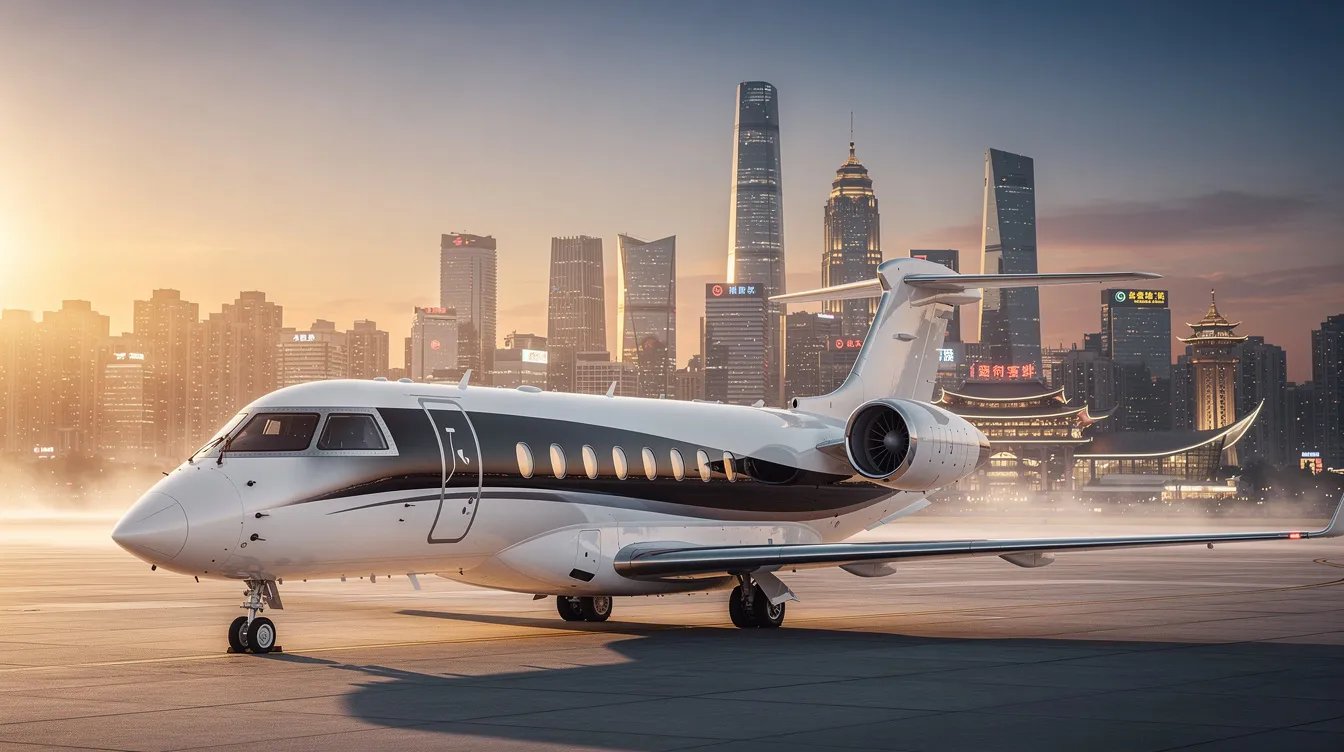
For executives, entrepreneurs, and ultra-high-net-worth families doing business across China, the private jet is no longer a status symbol-it is a strategic instrument. In a country where commercial flight delays routinely erode half a working day and secondary cities remain underserved by premium scheduled service, private aviation delivers something no first-class lounge can: control over time. This guide breaks down how the China private jet market has matured by 2027, how to access it through ownership, charter, or Jet Card membership, and how BlackJet makes the process seamless, safe, and carbon-neutral.
China's Private Jet Landscape in 2027: From Slowdown to Strategic Advantage
China's relationship with private aviation has undergone a remarkable transformation over the past fifteen years. At the beginning of the last decade, private jet fleet growth was 40% annually, fueled by real-estate tycoons and newly minted billionaires who treated aircraft purchases as expressions of prestige. By 2012, China already had more than 200 private jets, and the country was on track to become the world's second-largest business aviation market. That trajectory, however, hit turbulence.
Economic headwinds, regulatory tightening, and a cultural shift away from conspicuous corporate spending cooled the industry substantially. Sales of new aircraft slowed, and high-profile sell-offs-particularly from real estate and financial services firms under pressure-pushed the fleet in the opposite direction. Mainland China's business jet fleet contracted to 243 aircraft by the end of 2025, a number that underscored the market's correction from its earlier exuberance.
Yet by 2027, China's private jet market is recovering from that slump. The narrative has shifted from contraction to stabilization, and in many segments, to renewed growth. Flight activity in China increased nearly 10% year-on-year in early 2026, and in October 2026, international business jet flights from China increased by 17%. These are not vanity metrics-they reflect a fundamental change in who is flying privately and why.
Today, private aviation in China focuses on practical business efficiency rather than luxury. Demand for private aviation is driven by corporate internationalization and ultra-high-net-worth travel, with executives using jets to compress multi-city schedules, reach secondary economic zones with poor scheduled service, and maintain productivity during transit. Mainland China holds the largest business jet market in the Asia-Pacific region, a position reinforced by both the scale of its economy and the complexity of moving efficiently within it.
Infrastructure Catching Up to Demand
One of the clearest signals of market maturation is the investment pouring into ground infrastructure. Rather than simply adding aircraft, the industry is building the support ecosystem that sustainable growth requires.
Beijing Deer Jet opened China's largest private jet hangar at Beijing Capital International Airport. The hangar spans 5,700 square meters in size and can accommodate four Gulfstream 550s and two Gulfstream 200s simultaneously. It provides maintenance, cleaning, and storage services, and protects jets from inclement weather conditions-a practical necessity in a country where seasonal extremes can ground unprotected aircraft for days. Deer Jet operates a total of 39 corporate jets, making it one of the most established operators in the country.
Beyond the Deer Jet facility, Beijing's newer Daxing International Airport (ZBAD) has become a focal point for business aviation development. ExecuJet Haite's facility at Daxing offers approximately 5,000 m² of climate-controlled hangar space and recently received CAAC Part-145 MRO approval, enabling domestic maintenance of large business jets that previously required repositioning to Hong Kong or Singapore for major checks. Capital Airports Holding's business aviation management company (CBM) earned IS-BAH certification at both Beijing airports-the first such accreditation in China-and operates what many consider the most fully featured business aviation base in Asia at the opening of the Xinghe Building at Daxing.
Shanghai Hongqiao and Shenzhen Bao'an are following suit with dedicated business aviation aprons, expanded FBO amenities, and hangar capacity. Aircraft maintenance, repair, and overhaul capabilities are expanding within China at a pace that would have been unimaginable five years ago.
Regulatory Modernization
China's revised Civil Aviation Law took effect on July 1, 2026, streamlining regulatory structures for general aviation and low-altitude airspace operations. China's low-altitude economy is becoming a strategic priority for aviation development, with policymakers increasingly viewing business aviation as an enabler of economic connectivity rather than an indulgence. The number of registered general aviation aircraft reached 3,232 in 2024, spread across 475 Category A general aviation airports.
Private Jet vs. Commercial First Class on China Routes
The case for private jets over commercial first class inside China comes down to time and flexibility:
Beijing to Shanghai is approximately two hours by air. But factoring in ground transport to a commercial airport, check-in, security, boarding, taxi, and arrival procedures, a commercial first-class journey runs six to seven hours door-to-door. A private jet, departing from a business aviation terminal, compresses this to roughly three hours total.
For routes like Shenzhen to Beijing (approximately three to three-and-a-half hours in the air), private jets eliminate the multi-hour buffer that commercial passengers must build into schedules.
When crossing between Shenzhen and Hong Kong, private jet passengers avoid the border queuing and immigration lines that add unpredictable delays, using dedicated facilities instead.
Secondary destinations across western and central China-cities like Chengdu, Chongqing, and Kunming- often lack daily nonstop first-class service from coastal hubs, making private jets the only way to avoid connections and overnight layovers.
BlackJet enters this landscape as a global private aviation company offering carbon-neutral Jet Card access for travelers regularly flying into and out of China. With membership benefits tailored to both Chinese residents and international visitors, BlackJet bridges the gap between the complexity of China's aviation regulations and the simplicity that frequent flyers demand.

How to Access Private Jets in China: Charter, Ownership & BlackJet Jet Cards
There are three primary ways to fly by private jet in China in 2027: full or fractional ownership, on-demand charter, and Jet Card membership. Each model serves a different profile of traveler, and understanding the trade-offs is essential before committing capital or flight hours, especially when you compare the broader private jet price list, costs, and access options.
Full Ownership
For China-based clients, owning a plane outright-whether a Gulfstream G650ER, Bombardier Global 6500, or similar aircraft-offers maximum control and prestige. But ownership in China carries significant friction:
Imported aircraft face substantial customs duties and taxes, which can add 20–25% to the acquisition cost depending on category and origin.
Local regulatory compliance requires CAAC registration, Chinese airworthiness certification, locally licensed crew, and access to CAAC-approved Part 145 maintenance facilities.
Hangar space at major airports remains limited. Even with expansions at Beijing and Shanghai, securing a permanent berth for a large-cabin jet requires long-term contracts and relationships.
Annual operating costs-crew salaries, insurance, hangar fees, maintenance reserves, fuel-can easily exceed $2–3 million before the aircraft flies a single hour.
Ownership makes sense for individuals or corporations logging 400+ hours per year. For most executives, however, the economics tilt sharply toward charter or Jet Card models, or even toward budget-friendly private aircraft options that minimize both capital outlay and operating costs.
On-Demand Charter
China's private aviation market is transitioning from ownership to charter services, a trend accelerated by economic pressures and increased scrutiny of corporate expenses. Charter demand is increasing as companies seek the flexibility of private aviation without the balance-sheet burden of owning an asset that depreciates and costs money whether it flies or not.
On-demand charter within China and to nearby hubs-Shanghai to Tokyo, Shenzhen to Singapore, Beijing to Seoul-is priced per flight hour plus repositioning costs, FBO fees, and in some cases permit charges. For travelers open to alternatives, buying a seat on a private jet through shared or semi-private services can further optimize costs while preserving many of the same time-saving advantages. Availability can be tight around Golden Week and Chinese New Year, when demand for private aviation spikes and repositioning fees climb.
Foreign-registered aircraft face restrictions on domestic commercial charter operations in China. Under CAAC regulations (CCAR-129), foreign operators must hold approved operating certificates or secure Flight Special Operation Permits (FSOPs) for limited entries-typically no more than ten flights within twelve months. This regulatory layer adds complexity for international travelers who assume they can simply call a European or American operator for a domestic Chinese leg.
Demand for charter services is expected to grow alongside corporate travel in the coming year, particularly as more companies adopt "asset-light" travel policies that favor charter hours over owned or managed aircraft.
BlackJet Jet Cards: The Hybrid Advantage
Jet Cards occupy the space between charter's flexibility and ownership's reliability. By prepaying for blocks of flight hours-typically 25 or 50 hours-members lock in hourly rates across different cabin classes and gain guaranteed availability within standard notice windows, enjoying the predictable jet card cost structure and membership benefits that appeal to frequent flyers.
BlackJet's Jet Card programs offer access to vetted private jets across multiple categories, mirroring the broader suite of premium private jet card and charter services BlackJet provides worldwide:
Light jets (e.g., Cessna Citation XLS, Learjet 75) for short regional hops such as Shanghai to Hangzhou or Guangzhou to Xiamen, with rates benchmarked competitively against industry averages of approximately $8,500 per hour.
Midsize and super-midsize jets (e.g., Embraer Legacy 650, Gulfstream G280) for longer domestic legs and cross-border flights to Hong Kong, Tokyo, or Singapore, with pricing in the $9,500–$12,500 range.
Large-cabin and ultra-long-range aircraft (e.g., Gulfstream G650ER, Bombardier Global 7500, Dassault Falcon 7X) for intercontinental routes such as Beijing to London or Shanghai to Los Angeles, in the $13,000–$15,000+ per hour range.
A 25-hour Jet Card is typically the entry point for executives flying regionally four to six times per year. For those with heavier schedules, 50-hour jet card programs and their pricing dynamics deliver better per-hour economics and additional scheduling priority.
Why Aircraft Selection Matters in China
There is a growing preference for large and ultra-long-range jets in China, and the data confirms it: 30 of the 40 new business jet deliveries in the Asia-Pacific region in 2025 were long-range aircraft. Within mainland China's existing fleet, long-range jets account for roughly 44.6% of the total, with large jets at 19.7% and corporate airliners (BBJs, ACJs) at 13.3%. The success of the CBJ business jet will depend on customer acceptance and reliability, but for now, Western OEMs dominate the ultra-long-range segment.
This preference reflects how Chinese business travelers use private jets: not for short leisure hops, but for multi-leg itineraries that may start in Beijing, touch Shanghai, and end in Hong Kong or Singapore-all within days rather than weeks. Choosing the right aircraft type for each leg is where a managed Jet Card program outperforms ad hoc charter, whether you're selecting a light jet for a short hop or evaluating the best private jet for 20 passengers to move a larger deal team efficiently between hubs.
Digital Access and Safety Certification
BlackJet's digital platform allows members to request and confirm flights in real time for China routes via mobile and web. The 24/7 multilingual support team handles slot reservations, CAAC permit coordination, and ground transfers-removing the administrative burden that makes private jet travel in China more complex than in the United States or Europe.
On safety, BlackJet only partners with operators meeting international standards such as IS-BAO, ARGUS, and Wyvern certifications, and all operators serving China routes must be fully compliant with CAAC requirements. In a market where the number of operators and service quality can vary, this vetting layer is not optional-it is foundational. CBM's ground-handling operations at Beijing's airports, for instance, hold IS-BAH certification and maintain a track record of zero accidents over thirteen years of operation.
In a fast-growing market, rigorous safety certification isn't a differentiator-it's a prerequisite. BlackJet treats it as both.
Planning a China Private Jet Trip with BlackJet: Routes, Safety, and Sustainable Luxury
A Week in the Life: Multi-City China by Jet Card
Consider a scenario that plays out regularly in 2027: a tech founder based in Shenzhen needs to attend a government-relations meeting in Beijing on Monday, pitch investors in Shanghai on Wednesday, and close a partnership deal in Hong Kong on Friday. Using a BlackJet Jet Card, her week looks like this:
Monday morning: Depart Shenzhen Bao'an at 7:00 AM on a midsize jet. Arrive at Beijing Daxing's business aviation terminal by 10:30 AM. No check-in line. No security queue. Meeting at Guomao by 11:30 AM.
Tuesday evening: Depart Beijing for Shanghai Hongqiao. Two-hour flight. Dinner in the French Concession by 9:00 PM.
Thursday afternoon: Shanghai to Hong Kong on a light jet. Two hours in the air. Arrive at Hong Kong Business Aviation Centre. Skip the Shenzhen-Hong Kong land border entirely.
This itinerary, attempted on commercial flights, would require six separate airport visits, multiple check-ins, and at least ten additional hours of unproductive transit time across the week. The private jet compresses it into pure execution, particularly when paired with one of the best jet cards for frequent flyers that guarantees aircraft access on short notice.
Popular Routes and Cabin-Class Pairings
The most frequently flown private jet routes in and around China in 2027, along with typical flight times and recommended cabin classes:
Route | Flight Time | Recommended Class |
|---|---|---|
Beijing–Shanghai | ~2 hours | Light or midsize jet |
Shanghai–Shenzhen | ~2.5 hours | Light or midsize jet |
Guangzhou–Chengdu | ~2.5 hours | Midsize jet |
Shanghai–Hong Kong | ~2 hours | Light jet |
Beijing–Singapore | ~6 hours | Super-midsize or large cabin |
Shanghai–Tokyo | ~3 hours | Midsize or super-midsize |
Beijing–London | ~10–11 hours | Ultra-long-range (G650ER, Global 7500) |
For intercontinental destinations, BlackJet members can explore how private jets fly internationally under different regulatory frameworks, with the operations team managing overflight permits, fuel stops, and crew rest requirements, including when itineraries call for large private jets accommodating up to 50 passengers for roadshows or incentive travel.
Navigating Airspace and Peak-Season Planning
China's airspace presents unique planning challenges. Military authorities control approximately 70% of China's airspace, and regulations require dual military and CAAC clearance for private flight plans. This means that filing a flight plan is not the instantaneous process it is in the United States or Europe-lead times of 24–48 hours are common for domestic legs, and longer for routes crossing sensitive zones.
Practical planning details members should understand, especially when comparing how top private jet companies structure access models across regions: Booking
g for peak holidays: During Spring Festival and Golden Week, private jet availability across China tightens dramatically. BlackJet recommends confirming Jet Card flights at least two to three weeks ahead for these periods. Repositioning fees and fuel surcharges rise during peak days.
Slot and curfew considerations: Beijing Capital Airport enforces overnight curfews. Daxing offers more flexibility but still operates under noise and slot constraints during peak hours. BlackJet's operations team monitors slot availability in real time and advises members on optimal departure windows.
Secondary airport access: For destinations like Chengdu Tianfu, Kunming Changshui, or Haikou Meilan, private jets can often secure more favorable slots than commercial airlines, particularly during congested travel periods.
Safety: Beyond the Certificate
Safety in China's private aviation market is not a talking point-it is a structural concern in a rapidly evolving ecosystem. BlackJet's approach covers multiple layers:
Pre-flight checks follow international protocols, with operators required to submit maintenance logs, crew currency records, and aircraft status reports before every flight.
Crew experience standards are enforced across both Chinese and international operators. Captains on BlackJet partner aircraft must meet minimum type-rated hours and recurrent training requirements that exceed CAAC minimums.
Maintenance in major hubs like Beijing and Shanghai is now handled by CAAC Part-145 approved facilities, including ExecuJet Haite at Daxing and established MROs at Hongqiao. BlackJet continuously monitors partner fleet maintenance status and grounds any aircraft that falls out of compliance.
Sustainability and Carbon Neutrality
Private aviation carries a carbon footprint, and BlackJet addresses this directly rather than deflecting. Every Jet Card hour flown through BlackJet in 2027 is carbon neutral, achieved through verified carbon offsets applied at no additional cost to members.
Where available, BlackJet arranges sustainable aviation fuel (SAF) uplift. Nine airports in China currently supply SAF, though continuous availability varies. Hong Kong Business Aviation Centre offers a 5% SAF blend to business aviation customers, and Singapore's Changi has expanded its SAF supply chain for private operators, aligning with emerging private plane rideshare and shared-flight models that also emphasize efficiency and reduced environmental impact. As SAF production scales in the Asia-Pacific region, BlackJet is committed to increasing blend percentages across its network. For a deeper look at how green private jet travel works, members can review BlackJet's sustainability framework.
BlackJet ensures every journey is carbon neutral-at no extra cost to you. Sustainability is built into the Jet Card, not bolted on as an afterthought.

Onboard Experience
The onboard experience on private jets in China has evolved to meet the expectations of both domestic and international travelers:
Bilingual crews (Mandarin and English) are standard on most large-cabin and long-range aircraft operated by leading Chinese companies.
Catering is tailored to the route and passenger preference-regional Chinese cuisine sourced from local suppliers for domestic legs, Western fine dining for intercontinental flights, and dietary accommodations handled with 24-hour advance notice.
Wi-Fi connectivity supports live video meetings, secure document sharing, and real-time communication, transforming a three-hour domestic flight into productive working time.
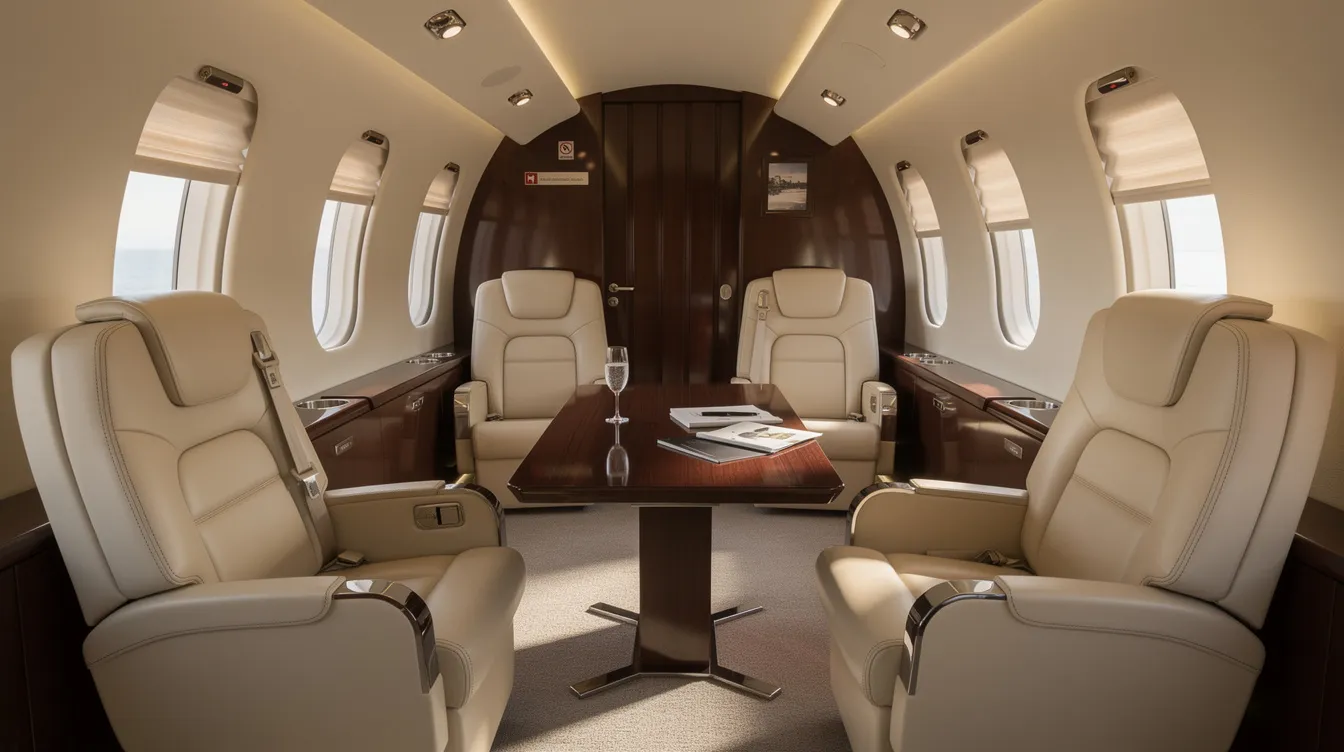
Privacy for sensitive negotiations is absolute. No seatmates, no overhead announcements, no cabin crew interrupting to sell duty-free.
Digital and Concierge Support
BlackJet's app lets travelers adjust departure times, select aircraft category, arrange chauffeured transfers to CBDs like Beijing's Guomao or Shanghai's Lujiazui financial district, and coordinate hotel check-ins at luxury properties. The platform integrates real-time slot availability, weather monitoring, and multilingual communication with ground handlers-removing the friction that typically accompanies private aviation in China.
Common Questions About Private Jets in China
Foreign visitors frequently ask whether they can use private jets inside China. The answer is yes, but with important qualifications. Passengers aboard domestically registered charter flights need valid passports and Chinese visas (unless exempt under bilateral agreements). The aircraft itself must be operated by a CAAC-certified company or, in the case of foreign-registered planes, hold appropriate CCAR-129 approvals or FSOP permits. BlackJet's team handles documentation coordination so members can focus on their travel rather than regulatory paperwork.
On billing, most travelers agree that clarity matters. For Jet Card hours used partly inside and partly outside mainland China, BlackJet applies the hourly rate corresponding to the aircraft category flown on each leg. Fuel surcharges, handling fees, and prices for ancillary services such as catering or ground transfers are itemized separately, with no hidden markups. Members receive detailed post-flight statements through the app.
For travelers considering how Jet Card economics compare to other access models, the math typically favors prepaid programs for anyone flying 25 or more hours per year. Understanding Jet Card cost per hour and the variables behind it helps clarify where the break-even point lies. The locked-in rates protect against peak-season price spikes, and guaranteed availability eliminates the scramble that charter brokers face during high-demand periods.
Discover What Strategic Access Looks Like
China's private jet landscape in 2027 rewards those who plan deliberately and partner with operators that understand both the opportunity and the complexity. The country's aviation infrastructure is maturing, its regulatory framework is modernizing, and the executives who treat private flight as a business tool-not a luxury-are compressing schedules, reaching more destinations, and operating with an edge their competitors simply cannot match.
If you frequently travel to, from, or within China's major business centers, BlackJet's Jet Card membership offers the flexibility, safety, and carbon-neutral performance that this market demands, with options like the BlackJet 25+ Hour Jet Card designed specifically for high-frequency travelers. No aircraft to own. No permits to chase. No compromise on standards.
Elevate your travel-effortlessly. With BlackJet, private flight isn't reserved for a few; it's accessible on your terms through our Jet Card programs, complete with rigorous safety, carbon-neutral performance, and unmatched flexibility. Explore our offerings and discover how refined, strategic travel becomes your new standard.
Frequently Asked Questions About Private Jet Travel in China
Can foreign travelers fly by private jet within China?
Yes. Foreign travelers can use private jets in China, subject to the aircraft operator’s approvals and applicable entry requirements. Domestic charter flights must be operated by an appropriately authorized provider; foreign-registered aircraft face restrictions on domestic commercial charter operations. Passengers should confirm passport, visa, and itinerary requirements in advance, while the operator coordinates permits and flight planning.
How far in advance should I book a private jet in China?
For routine trips, arrange flights as early as possible because China requires both military and CAAC clearance for private flight plans. Lead times of 24–48 hours are common for domestic routes, and peak periods such as Spring Festival and Golden Week can require much earlier planning. Jet Card members should reserve several weeks ahead for holiday travel.
What is the difference between charter and a Jet Card?
On-demand charter is booked flight by flight, with availability and pricing varying by route, aircraft, and season. A Jet Card uses prepaid flight hours to provide more predictable access and rates across aircraft categories, without the acquisition and operating costs of ownership. It can suit executives who fly regularly but do not need to manage an aircraft.
Which private jet class is best for China routes?
Light and midsize jets can work well for shorter domestic journeys, while super-midsize and large-cabin aircraft offer more space and range for longer regional trips. Ultra-long-range jets are suited to nonstop intercontinental routes such as Beijing–London, subject to aircraft performance, weather, payload, and operational requirements. The right choice depends on passenger count, distance, baggage, and itinerary.
How does BlackJet address safety and sustainability?
BlackJet partners with operators that meet recognized safety standards, including applicable IS-BAO, ARGUS, or Wyvern certifications, and checks that flights comply with local requirements. BlackJet Jet Card flights are carbon neutral through verified offsets at no additional cost to members; sustainable aviation fuel may also be arranged where available.
Conclusion: Make China Private Jet Access a Strategic Advantage
China’s private aviation market in 2027 rewards travelers who value control, careful planning, and dependable access. As the market moves from ownership toward charter and Jet Card services, frequent flyers can reach major business centers with greater flexibility—without taking on the cost and operational responsibilities of owning an aircraft. A 25- or 50-hour Jet Card can help executives coordinate multi-city itineraries, choose the right cabin class for each route, and avoid the uncertainty of arranging every flight from scratch.
Private aviation in China still requires close attention to permits, airspace clearances, operator approvals, and peak-season availability. A trusted provider can coordinate these details while applying rigorous safety standards and offering digital booking, real-time support, and carbon-neutral flights. For business leaders and discerning travelers, that combination turns private jet access into a practical advantage: less time navigating logistics and more time focused on the people and decisions that matter.
Join BlackJet's Jet Card program for seamless, premium private travel-safety, sustainability, and flexibility built in. Prospective members evaluating commitments beyond 25 or 50 hours can reference BlackJet's guide to 100-hour jet card costs and structures, as well as a breakdown of jet card pricing, fees, and program types across the market. For many, comparing overall jet card costs against other access models is only one part of the equation; sophisticated users also plan around jet card tax deductions and compliance, benchmark against competitors such as NetJets jet card pricing and benefits, and explore the cheapest private jet and entry-level options before committing. While this guide focuses on China, BlackJet also supports complementary markets such as private jet charters in Karachi for executives whose Asia itineraries extend beyond Greater China.