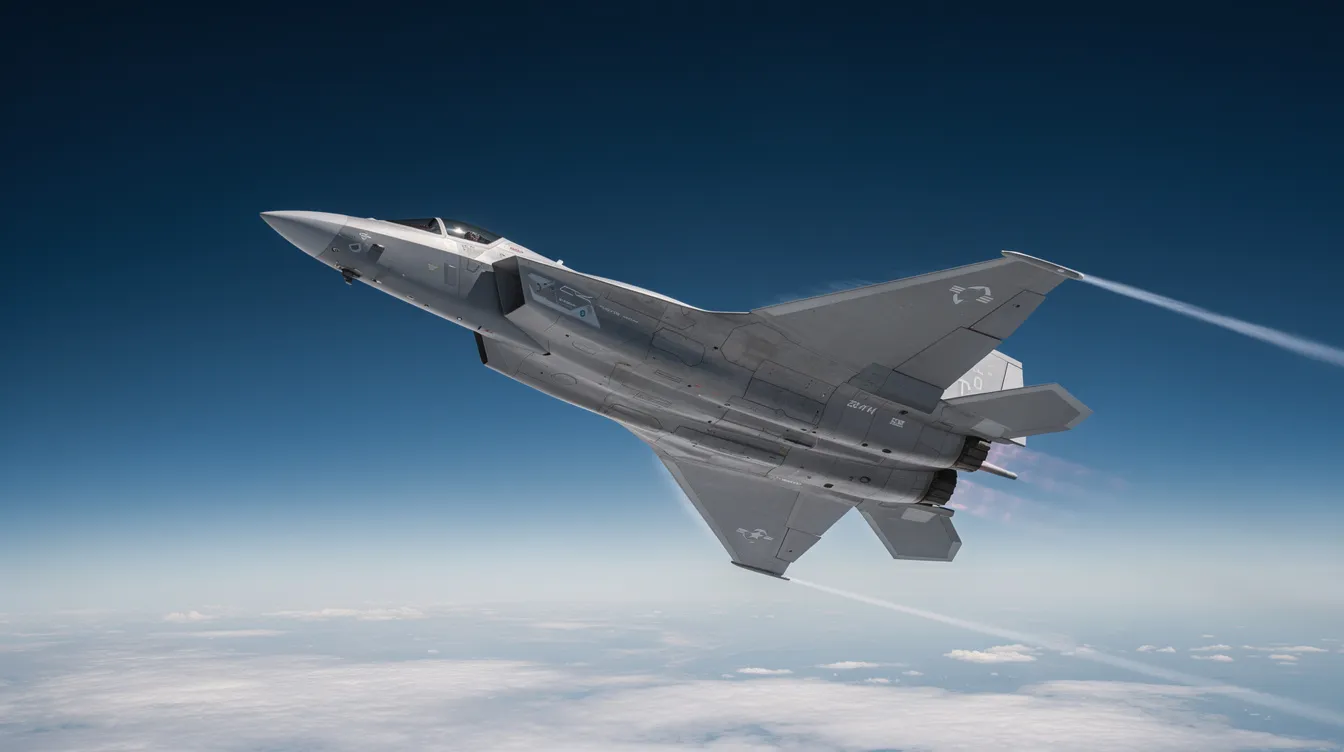
Few machines capture raw power quite like a military jet streaking across the sky. Whether you’ve watched an air force demonstration or simply wondered about the capabilities of these planes, the question of speed naturally arises. Understanding how fast military jets actually fly—and how that compares to the private jets that transport executives across continents—reveals something important about what speed really means for travel. The critical role of takeoff speed allows a military jet to become airborne quickly and efficiently, setting the stage for its impressive performance.
Quick answer: How fast does a military jet fly?
Typical modern fighter jets cruise around 600–700 mph (Mach 0.9–1.2) during patrol and can sprint to 1,300–1,900 mph (Mach 1.6–2.5+) at high altitudes with afterburners engaged, thanks to advanced engine technology that enables these jets to reach high speeds. Modern military jets use turbofan or turbojet engines equipped with afterburners, which inject extra fuel into the exhaust to provide a temporary but powerful thrust increase essential for supersonic flight. The fastest fighter jet platforms like the MiG-25 Foxbat have reached speeds exceeding Mach 2.83 (~1,900 mph).
Here’s how different military aircraft compare:
Subsonic transports and tankers: ~416–580 mph (C-130J cargo, KC-135 tanker, B-2 bomber at 628 mph)
Supersonic fighters: Mach 1.2–2.5 (~900–1,900 mph), including F-15 Eagle, F-22 Raptor, Su-27 family, all powered by high-performance engines designed to reach high speeds
Experimental aircraft: Mach 3+ and above (SR-71 at Mach 3.2, X-15 at Mach 6.70)
These top speed figures represent ideal conditions—clean configuration, optimal altitude, and afterburner at maximum thrust. In actual air combat or patrol scenarios, military pilots typically operate far below these peaks, often flying at subsonic or low supersonic speeds to conserve fuel and reduce airframe stress.
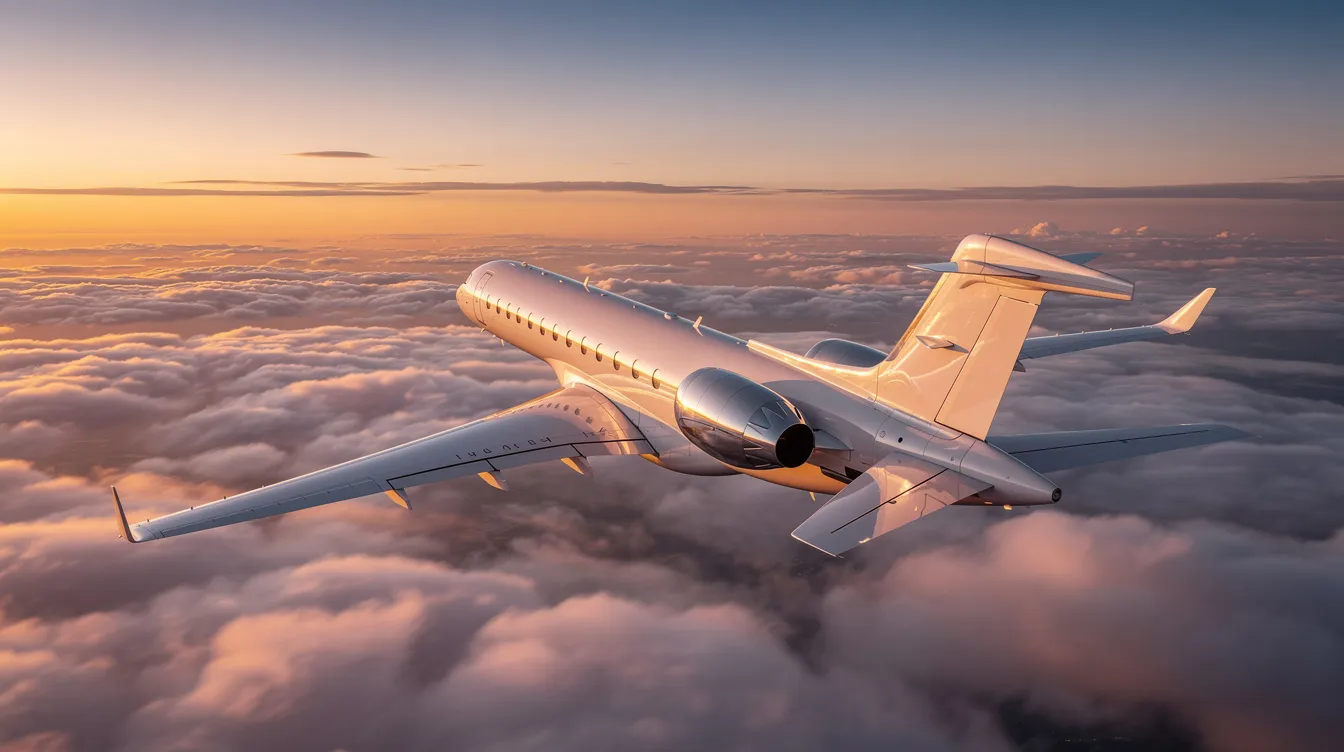
For context, commercial airliners cruise at approximately 530–580 mph (Mach 0.78–0.85), while long-range business jets like the Gulfstream G650 or Bombardier Global 7500 reach Mach 0.85–0.90 (~560 mph). Business jets are slightly slower than military jets due to differences in engine design and mission priorities. The gap between a business jet and a fighter’s cruise speed is far narrower than most assume.
While fighters chase raw speed for tactical advantage, private jets focus on high subsonic cruise, exceptional comfort, and intercontinental range. A BlackJet-arranged flight at Mach 0.85 still cuts door-to-door travel time dramatically compared to commercial first class—often saving 2–4 hours on transatlantic legs through direct routing and streamlined ground experience.
Understanding Mach: the language of jet speed
Mach isn’t a fixed number—it’s a ratio comparing aircraft speed to the local speed of sound, which changes with temperature and altitude.
Mach 1 equals approximately 761 mph (1,225 km/h) at sea level in standard conditions. At cruise altitude around 36,000–40,000 feet, where temperatures drop to -56°C, the speed of sound falls to roughly 660–680 mph. This means a jet flying Mach 2.0 at altitude covers about 1,320 mph—not 1,522 mph as it would at sea level.
The aviation world divides flight regimes into distinct categories:
Subsonic: Below Mach 0.8—where most commercial and business aviation operates
Transonic: Mach 0.8–1.2—the challenging zone where shock waves begin forming
Supersonic: Mach 1.2–5—requiring afterburners, special materials, and sophisticated inlet designs
Hypersonic: Above Mach 5—involving extreme heating and plasma effects
When a military jet crosses Mach 1, it breaks the sound barrier, generating a sonic boom as shock waves coalesce. This produces a dramatic increase in drag—up to 300% in the transonic range—demanding aerodynamic design features like swept wings and sharp noses to minimize air resistance and enhance speed. Sleek, streamlined designs reduce drag, allowing jets to break the sound barrier efficiently. Heat-resistant alloys such as titanium are used to withstand the intense heat generated by air friction at very high speeds, especially above Mach 2.5, where temperatures can damage conventional metals and sensitive components.
High-end private jets like the Gulfstream G700 operate at Mach 0.935 maximum, deliberately staying below the sound barrier to optimize fuel efficiency, structural longevity, and cabin comfort without the complications of supersonic flight.
How fast do different types of military jets really fly
“Military jet” encompasses a diverse fleet—from nimble jet fighters to lumbering tankers—each designed for specific mission profiles with corresponding speed envelopes.
Fighter and interceptor jets represent the speed elite. Aircraft like the F-15 Eagle, the fastest aircraft currently serving in the US Air Force, cruise near Mach 0.9–1.2 during patrol but can reach speeds of Mach 2.5 (~1,875 mph) in clean configuration. The F-22 Raptor, a fifth-generation fighter, achieves Mach 2.25 and features supercruise capability—sustained supersonic cruise without afterburner—extending range while maintaining high speed. The MiG-25 Foxbat, for example, was developed during the Cold War specifically to intercept bombers, and its top speed of Mach 2.83 reflects the need to counter high-speed bomber threats and defend against incursions.
During the latter stages of the Cold War, as air defense systems became more sophisticated, design priorities shifted from raw speed to stealth and maneuverability. Modern military jets generally emphasize these traits over maximum velocity, resulting in many contemporary aircraft achieving lower top speeds than their Cold War predecessors.
Strike and bomber aircraft balance speed with payload capacity. The B-2 Spirit cruises at 628 mph (subsonic), prioritizing stealth over raw speed. Legacy platforms like the F-4 Phantom II reached Mach 2.23 but spent most missions well below that.
Transport and tanker aircraft remain firmly subsonic. The Boeing KC-135 operates around 580 mph, while the C-130J cruises at approximately 416 mph—optimized for troop comfort and fuel efficiency over intercontinental hauls.
Training and light attack jets like the T-38 typically reach Mach 0.7–1.2, providing cost-effective instruction without extreme performance demands.
The critical insight: quoted maximum speeds represent brief afterburner sprints at optimal altitude, lasting perhaps 2–5 minutes before fuel constraints or heat limits intervene. Actual combat and patrol speeds hover around Mach 0.9–1.1—remarkably close to where elite private jets cruise.
In aerial combat, speed is not merely about outrunning opponents; it also allows greater energy to be imparted on missiles when fired, enhancing their effectiveness against targets. However, heavy loads such as weapons and external fuel tanks increase drag and weight, decreasing top speed and maneuverability.
For business aviation clients, this means a Gulfstream at Mach 0.85–0.90 isn’t far behind most military aircraft in practical cruise speed, while offering 4,000–7,000+ nautical mile range and access to thousands of airports worldwide—illustrating many of the time and flexibility advantages explored in analyses of whether chartering a private jet is worth it.
Fastest military jets in history (with concrete examples)
Cold War competition drove aviation to extraordinary extremes, producing aircraft that remain unmatched decades later.
The North American X-15 holds the absolute record for air-launched aircraft, achieving Mach 6.70 (~4,520 mph / 7,274 km/h) on October 3, 1967, piloted by William J. Knight. This experimental aircraft was developed through extensive research and engineering efforts, was rocket-powered, dropped from a B-52 mothership, and flew only 80–100 second powered burns at altitudes exceeding 100,000 feet. While impractical for operational use, it proved concepts essential for hypersonic flight and eventually the Space Shuttle program.
The Lockheed SR-71 Blackbird represents the fastest sustained jet-powered flight in history. Developed by Lockheed's Skunk Works, it was operational from 1966 to 1998. This reconnaissance platform sustained Mach 3.2+ (~2,193 mph) at 85,000 feet, outrunning surface-to-air missiles through pure speed and altitude. Its official 1976 record stands at 1,905.81 knots—still unbroken by any air-breathing operational aircraft.
Among true fighters, the Mikoyan-Gurevich MiG-25 Foxbat achieved Mach 2.83 (~1,900+ mph), entering service with the Soviet Union in 1967. Built with titanium to withstand extreme aerodynamic heating, approximately 1,200 units were produced for high-altitude bomber interception. Its successor, the MiG-31 Foxhound, maintains similar speed capability with upgraded avionics.
The F-4 Phantom II was widely used by several air forces, and notably, South Korea retired its last F-4E Phantom jets in 2024, marking the end of an era for this historically significant aircraft.
The F-15 Eagle demonstrates Western air superiority engineering. First flying in 1972, it reached Mach 2.5 and boasts an undefeated air-to-air combat record of 104–0. Ongoing upgrades like the F-15EX ensure this airframe serves into the 2030s and beyond.
Modern design priorities have shifted from maximum speed toward stealth, sensors, and networking. The F-35 Lightning II, for example, achieves only Mach 1.6 but features radar cross-sections below 0.001 m² and sensor fusion that provides unprecedented situational awareness.
How the top speed of military jets is actually measured
Official top speed figures emerge from controlled test conditions far removed from typical operations.
Standard measurement protocols require:
Clean configuration: No external weapons, tanks, or pods—internal weapons only
Optimal altitude: Typically 30,000–50,000 feet, where air density minimizes drag
Maximum afterburner thrust: Full military power with afterburners engaged
Level flight over measured course: Instrumented runs, often lasting only 3–5 minutes
A clean F-15 at altitude might reach Mach 2.5, but the same aircraft loaded with external stores flies considerably slower—often 15–25% below maximum capability. Skin temperatures during these runs can exceed 350°C, limiting sustainable duration.
The distinction between maximum speed and supercruise matters significantly. The F-22’s Mach 1.5–1.8 supercruise—sustained supersonic cruise without afterburner—extends combat radius 20–30% compared to aircraft requiring afterburner for supersonic speeds.
Above 20,000 feet, Mach number becomes the preferred metric because true airspeed (TAS) diverges dramatically from indicated airspeed (IAS). At 40,000 feet, Mach 2.5 translates to approximately 1,650 mph TAS but reads only ~400 knots indicated.
Private aviation follows parallel certification standards. Aircraft like the G650 carry certified maximum operating Mach numbers (Mmo) around Mach 0.925, established through rigorous FAA dive testing with 1.5x safety margins.
Why modern fighters are not getting dramatically faster
Beyond approximately Mach 2–2.5, the operational benefits diminish while costs and complexity escalate sharply.
Aerodynamic heating scales with the cube of velocity. At Mach 3, skin temperatures approach 700°C—sufficient to soften aluminum and stress cockpit glass. The SR-71 required special JP-7 fuel that wouldn’t ignite at extreme temperatures.
Fuel consumption surges dramatically in the afterburner. An F-16 at maximum thrust burns approximately 100,000 pounds per hour—limiting high-speed dashes to mere minutes. Structural loads and fatigue compound with each Mach increment.
However, flying faster allows military jets to spend less time in hostile or enemy airspace, improving mission safety and increasing the chances of successful engagement or escape.
Modern aerial combat depends less on aircraft speed than on stealth, advanced sensors, and networked operations. The F-35’s emphasis on low observability (radar cross-section ~0.001 m²) and EOTS sensors proves more tactically valuable than additional Mach capability. Data from Red Flag exercises shows fighters spending roughly 80% of engagement time below Mach 1.0.
Advanced missiles now significantly outpace their launching platforms. The AIM-120D reaches Mach 4+ with 100+ nautical miles range, meaning the aircraft’s role shifts from pure speed to sensor platform and weapons truck.
For private aviation, this evolution parallels BlackJet’s value proposition: optimizing for mission flexibility, range, airport access, and cabin productivity rather than chasing extreme peak speeds.
Military jets vs private and business jets: speed in real-world travel
A fighter jet may fly faster in the sky, but it’s entirely impractical for point-to-point travel. Private jets optimize for your complete journey. Notably, some of the fastest military jets, such as the F-14 Tomcat, were operated by the US Navy, highlighting the Navy's significant role in deploying and maintaining high-speed, carrier-capable aircraft.
Aircraft Type | Cruise Speed | Practical Range | Passenger Comfort |
|---|
Fighter (F-15, Navy F-14 Tomcat) | Mach 0.9–2.5 | 300–500 nm at max speed | None |
Commercial Airliner | Mach 0.78–0.85 | 6,000–8,000 nm | Standard |
Business Jet (G650) | Mach 0.85–0.90 | 7,000+ nm | Exceptional |
Military jets face severe operational constraints: very short range at maximum speed requiring tanker support, specialized runway requirements, and cabins designed for combat, not productivity or rest.
For executives and high-net-worth travelers, a BlackJet-arranged flight cruising at Mach 0.85–0.90 delivers superior results:
Direct access to 5,000+ airports closer to final destinations
Zero security lines, boarding delays, or hub connections
Productive cabins for work, meetings, or rest
Concrete scenario: New York to London. Commercial first class involves 7–8 hours of flight time plus 3–4 hours of ground delays, security, and connections. A private jet completes the air segment in 6–6.5 hours from Teterboro to Farnborough, with total door-to-door savings of 3–4 hours. A theoretical fighter dash? Impossible without aerial refueling, military clearances, and landing on a specialized runway far from central London.
Strategic speed means reducing total journey time—not maximizing airspeed.
Factors that influence how fast a military jet can fly on any given mission
Mission planners rarely select the maximum possible speed. They balance velocity against range, survivability, and tactical requirements.
Altitude dramatically affects performance. Jets fly faster at high altitudes where the air is thinner, reducing drag but requiring sufficient oxygen for engine operation. At 40,000 feet, air density drops to roughly one-third of sea level values, reducing drag and allowing higher true airspeed for equivalent thrust. Fighters typically climb to optimal altitude for high-speed flight before accelerating.
Payload significantly limits speed. External bombs, missiles, and fuel tanks add drag and weight. A clean F-16 reaches Mach 2.0; loaded with ordnance, it may be limited to Mach 1.6 or less.
Fuel management drives tactical decisions. Afterburners consume 1–2% of total fuel reserves per minute. Standard profiles use subsonic ingress to conserve fuel, reserving speed bursts for engagement or egress—often Mach 0.9 inbound, Mach 1.8 outbound.
Environmental factors, including headwinds, temperature variations, and weather routing, further influence actual ground speed. A 100 mph headwind effectively negates a significant airspeed advantage.
Tactical considerations sometimes favor flying slow and low to evade radar and infrared surface-to-air missiles from adversaries like North Korea or Islamic Republic-operated systems.
BlackJet flight planners apply similar optimization principles, adjusting cruise Mach slightly to improve fuel efficiency and ride quality without adding significant time—often yielding smoother flights and reduced environmental impact, especially when leveraging the higher cruise altitudes described in analyses of how high a private jet flies compared to commercial flights.
Safety, regulation, and sustainability: limits on speed in both military and private aviation
Safety frameworks and regulations place firm limits on operational speeds regardless of capability.
Military jets operate under strict constraints:
Supersonic flight is banned over populated areas in most nations (including FAR 91.817 in the United States)
Each aircraft carries structural limits (Vne/Mmo) in its flight manual
High-speed flight accelerates maintenance requirements and airframe inspection cycles
Private and civil aviation face parallel restrictions:
250 knots maximum below 10,000 feet in controlled airspace
Certified MMO limits (typically Mach 0.92–0.935 for business jets)
Operational policies prioritizing safety margins over aggressive speed profiles
Sustainability increasingly shapes speed decisions. Pushing beyond optimal cruise Mach sharply increases fuel burn and emissions. Reducing cruise from Mach 0.80 to Mach 0.76 can cut fuel consumption by 10–15% with minimal time impact.
BlackJet commits to carbon-neutral flights through verified offsets and efficient fleet selection. This approach recognizes that responsible speed—balanced with safety and sustainability—delivers more value than chasing military-style extremes, even when travelers opt for the cheapest private aircraft and other budget-friendly options. Every BlackJet journey includes carbon neutrality at no additional cost to members.
Future of high-speed flight: from hypersonic concepts to next-gen private jets
Research into hypersonic flight continues, with military programs targeting Mach 5–12 for prompt global strike capabilities. NASA’s X-43A achieved Mach 9.6 in 2004 using scramjet propulsion, demonstrating that air-breathing hypersonic flight is technically feasible.
Current hypersonic development includes glide vehicles like the AGM-183A ARRW and air-breathing concepts that may eventually reach operational service. These remain firmly in the experimental aircraft category for now.
Commercial implications are emerging. Companies like Boom Supersonic target Mach 1.7 transoceanic service, potentially reducing New York–London to 3.5 hours using sustainable aviation fuel. NASA’s X-59 QueSST program explores low-boom supersonic flight that could enable overland routes previously banned.
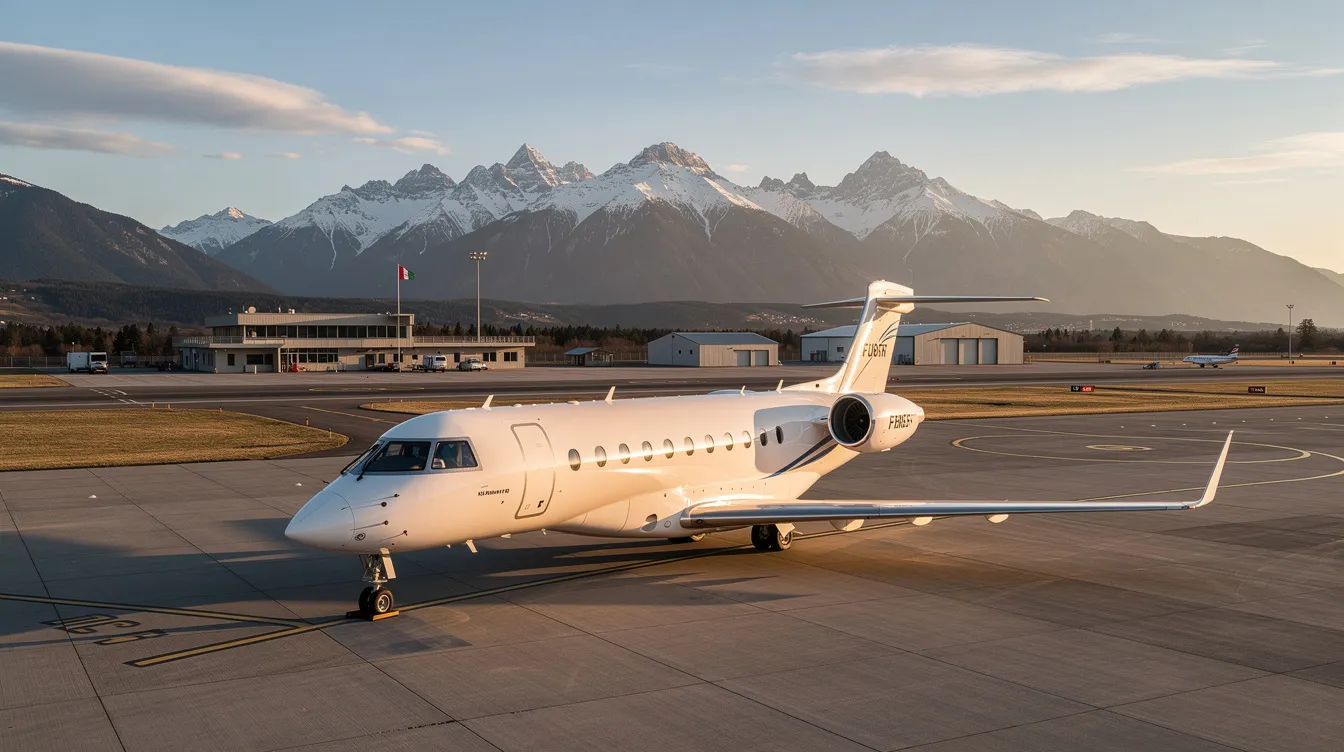
BlackJet monitors these developments closely. As faster, more efficient aircraft reach certification, members can expect curated access through flexible Jet Card programs, aligned with many of the innovations highlighted in the best aircraft of 2026. The technology platform and 24/7 real-time support infrastructure are built to integrate new aircraft categories as they become viable—whether supersonic business jets or advanced subsonic platforms with improved range and efficiency.
FAQ: military jet speeds vs private jet travel
What is the fastest military jet ever built, and how fast did it fly?
The North American X-15 achieved Mach 6.70 (~4,520 mph) in 1967, though it was rocket-powered and air-launched. The fastest jet-powered operational aircraft remains the SR-71 Blackbird at Mach 3.2+ (~2,193 mph).
How fast do modern fighter jets usually fly in real missions?
Despite maximum speeds of Mach 1.6–2.5, most combat and patrol operations occur at Mach 0.8–1.2 (500–800 mph). Afterburner sprints are reserved for intercepts or evasion, typically lasting only minutes.
Are private jets as fast as military jets?
Not at peak capability—fighters reach Mach 2.0+ while business jets cruise at Mach 0.85–0.90. However, practical military cruise speeds often hover near Mach 0.9–1.1, surprisingly close to elite private aviation.
Can private jets go supersonic?
Currently operating business jets remain subsonic. The retired Concorde was the last supersonic commercial transport. New supersonic business jets targeting Mach 1.4–1.7 are in development but not yet certified.
What matters more for travel time: Mach number or airport logistics?
For most journeys, logistics dominate. A BlackJet flight at Mach 0.85 from a convenient regional airport often beats commercial first class by 2–4 hours door-to-door, despite the airliner’s similar cruise speed.
How does BlackJet optimize flight speed, safety, and sustainability simultaneously?
BlackJet selects certified aircraft operating at efficient cruise speeds (Mach 0.85–0.90), applies rigorous safety standards exceeding regulatory requirements, and ensures carbon neutrality through verified offset programs on every flight.
Conclusion: speed as a strategic advantage, not just a headline number
Military jets achieve extraordinary speeds—Mach 2–3+ in extreme cases—yet spend most operational time well below those peaks. Meanwhile, high-end private jets cruise just under the speed of sound and consistently deliver faster door-to-door journeys for business and leisure travelers through superior logistics.
In modern aviation, speed represents one variable among many. Stealth, safety, technology, sustainability, and mission design all shape how fast aircraft actually fly—whether in air superiority operations or transcontinental business travel.
BlackJet members gain strategic speed: direct routing to 5,000+ airports, flexible scheduling across cabin classes, and rapid access to aircraft when needed. Every flight is carbon neutral and supported by 24/7 real-time oversight, maximizing both efficiency and peace of mind.
Discover how BlackJet’s 25+ Hour Jet Card programs can transform high-speed capability into consistent time saved on every journey.


 Sign up with google
 Sign up with Apple