
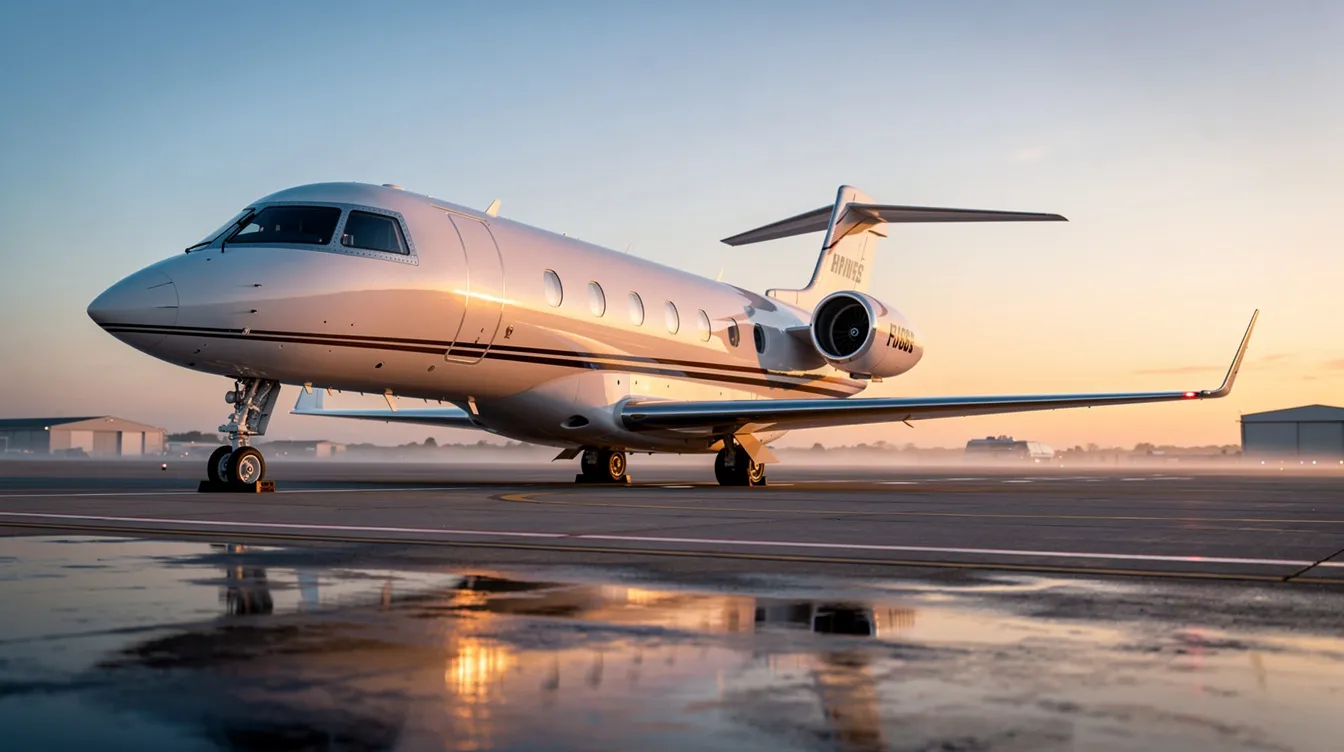
Private aviation crossed 3.9 million global departures in 2025, and the trajectory for 2027 points upward. For executives and frequent travelers who measure success in hours reclaimed, international jet travel is no longer about prestige alone; it is a planning instrument that reshapes how business gets done across borders.
International Jet Aviation Services in 2027
Time Savings and Efficiency
A New York-to-London business trip in 2027 illustrates why private aviation has become a strategic tool rather than an indulgence. On commercial first class, the door-to-door journey typically takes about 13 hours: a 90-minute drive to JFK, a 2.5-hour early-arrival buffer for security and boarding, roughly 7 hours of eastbound flight time, an hour clearing immigration at Heathrow, and another hour into central London. Private jets bypass crowded commercial hubs entirely. Departing from Teterboro, the same traveler spends 30 minutes reaching the FBO, another 30 minutes through the private terminal, 6.5 to 7 hours in the air, and 20 to 60 minutes to a London destination. Total: 8 to 9 hours. Direct point-to-point routing and bypassing commercial terminal lines save 4 to 5 hours and reduce total travel time on every international leg.
International Services and Access
International jet aviation services in 2027 encompass four core components:
Worldwide aircraft charter access for one-off trips.
Jet card membership with prepaid flight hours.
On-demand booking for last-minute missions.
24/7 flight support covering permits, slots, customs, and immigration filings.
Private jets provide greater schedule flexibility compared to commercial flights because travelers set departure times rather than conforming to airline timetables. International private jets access thousands of airports compared to commercial airlines, opening routes to secondary cities and private terminals that scheduled carriers cannot serve.
BlackJet Membership Benefits
BlackJet operates as a B2C private aviation company offering Jet Card programs in 25-hour and 50-hour tiers, plus custom configurations, and its premium private jet card memberships emphasize comfort, safety, sustainability, and flexible access. Members gain access to multiple cabin classes for transatlantic and intercontinental flights, from light jets on short cross-border hops to ultra-long-range aircraft for nonstop transoceanic missions.
BlackJet membership benefits include:
Carbon-neutral flights by default: the company calculates emissions per sector and purchases verified offsets at no additional cost to the traveler.
Customizable services such as catering and onboard preferences.
Secure digital profiles that store service details so returning customers receive consistent service on every trip.
BlackJet's Three Pillars
Three pillars define BlackJet's approach to international jet aviation services:
Safety and certification: Every operator in the BlackJet network undergoes third-party audits, and pilot experience thresholds exceed regulatory minimums for oceanic operations.
Technology-driven booking: A mobile platform and web tools provide real-time pricing, aircraft options, and instant confirmations for international missions.
Sustainability: Carbon-neutral performance is built into every flight hour, supported by offset programs and, where available, sustainable aviation fuel procurement.
Comparison: Charter vs. Jet Card vs. Ownership
How does BlackJet differ from aircraft ownership or traditional aircraft charter for global travel? Ownership demands capital outlay, crew salaries, maintenance cycles, hangar fees, and insurance, all for a single aircraft type that may not suit every route. A one-off charter flight requires negotiating repositioning fees, peak surcharges, and handling costs each time, with pricing that fluctuates by season and demand. BlackJet's Jet Card model eliminates both problems: fixed or capped hourly rates, guaranteed availability windows, and cabin-class flexibility across a curated operator network. BlackJet is not affiliated with STA Jets or other competitors; it operates its own certification standards and vetting process.
Access model | How it works | Best suited to | Key considerations |
|---|---|---|---|
Traditional aircraft charter | Book and pay for each flight individually. | Occasional travelers or one-off regional and international trips. | Flexible with no membership commitment, but availability and pricing can vary by date, route, and aircraft repositioning. |
Jet Card | Prepay for a defined number of flight hours, such as 25 or 50, with access to a network of aircraft. | Frequent travelers seeking more predictable access and rates. | Terms, availability windows, cabin interchange rules, and fees vary by program; review the agreement before purchase. |
Full aircraft ownership | Purchase and operate a specific aircraft. | Travelers with high, consistent annual utilization and predictable needs. | Requires substantial capital and ongoing responsibility for crew, maintenance, insurance, and hangar costs. |
Commercial first class | Purchase an airline ticket on a scheduled route. | Travelers prioritizing established airline networks and individual fares. | Fixed schedules, shared terminals, and airline routes may add ground time or limit destination choice. |
Choosing the Right International Jet Solution: Jet Cards vs. Aircraft Charter
The core decision for global private flyers in 2027 is how they structure access. Owning an aircraft, booking ad-hoc charter, and holding a Jet Card each serve different travel patterns. For travelers flying 25 to 150 hours per year on international routes, BlackJet's Jet Card consistently outperforms the alternatives on predictability, flexibility, and total cost of access, and 25-hour Jet Card guides help occasional flyers benchmark features and pricing.
Aircraft Charter for International Routes
Aircraft charter for international routes works on a per-flight basis. Private jet charters offer flexible travel options, and charters can be booked for regional or international flights with no long-term commitment. Charter services include personalized solutions for travelers, from cabin configuration to catering. On-demand pricing typically includes an hourly rate plus repositioning (the cost of flying an empty aircraft to your departure point), fuel surcharges, and handling fees at international airports, all core elements in any clear explanation of how charter flights work. A family chartering a heavy jet from Los Angeles to Honolulu or Paris to Malé once or twice per year may find this model sufficient, whereas companies moving larger groups should consider the economics of chartering aircraft for around 100 passengers.
The drawbacks emerge with frequency:
Price variability spikes on peak travel dates.
Booking lead times stretch longer for international permits.
Availability at popular FBOs can be limited during holiday windows.
The Jet Card Approach
The Jet Card approach solves these friction points. Jet card programs typically offer 25-hour or 50-hour options, and BlackJet structures both tiers with fixed or capped hourly rates across cabin types: light, midsize, super-midsize, large-cabin, and ultra-long-range. Jet cards provide prepaid access to private jets, locking in rates for international missions such as New York to London, Miami to São Paulo, or Dubai to Nice. Jet card users are often high-net-worth travelers who value the ability to plan annual budgets without surprises from repositioning or fuel surcharges. BlackJet guarantees availability windows at key European and transatlantic hubs, so members traveling during peak periods can confirm aircraft with as little as 24 to 72 hours' notice.
Jet Card Scenario: International Business Travel
Consider a CEO based in San Francisco who needs to fly SFO to Tokyo (about 11 to 12 hours on an ultra-long-range jet), SFO to London (10 to 11 hours), and several intra-European hops of 3 to 4 hours during 2027. With a 50-hour BlackJet Jet Card, every leg is booked at a capped rate, and the company's team handles permits, slots, and ground logistics across time zones, aligning with independent analyses of 50-hour jet card costs and value. Compared with booking each mission as a separate aircraft charter, the CEO avoids negotiating four or five separate contracts, absorbing repositioning premiums, and managing permit timelines. The step from ad-hoc charter to a Jet Card is primarily one of operational simplicity: one agreement, one rate structure, one support team.
Full Aircraft Ownership
Full aircraft ownership occupies the opposite end of the spectrum. Purchasing a large-cabin or ultra-long-range jet requires capital in the range of $40 million to $75 million, plus annual operating costs for crew, maintenance, hangar, and insurance that can exceed $2 million per year. Depreciation erodes value annually. Ownership makes economic sense only for travelers logging 150+ hours per year with highly predictable routing, and those evaluating this path can study the features of a $20 million private jet before committing capital, or weigh alternative structures like the tax benefits of fractional jet ownership. For those flying 25 to 150 hours, the math tilts toward Jet Cards: no capital locked in a depreciating asset, no crew management, and the flexibility to choose different cabin classes based on trip profile rather than being constrained to one aircraft type, provided you understand jet card membership pricing structures.
Technology and 24/7 Support
BlackJet's technology edge reinforces this model. Jet cards include 24/7 digital booking tools, and the mobile booking platform enables around-the-clock access to jet services. Digital booking tools streamline the private jet reservation process so that a member in Tokyo can confirm a return flight to San Francisco at 2:00 a.m. local time without waiting for business hours. Mobile platforms enhance flexibility for private jet travelers by displaying real-time pricing, aircraft availability, and estimated flight times before confirmation.
The 24/7 flight support team coordinates:
Slots and overflight permits.
Customs filings.
Ground transportation.
Flight timing and routing support across time zones.
Customers see a single confirmation rather than a chain of vendor communications, supported by tools similar in precision to an advanced private jet flight time calculator. For those ready to acquire international jet access in a structured format, the Jet Card vs. Charter comparison breaks down the differences in detail.
International Aircraft Types and Cabin Classes
Choosing the right aircraft class for an international flight determines comfort, range, and cost, and many travelers start with broad overviews of the main types of private jets before settling on a cabin category. International jets are categorized by range, passenger capacity, and cabin configuration. Private jets offer multiple cabin classes for different needs, and cabin classes vary in size, amenities, and comfort levels, which is why guides to private jet sizes and categories are useful during planning. BlackJet's Jet Card members can switch between these classes depending on trip profile, a flexibility that compares favorably to owning one specific jet type.
Turboprop aircraft form the entry category in private aviation, typically used for short regional routes under 1,000 nautical miles. Average jet card rates for turboprops ran about US$6,625 per hour in 2025, according to William Blair's aviation services report. They serve a niche role; most international travelers step up to jets, while cost-conscious flyers may instead explore the cheapest private aircraft options and alternative access models.
Light jets typically seat 4 to 8 passengers and cover ranges of about 1,500 to 2,000 nautical miles. Common cabin classes include light, midsize, and large jets, and light jets suit shorter cross-border flights such as New York to Nassau or Madrid to London. Examples include the Citation CJ3+ and Phenom 300E.
Midsize jets accommodate 6 to 9 passengers comfortably, with ranges of roughly 2,500 to 3,000 nautical miles. Aircraft like the Citation XLS+ and Hawker 800XP handle intra-European routes and US-Caribbean flights. These are the workhorse class for regional international travel.
Super-midsize jets push range to 3,000 to 4,000 nautical miles, seating 8 to 10 passengers. The Bombardier Challenger 350 and Gulfstream G200 serve North American coast-to-coast routes and shorter transatlantic missions. Sentient Jet reported that its super-midsize cabin jet card business grew 25% in the first half of 2026, reflecting rising demand for this category and underscoring why analyses of the best jet cards for frequent flyers focus heavily on this cabin type.
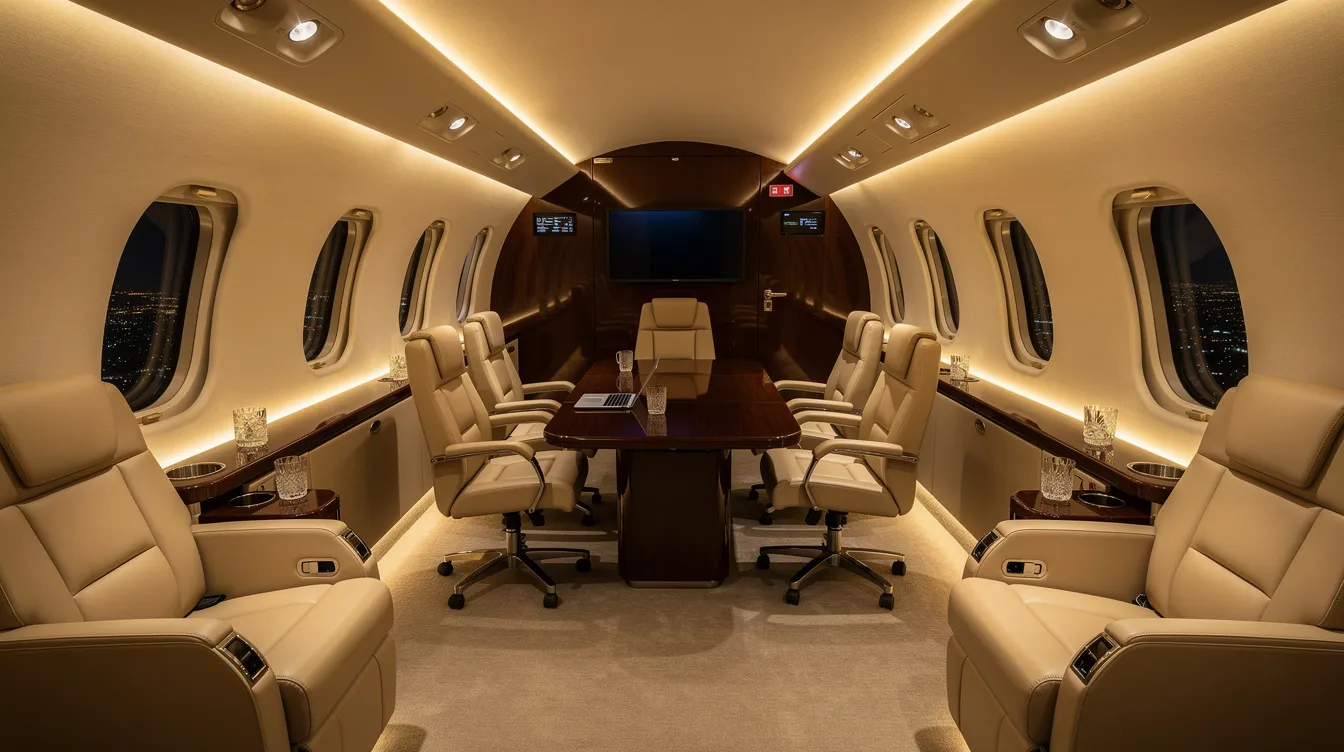
Heavy jets are designed for long-range travel and larger groups, featuring larger cabins with dedicated work zones for productivity. The Dassault Falcon 7X, Bombardier Global 6000, and Gulfstream G450/G550 cover most intercontinental missions: New York to London, Miami to Lisbon, Chicago to Bogotá. Ranges reach 5,000 to 6,000 nautical miles with seating for 10 to 14 passengers. Luxury cabin classes in this tier provide high-end amenities and services including lie-flat sleeping arrangements, full galleys, and enclosed lavatories. BlackJet's certified large cabin jets illustrate the configurations available to Jet Card members, while dedicated reviews of private jets for 50 passengers highlight options for much larger traveling parties.
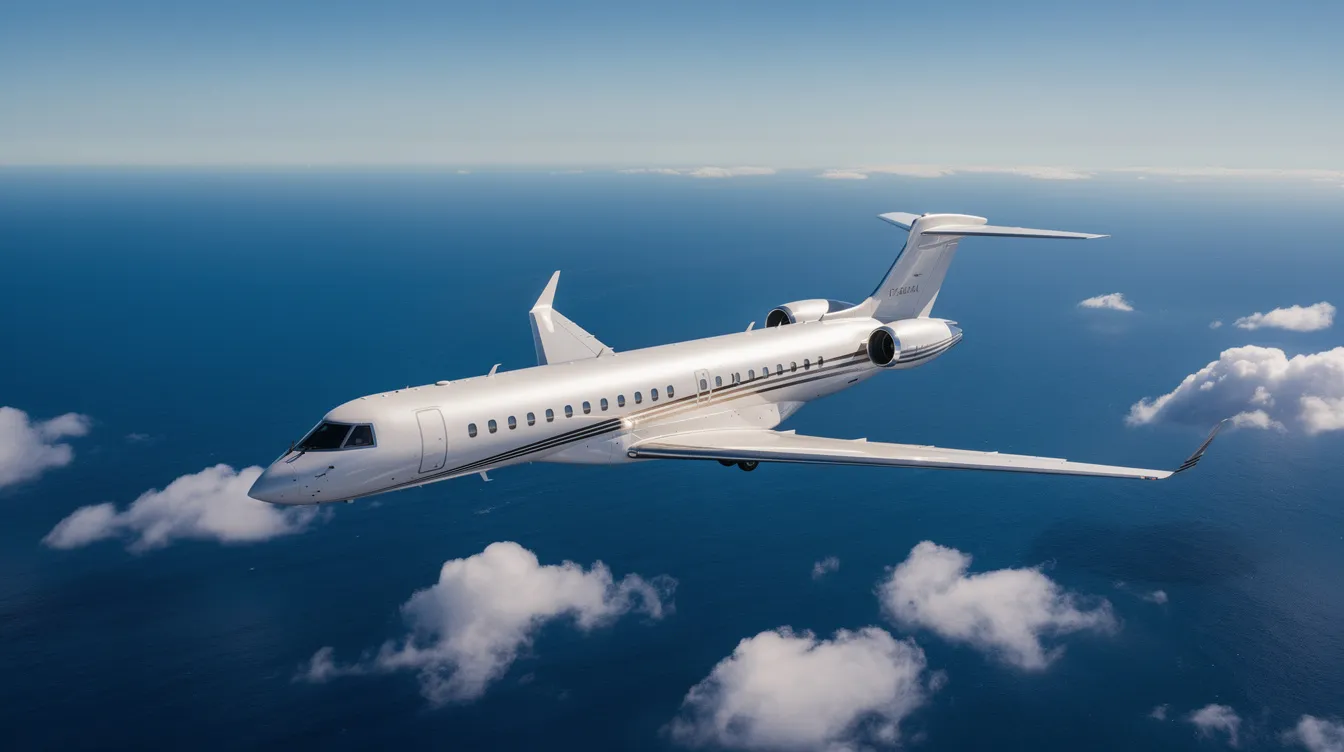
Ultra-long-range jets represent the top tier. Models like the Gulfstream G650ER and Bombardier Global 7500 fly nonstop up to 7,000 to 8,700 nautical miles, covering routes such as Los Angeles to Sydney or New York to Tokyo. International jets can fly nonstop up to 8,000 nautical miles on many of these platforms, seating 10 to 16 passengers in extended-luxury layouts. Many international jets cruise at speeds between Mach 0.85 and Mach 0.925, and modern jets often maintain cabin altitudes of 3,000 to 4,500 feet, lower than commercial aircraft, which reduces fatigue. Higher cabin humidity in modern jets further reduces passenger fatigue on flights exceeding 10 hours. Ultra-long-range private jets are specifically designed to prevent passenger fatigue through these engineering choices. Higher altitude cruising results in fewer disturbances from weather and air traffic, and international jets maximize speed, comfort, and efficiency for long-distance flights.
While brands like STA Jets and others operate aircraft fleets directly, BlackJet focuses on providing flexible, safety-vetted access across a curated network rather than limiting members to a single fleet, a contrast to many of the top private jet companies profiled for luxury travel. Private jet charters provide access to multiple cabin types, and jet cards offer access to multiple cabin types; BlackJet combines both advantages through its Jet Card interchange policy.
Safety, Sustainability, and the BlackJet Aviation Experience
For international private aviation in 2027, the differentiators that matter most are safety standards, environmental responsibility, and end-to-end service execution, plus transparent jet card pricing frameworks that avoid hidden fees. The cabin finishes are table stakes; what separates providers is what happens before the wheels leave the ground and after they touch down.
Safety and Certification
Safety certifications are crucial in private aviation because international operations cross multiple regulatory jurisdictions, each with its own requirements. Private aviation companies must adhere to strict safety standards, and BlackJet's network operators carry ARGUS Platinum or Wyvern Wingman ratings, which set thresholds for pilot experience, maintenance intervals, and crew training programs, comparable to the standards maintained by many of the leading private jet companies globally.
BlackJet's safety protocols include:
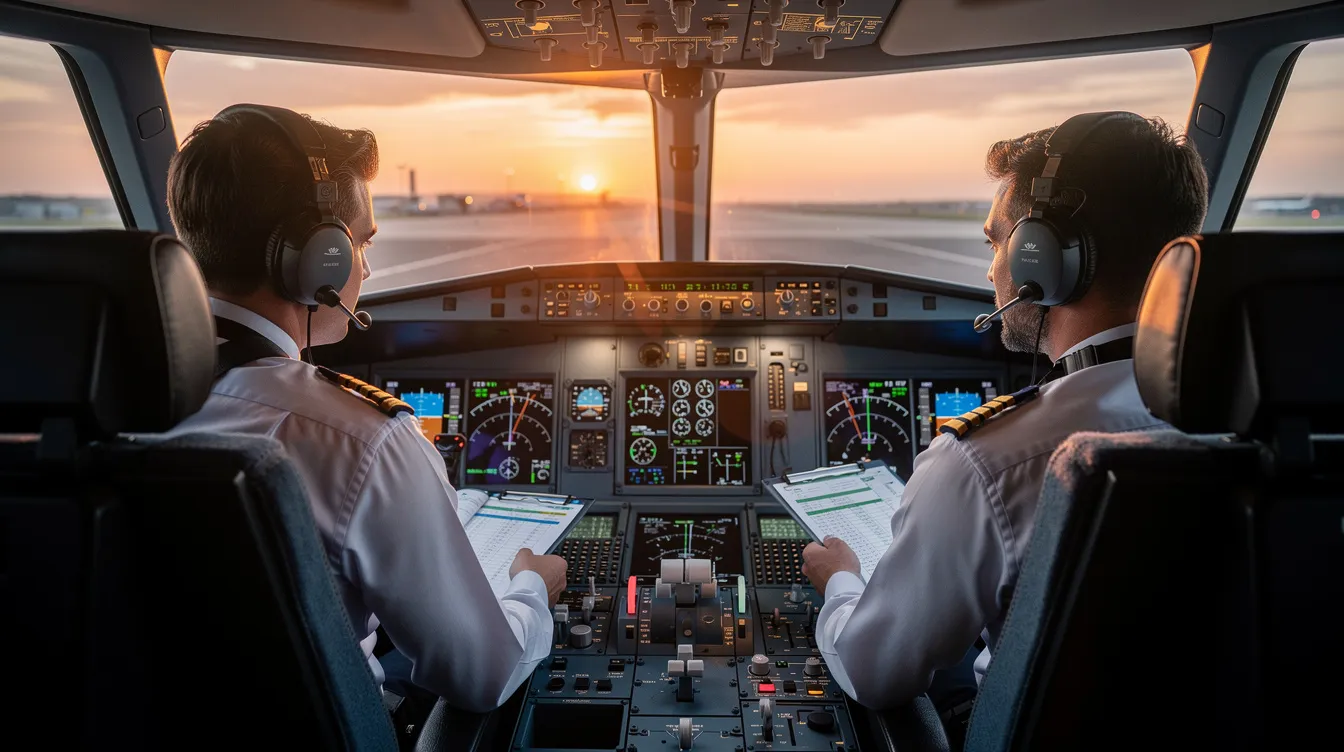
For oceanic crossings such as New York to London, pilots hold a minimum of 1,500 total flight hours plus type ratings on the specific aircraft.
Pilots receive training in ETOPS procedures and North Atlantic high-level airspace navigation.
Pre-flight assessments cover weather routing, alternate airport planning, and fuel reserves calculated for headwinds that can add 30 to 60 minutes on westbound transatlantic legs.
The co-pilot undergoes the same vetting.
These are baseline requirements for every international mission BlackJet dispatches, not optional upgrades.
International Logistics and Support
BlackJet's operations team manages international logistics and support, including:
Overflight and landing permits, which typically require 24 to 72 hours for standard countries and 5 to 7 business days for restricted airspace.
Slots at congested airports, such as London-area fields or Paris Le Bourget, secured in advance.
Ground transportation, customs filings (including U.S. CBP and APIS submissions), and immigration fast-tracking where available.
Real-time flight monitoring and rerouting when weather systems or airspace restrictions shift mid-flight.
The UK ETA requirement for U.S. citizens, which took effect in January 2025, is handled as part of the pre-departure checklist.
Each step in the permit chain is tracked and confirmed before departure, so customers see a single "ready to fly" notification rather than a stack of paperwork.
Sustainability Practices
Sustainable aviation aims to reduce carbon emissions across every flight sector, and BlackJet delivers carbon-neutral flights as a standard feature, not an add-on. Its sustainability steps include:
Calculating fuel burn and distance for each international leg.
Purchasing verified offsets from projects such as reforestation initiatives and renewable energy installations.
Supporting sustainable aviation fuel procurement at major hubs where supply exists.
Publishing the methodology behind offset calculations through BlackJet's sustainability commitment.
Carbon-neutral flights are a key feature of sustainable aviation. SAF still represents less than 1% of global jet fuel according to ICAO's 2025 environmental report, so offsets remain the primary mechanism for achieving carbon neutrality on most routes. BlackJet's green private jet initiatives detail the company's approach.
The BlackJet Aviation Experience: A Family Scenario
Consider a family flying from Dallas to Rome on an ultra-long-range jet. BlackJet's team:
Vets the operator and crew and confirms overflight permits for the North Atlantic and European airspace.
Arranges a nighttime departure so the family arrives in the morning, rested.
Automatically offsets carbon emissions for the transatlantic leg through a verified reforestation project.
Uses dietary preferences stored in the family's secure digital profile to determine the catering.
Confirms ground transfer to a villa outside Rome before departure.
The entire journey, from pre-flight safety checks to arrival, runs through one point of contact. 24/7 real-time support enhances safety in private travel, and real-time flight support is available around the clock, so if weather forces a diversion, the team reroutes and adjusts ground arrangements within minutes. Real-time support enhances the private aviation experience by removing the burden of contingency planning from the traveler. Private jet companies offer digital booking tools for real-time support, and BlackJet's app allows the family to adjust departure windows, review flight status, or add a passenger, all from a phone, even across time zones. Privacy and discretion for executives and public figures are maintained through secure data handling and confidential booking protocols.
FAQs: International Jet Travel with BlackJet
How far in advance do I need to book an international jet with a BlackJet Jet Card?
BlackJet guarantees availability in a given cabin class with 24 to 72 hours' notice for most destinations. Restricted countries or complex permit regimes may require 5 to 7 business days. For private plane international flights during peak periods (December holidays, centennial events, major summits), booking a week or more ahead is recommended.
What documentation is required for international private jet flights?
Every passenger needs a valid passport, plus any required visa or electronic travel authorization for the destination country. The operator files customs and border protection paperwork, including APIS for U.S. departures and arrivals. Crew members carry licenses, medical certificates, and aircraft registration and airworthiness documents. For certain destinations, diplomatic clearances or authorization letters are needed. BlackJet's team manages all operator-side documentation as part of the service.
How does pricing differ between Jet Card hours and one-off aircraft charter for long-haul trips?
Jet Card hours carry fixed or capped rates that smooth out seasonal demand, fuel price changes, and repositioning costs, and high-utilization travelers sometimes step up to 100-hour jet card structures to secure even more predictable access. The 2025 industry average across all jet card categories was US$11,578 per hour, with ultra-long-range rates averaging US$19,208 per hour, numbers that align with broader analyses of jet card cost per flight hour. One-off charter pricing fluctuates based on aircraft availability, fuel surcharges, exchange rates, and peak-day premiums. On a route like New York to London, a single charter on a Falcon 7X can run roughly EUR 115,000 one way. Understanding jet card pricing provides a full breakdown.
Can I bring pets on international routes, and what regulations apply?
Most private aviation providers, including BlackJet, accommodate pets in the cabin. Import and export regulations, veterinary health certificates, and pet import permits vary by country and can require days to weeks of preparation. BlackJet's logistics team manages the paperwork, but travelers should initiate the process early, especially for destinations with quarantine requirements like Australia or the UK.
How does BlackJet ensure flights are truly carbon neutral?
BlackJet calculates emissions per international sector based on fuel burn, distance, and aircraft type, then purchases offsets from verified projects, including reforestation and renewable energy initiatives. Where SAF is available at departure or arrival hubs, BlackJet incorporates it. The offset program undergoes independent verification. You can find more detail on BlackJet's approach on its sustainability page.
Which regions does BlackJet most frequently serve for international jet travel in 2027?
North America to Europe is the highest-volume international corridor, followed by North America to the Caribbean and intra-European routes. The United States accounts for roughly 64 to 72% of global private jet activity, with Europe at 13 to 16%. Latin America and Asia-Pacific show the fastest percentage growth. Top private jet airports include Teterboro (KTEB), which logged approximately 72,915 arrivals in a recent 12-month period, along with hubs located across Texas, Florida, and California. If you agree that flexibility matters, a Google search will confirm that BlackJet serves these corridors with published Jet Card rates; you can also find us on Facebook or comment on our posts to learn more about specific routes.
Is it safe to fly private jets across oceans?
Yes. Oceanic crossings on private jets follow the same airspace rules and safety protocols as commercial airlines, with additional operator-specific requirements. BlackJet's network operators maintain ARGUS or Wyvern certifications, and pilots are trained in ETOPS and North Atlantic navigation. Weather and route assessments are conducted for every oceanic mission, and 24/7 monitoring ensures real-time rerouting if conditions change. For more on BlackJet's safety standards, the safety page details the full audit process.
Elevate Your Global Travel
Global travel in 2027 rewards those who plan access, not just destinations. A BlackJet Jet Card, whether 25 hours or 50 hours, turns the complexity of international jet aviation services into a single framework: predictable rates, guaranteed availability, carbon-neutral performance, and a team that handles permits, customs, and ground logistics so you do not have to.
If you are ready to map your 2027 international travel calendar against a Jet Card, consider scheduling a private consultation with BlackJet. It is a planning step, not a commitment; a conversation about where you need to be, how often, and which cabin class fits each mission. Discover how BlackJet's Jet Card programs reshape international travel into something precise, responsible, and built around your business and life, not an airline's timetable. Incorporate your travel standards. Elevate your travel on your terms.