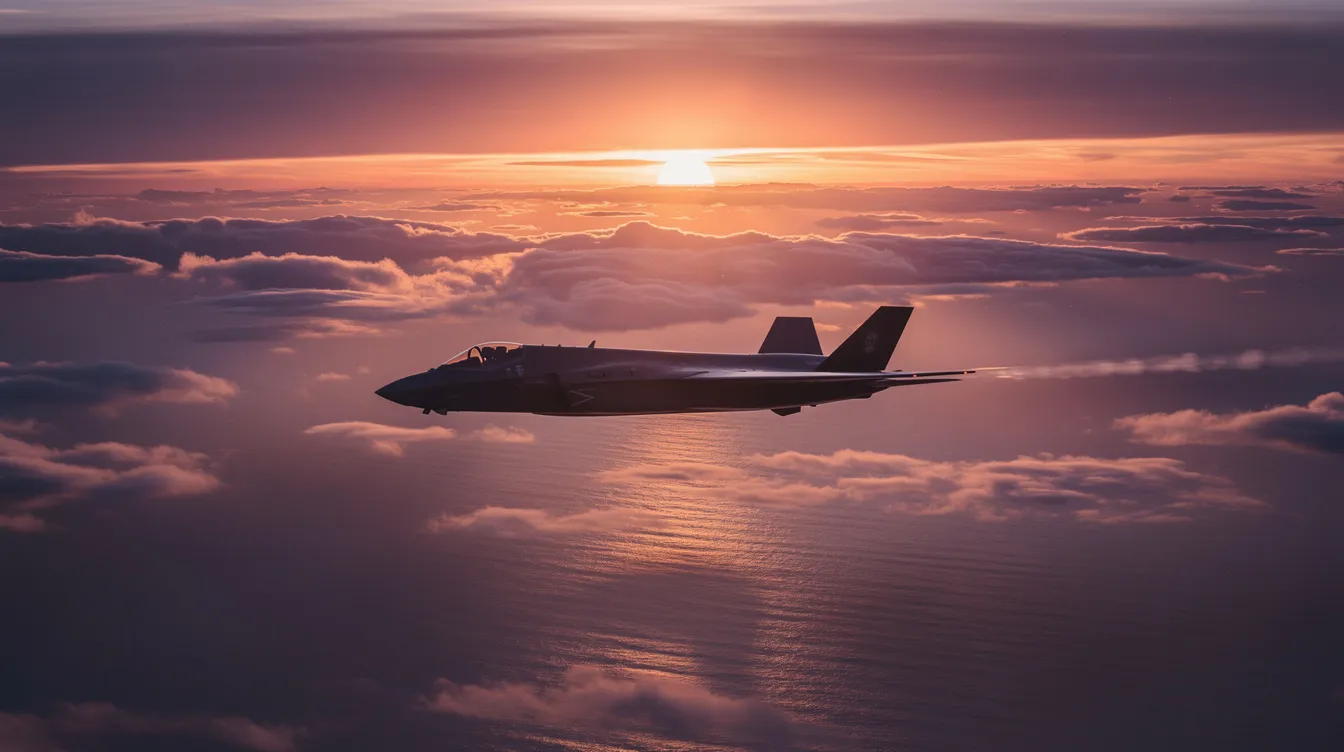
The global race for aerial supremacy just entered a new phase. Note: J-36 can also refer to a high-performance sailboat by J/Boats, which is addressed later in this article. China's Chengdu J-36—a massive, tailless stealth fighter that first broke cover in late 2024—signals that the contest between great powers is no longer confined to diplomats and defense ministers. It is reshaping the very airspace that business executives, families, and discerning travelers rely on every day. This article covers both the Chengdu J-36 fighter jet and the J/36 sailboat by J/Boats, clarifying the differences and relevance for private flyers and sailing enthusiasts. Here is what the J-36 actually is, why it matters, and how it connects to the future of private aviation.
FAQs: J-36, Sixth Generation Fighters, And BlackJet
What do "J-36" and "J/36" mean? J-36 refers to a speculative designation for a heavy stealth multirole combat aircraft developed by Chengdu Aircraft Corporation. J/36 refers to a high-performance 36-foot sailboat produced by J/Boats.
Is the J-36 already operational? As of mid-2026, the J-36 remains in active flight testing with at least three prototypes flying. There has been no public declaration of frontline service or initial operational capability. US Department of Defense reports project a possible service entry by approximately 2035.
What does "sixth generation fighter" really mean? It describes a class of combat aircraft defined by advanced broadband stealth, deep sensor fusion, integration with collaborative combat aircraft and unmanned wingmen, extreme range, supercruise as standard, and potentially directed-energy weapons. The J-36 and US NGAD both target this specification.
Does military air activity like the J-36 affect private flights? It can. Increased test flights, exercises, and deployments lead to temporary airspace restrictions, rerouted corridors, and elevated risk assessments—particularly over contested regions like the South China Sea and Western Pacific. Civil aviation authorities and operators work to maintain safe separation, but flexibility in scheduling and routing becomes a premium asset.
How does BlackJet help me navigate a more contested airspace environment? Through 24/7 operational support, dynamic routing informed by real-time intelligence, access to a diverse fleet across all cabin classes, and deep experience managing transcontinental and transoceanic travel. BlackJet's team proactively adjusts itineraries so members travel safely and on time, while transparent jet card cost-per-hour comparisons help ensure the economics match your risk profile.
Is the J/36 also a sailboat? Yes—and the naming overlap is worth clarifying. The J/36 is a high-performance 36-foot sailboat produced by J/Boats, a brand that emphasizes a philosophy of speed, handling, and practical accommodations. The original J/36 was designed as a racer-cruiser during the era of offshore handicap racing and achieved cult status among sailors for its racing capabilities. The new J/36 introduced modern deck layouts and ergonomics for enhanced user experience, and the J/36 offers a shorthanded sailing capability through ergonomically designed controls. The modern J/36 supports a balance between racing performance and family cruising comfort. A high-performance hull design is used in both classic and modern J/36 models, and J/Boats hold their value remarkably well in the brokerage market. Entirely different from the Chengdu fighter—but if you are shopping for either, precision matters, just as it does when choosing between different types of private jets or deciding how to buy a seat on a private jet.
Immediate Takeaways: What The J-36 Actually Is (Answer Up Front)
The Chengdu J-36 is a speculative designation for a heavy stealth multirole combat aircraft—China's boldest attempt yet at a sixth-generation fighter. The prototype aircraft first flew on 26 December 2024 near Chengdu, Sichuan province, escorted by a J-20S chase plane, and immediately drew attention from defense analysts worldwide. Its sheer scale and estimated range set it apart from anything currently operational in any air force.
Key facts at a glance:
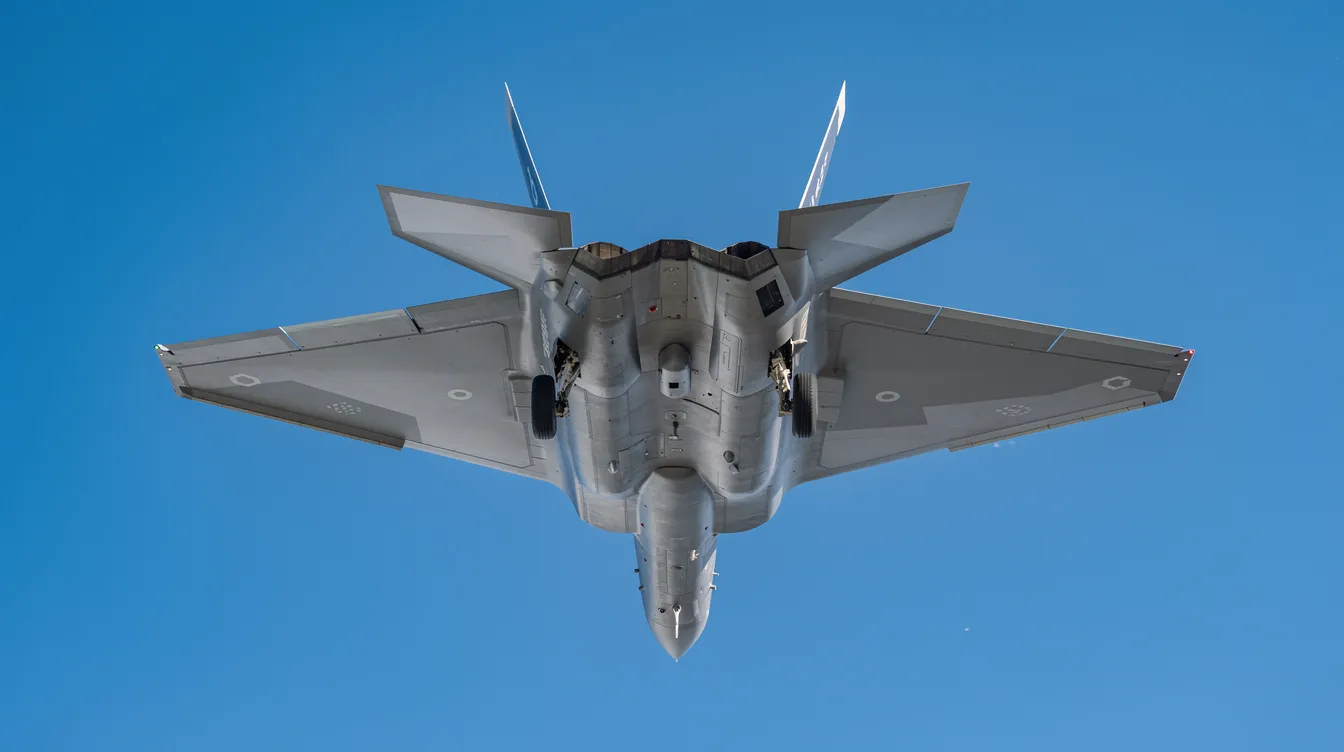
Tailless trijet design with a "ginkgo leaf" planform—a diamond-like double delta wing configuration unlike conventional fighters
Estimated maximum takeoff weight in the 50–55 tonne class, placing it between existing air superiority aircraft like the F-22 and strategic bombers
The J-36 features a trijet tailless flying wing design optimized for long-range air superiority, deep strike, and command-and-control roles
The cockpit features side-by-side seating for two pilots, suggesting a pilot flying alongside a weapons systems officer or mission coordinator
The J-36 fits squarely into the broader sixth-generation fighter race alongside the US next-generation air dominance program. Where fifth-generation platforms like the F-22 and J-20 prioritized stealth and sensor fusion, this new class emphasizes extreme range, broadband stealth, massive onboard power, and the ability to orchestrate networks of collaborative combat aircraft—not just dogfighting prowess.
Why should any of this matter to someone who flies private? Because aircraft believed to fill these roles will reshape airspace management across the Indo-Pacific. Increased military exercises, temporary flight restrictions, and contested corridors over the South China Sea directly affect route planning, fuel costs, and scheduling flexibility for anyone crossing these regions. This is where BlackJet's perspective becomes relevant -—and where the value of flexible, intelligence-driven private access becomes unmistakable.
From Fifth To Sixth Generation Fighter: Where The J-36 Fits
As the J-36 enters flight testing alongside other next-generation platforms, it joins a broader wave of innovation across commercial, military, and private aviation highlighted in our guide to the best aircraft of 2026.
The evolution from fourth to sixth generation fighters spans roughly five decades:
Fourth generation (1970s–1980s): aircraft like the F-15 and Su-27 emphasized raw thrust, agility, and beyond-visual-range missiles
Fifth generation (2000s–2010s): the F-22, F-35, Su-57, and J-20 added all-aspect stealth, sensor fusion, and supercruise capability
Sixth generation (mid-2020s onward): platforms like the J-36 and NGAD concepts add broadband stealth across all frequencies, massive onboard electrical power for advanced sensors and potential directed-energy weapons, deep integration with collaborative combat aircraft and unmanned wingmen, extended range measured in thousands of kilometers without tanker dependence, and supercruise as a baseline rather than a bonus
The J-36 is viewed as a sixth-generation air superiority fighter by both the US Air Force and People's Liberation Army Air Force leadership. By mid-2026, public statements from both sides classify it under generation air dominance efforts. Its large weapons bays, long endurance, and battle management architecture suggest it is less about classic dogfighting and more about controlling vast swaths of airspace.
That said, analysts debate the J-36's primary role in aerial warfare. Some see a pure air superiority aircraft. Others see a regional bomber prototype design or a multi-role platform. What is clear is that the Chinese aviation industry is treating it as the centerpiece of its sixth-generation fighter program.
Design Overview: The J-36 As An "Airborne Cruiser"
The J-36 has earned the label airborne cruiser from analysts who note that its design prioritizes payload, range, and sensor capacity over the agility of traditional combat aircraft. The aircraft was publicly referred to as the ginkgo leaf jet in March 2025, a nickname drawn from its distinctive planform visible in images shared across Chinese social media.
The prototype's trijet configuration — three engines fed by three air intakes — is a defining feature. In early prototypes, engine exhausts sit inside recessed troughs on the upper fuselage to minimize infrared and radar signature. This unusual three-engine layout supports the aircraft's heavy weight class while generating the electrical power demanded by sixth generation sensors and electronic warfare suites.
Approximate dimensions derived from satellite imagery and public photographs:
Length: approximately 23 meters
Wingspan: roughly 19–20 meters (about 62–65 feet)
Estimated MTOW: 50–55+ tonnes
The J-36's design emphasizes long-range and high payload capacity, placing it firmly in the heavy fighter or regional strike class
The forward fuselage houses a side-by-side cockpit — unusual for a fighter aircraft but consistent with command-and-control missions. Below it, the primary weapons bay is approximately 7.6 m long, large enough to house very long range missiles such as the PL-17. Additional multiple ventral weapons bays—a secondary weapons bay on each side—expand the internal loadout. A side-looking airborne radar array may also be embedded in the fuselage.
This airborne cruiser concept could coordinate swarms of unmanned wingmen across contested Indo-Pacific airspace, turning the J-36 into a large crewed aircraft that manages cost-effective combat mass rather than fighting alone. The deck structure located atop the fuselage—between dorsal intake and exhausts—further suggests large crewed aircraft with significant avionics volume for battle management.
Key Timeline: From Concept To Flight Testing
The J-36's path from paper to sky has been remarkably compressed. Here is the chronological record drawn from open-source intelligence:
2018: Chengdu Aircraft Corporation submitted eight sixth-generation fighter design proposals; four underwent wind-tunnel testing at low altitude at Chengdu Aircraft Corporation facilities
January 2019: Chengdu Aircraft Corporation began pre-research on a sixth-generation aircraft, with an initial public target of maturity around 2035
October 2021: Satellite imagery revealed a tailless aircraft prototype under construction at Chengdu, linked to Chinese state media references to next-generation efforts
26 December 2024: First public test flight of the sixth-generation fighter prototype near Chengdu, aircraft's serial number "36011," escorted by a J-20S chase aircraft. The aircraft was spotted conducting test flights and widely tagged as J-36
17 March 2025: The second public test flight, with images revealing the trijet layout, three weapons bays, and side-by-side cockpit in greater detail
May–June 2025: Multiple flight testing continued, exposing additional details about intakes, exhausts, and landing gear
October 2025: A second prototype began flight testing, incorporating 2-D vectoring exhausts, revised intake shapes, and altered landing gear configuration with engine exhaust petals visible
Late December 2025: Reports of a third prototype, with further airframe refinements visible into early 2026
Flight Testing And Rapid Iteration
For private flyers, understanding how different airframes are optimized for range, capacity, and mission profile starts with a clear view of the major types of private jets available today.
The Chinese aviation industry is adopting a fast, iterative prototyping approach more reminiscent of Silicon Valley's "ship early, iterate often" philosophy than traditional aerospace procurement cycles. Multiple flight testing runs have yielded visibly different prototypes within months rather than years.
Early J-36 experimental aircraft testing at Chengdu included:
Takeoff and landing sequences to validate basic flight performance envelope
Pattern flying with a dedicated chase plane for observation and safety
Use of a purpose-built shelter or hangar, indicating a structured program rather than a one-off demonstrator
Each prototype generation shows clear design shifts. The initial prototype featured recessed exhaust troughs on the upper fuselage -—similar in concept to the Northrop YF-23 -—designed to suppress infrared and radar signature. Later prototypes introduced angular 2-D thrust-vectoring nozzles, trading some signature reduction for improved control authority. Air intakes evolved from mixed arrangements toward refined diverterless supersonic inlets. The aircraft's powerplants themselves remain classified, though variable cycle engines have been suggested by some analysts as a long-term goal.
Images from mid-2025 to early 2026 show incremental changes to landing gear doors, nose sensor fairings, and intake-fuselage blending — hallmarks of intense flight testing rather than a static technology demonstrator. The aircraft painted in different primer schemes across prototypes further confirms active iteration.
This rapid pace may compress timelines toward initial operational capability, but it also introduces risk. Stealth signature performance, structural fatigue, and maintainability issues could surface late, and analysts caution that operational readiness is still years away.
Aerodynamics, Inlets, Exhausts, And Landing Gear
This section covers the J-36's most distinctive technical features. While detailed, the core trade-offs are straightforward and relevant to understanding why this sixth-generation fighter design looks the way it does.
The "ginkgo leaf" planform uses a tailless diamond double delta wing with cranked leading edges and carefully tuned wing sweep angles. This shape maximizes internal volume for fuel and weapons while minimizing radar signature across a broad frequency range, and the aircraft control hinge lines also appear to be treated carefully with flexible coverings or shaping to further reduce signature. The outboard wing edges are swept sharply to reduce supersonic drag. However, the tailless layout creates challenges for low-speed handling and potential carrier operations — relevant to any possible naval variant
Inlet evolution: early prototypes used trapezoidal caret intakes combined with a dorsal diverterless supersonic inlet, reminiscent of existing stealth designs. Later, all-DSI side intakes with forward-swept lips appeared, improving both stealth and airflow efficiency during transonic and supersonic flight
Exhaust evolution: the initial recessed upper exhausts dramatically reduced infrared signature, but later angular nozzles with possible 2-D thrust vectoring emerged. This trades some stealth for better maneuverability and high-altitude flight performance — a deliberate choice reflecting the aircraft's mission priorities
Landing gear: the original tandem two-wheeled mains -—suggested large crewed aircraft weight classes -—gave way to side-by-side twin-wheel trucks in newer prototypes. This change reduces gear door size (improving stealth) and distributes loads more evenly, while also potentially enabling carrier-compatible configurations
For intuitive reference: the J-36 shares the tailless philosophy of the B-2 Spirit, the internal bay concept of the F-22 Raptor, and the sheer ambition of the J-20, but combines them at a scale and integration level that defines sixth-generation aircraft.
Why Three Engines? Power, Range, And Mission Profile
On the civilian side, mission-driven design choices also shape which platforms make sense for travelers, from compact turboprops to very light jets and other options covered in our guide to the best small private aircraft.
The J-36's trijet layout is unusual for fighter aircraft and has sparked intense discussion among defense observers. Several factors explain the choice:
Chinese turbofan engines have historically delivered less thrust per unit than their American or European counterparts. Three engines provide the combined thrust needed to push a 50-plus tonne airframe through supersonic flight and sustained supercruise without afterburner
Sixth-generation sensors, electronic warfare suites, datalinks for collaborative combat aircraft, and potential directed-energy weapons demand enormous electrical power. Three engines multiply shaft power and accessory drive capacity
Internal fuel is estimated at 13–15 tonnes, enabling range estimates of 4,000–6,000 km depending on speed profile. This supports deep-penetration strike and anti-AWACS missions far from Chinese bases, reducing dependence on vulnerable tanker aircraft
Long-range missiles carried internally — like the PL-17 family — give the J-36 the ability to engage high-value targets well beyond visual range
Trade-offs exist. Three engines add weight, mechanical complexity, and maintenance burden. Managing infrared and radar signature around three hot exhausts requires careful shaping and possibly active cooling — hence the evolution from recessed troughs to sculpted vectoring nozzles across prototypes.
Strategic Role: Sixth Generation Air Superiority And "Generation Air Dominance"
The J-36 is more than a fighter. It is best understood as a supercruising missile platform and airborne command hub designed for distributed operations in contested environments.
Likely missions include:
Hunting and destroying AWACS platforms, tankers, and stealth bombers — the high-value nodes of any adversary's air campaign
Long-range air superiority across distances that conventional fighters cannot sustain
Deep strike against high-value ground and naval targets in a regional bomber role
The J-36 is speculated to serve multiple roles, including air superiority, and it may function as a command and control hub for aircraft operations, managing unmanned escorts and collaborative combat aircraft in a networked "kill web"
The side-by-side cockpit and large sensor apertures - including what appear to be electro-optical and infrared arrays - make it a twin-seater stealth fighter ideally suited to managing complex, multi-platform engagements. For China, which has fewer overseas bases than the US Air Force, an aircraft that can project power across peacetime flashpoints like the South China Sea, Indian Ocean, and wider Pacific, as well as across any potential war zone where tanker support and forward basing are constrained, fills a critical strategic gap.
By mid-2026, both US Air Force and People's Liberation Army leaders reference the J-36 as a sixth-generation platform. The South China Morning Post and other outlets have covered its implications extensively. Yet analysts continue to debate how to label this new airborne cruiser category — is it a fighter, a striker, a command ship, or something entirely new in future aerial warfare?

J-36, NGAD, And The Global Sixth Generation Fighter Race
The J-36 does not exist in a vacuum. It is part of a global competition that includes the American next generation air dominance program, conceptual designs like the Boeing F-47, the F/A-XX naval fighter effort, and European GCAP/Tempest initiatives.
The US Air Force has acknowledged that Chinese experimental aircraft testing was expected but reinforces the urgency of continuing or re-scoping NGAD despite budget constraints. The USAF considers the J-36 a potential adversary to NGAD, and the Royal United Services Institute has published assessments noting that the J-36 may achieve initial operational capability before US fighters reach equivalent milestones—a sobering prospect for Western defense planners.
China appears to be pursuing at least two sixth-generation lines simultaneously. The large Chengdu J-36 trijet handles long-range, heavy missions. The Shenyang Aircraft Corporation is developing a smaller twin-engine sixth-generation fighter prototype — sometimes referred to as J-50 or XDS — optimized for carrier operations or regional defense roles, raising questions about a possible naval variant for China's growing carrier fleet.
This competition shapes the security architecture of the Indo-Pacific. For private jet users and global corporations, the practical effect is unmistakable: more contested airspace, more frequent military exercises, and more route volatility in key travel corridors, reinforcing interest in flexible options such as private plane rideshare services on less congested routes.
Implications For Airspace, Security, And High-End Private Travel
Advanced combat aircraft do not simply change military balance. They change the character of the airspace above us.
Platforms like the J-36—designed to target tankers, AWACS, and communications nodes at extreme range—could increase volatility in specific corridors used by both commercial and private aviation. Routes over the South China Sea, East China Sea, and Western Pacific already face periodic disruptions from military exercises and territorial disputes. A new class of sixth-generation fighters extends the geographic reach and intensity of those disruptions.
Airspace closures, temporary flight restrictions, and heightened NOTAMs can force detours, longer flight times, and dynamic rerouting. For travelers locked into fixed commercial schedules, this means delays with no alternatives. For private jet members, it means calling their operations team—or, for newcomers exploring access models, learning how to buy a seat on a private jet without chartering an entire aircraft.
Consider a concrete scenario: a BlackJet member flying from Singapore to Tokyo during a regional crisis in the Western Pacific. BlackJet's 24/7 operations center monitors military NOTAMs, exercises, and intelligence feeds in real time, adjusting departure windows, routings, or alternate airports before the member even boards. The same flexibility applies to a Hong Kong-to-Sydney itinerary rerouted to avoid active military zones—the kind of agility that commercial carriers cannot offer.
Sixth-generation fighters are military tools. But their presence reinforces the importance of real-time flight support, contingency planning, and access to multiple aircraft types — from light jets to 16-seat large-cabin private jets for teams and families — core elements of BlackJet's service model.
How BlackJet Ensures Safety Amid Evolving Military Technology
Unlike combat aircraft, BlackJet's mandate is civilian safety, regulatory compliance, and risk mitigation. Yet both operate in the same increasingly complex skies.
BlackJet's premium private jet programs are built on a safety architecture that rests on several pillars:
Proprietary operator vetting that goes beyond minimum regulatory requirements
Third-party safety ratings, including ARGUS evaluations and IS-BAO certification where applicable
Rigorous crew duty-time standards aligned with Part 135 regulations and best practices
Ongoing oversight of maintenance providers and aircraft condition
BlackJet's 24/7 operations center tracks geopolitical events, NOTAMs, weather systems, and military exercises to recommend safe routings and departure windows—especially critical on transcontinental or transoceanic sectors where the J-36 and similar platforms may influence airspace availability and where a clear understanding of the broader private jet price landscape helps members choose the right access model.
While sixth generation fighters push the envelope on speed and altitude, BlackJet focuses on stable, certified aircraft types across light, midsize, super-midsize, and large-cabin categories, each matched to client missions with safety as the foundation.
Two quick examples: rerouting a London-to-Dubai flight to skirt a flashpoint region with active air exercises, or adjusting a New York-to-Tokyo itinerary during major naval maneuvers in the Pacific—both handled proactively by BlackJet's team before they become problems for members.

Technology, Data, And Sustainability: Civilian Counterpart To High-End Military Aviation
Military programs like the J-36 invest billions in sensors, networking, and onboard power generation. In a different domain but with parallel ambition, BlackJet invests in digital tools, data intelligence, and sustainability for its members.
BlackJet's mobile booking platform provides:
Instant price estimates and real-time aircraft availability across cabin classes
Aircraft type selection by mission profile -—light jet for a New York-to-Miami hop (~1,000 nm), large cabin for New York-to-London (~3,000 nm)
Transparent scheduling that contrasts sharply with the opacity of military flight planning
On sustainability, BlackJet ensures every flight is carbon neutral at no extra cost to members. Offsets are calculated per sector using verified environmental projects, positioning BlackJet as a sustainable alternative to both commercial premium cabins and outright aircraft ownership, even for travelers comparing more budget-friendly private aircraft options.
Where the J-36 represents a new ceiling of combat capability, BlackJet aims to represent a new standard of safe, sustainable, and intelligent private travel, from ultra-long-range jets down to the most affordable private jet options that open this world to a broader set of travelers.
Jet Cards, Ownership, Or On-Demand Charter: Strategic Access Compared
Like air forces choosing between aircraft programs, private travelers face strategic access decisions:
BlackJet Jet Card (25-hour or 50-hour programs): prepaid hours with fixed or capped hourly rates, priority access across multiple aircraft categories, and predictable budgeting. Maximum flexibility to shift routes, aircraft types, or schedules in response to changing conditions, especially with products like the BlackJet 25+ Hour Jet Card
Full aircraft ownership: high fixed costs covering crew salaries, hangar fees, insurance, and maintenance management. Limited fleet flexibility - a single large-cabin jet cannot efficiently serve short regional hops, and buyers weighing ownership often start by comparing small private aircraft options or more budget-conscious private aircraft choices. Geopolitical shocks or shifting travel patterns make pure ownership less agile
Ad-hoc charter: more pricing variability and less guaranteed availability during peak demand. No membership relationship, no priority scheduling, and minimal operational intelligence support, which makes a clear grasp of the overall private jet pricing spectrum especially important
A concrete example: a European executive who regularly flies Paris-to-Doha, London-to-New York, and intra-US sectors each quarter. A BlackJet Jet Card lets her shift from a super-midsize on the Atlantic crossing to a light jet for domestic legs—and rapidly reroute any sector in response to airspace disruptions or a last-minute schedule change, without the overhead of owning a large-cabin aircraft, while still capturing the benefits outlined in our guide to the best jet cards for frequent flyers.

Conclusion: Air Superiority Versus Travel Superiority
The J-36 pursues air superiority—the ability to dominate contested skies through speed, stealth, and networked lethality. BlackJet pursues something equally ambitious in its own domain: travel superiority—reliability, privacy, safety, and control for members who cannot afford disruption.
As ssixth-generationair dominance platforms like the J-36 and NGAD reshape the global security landscape, informed and flexible access to private aviation becomes a strategic asset, not a luxury indulgence. The executives and families who thrive in an uncertain world are those who plan ahead, stay informed, and partner with teams that operate at the highest level.
Explore BlackJet Jet Card membership or speak with our team about building a resilient, carbon-neutral private travel strategy. Whether you're evaluating a 225-hour jet card, comparing 50-hour jet card pricing, considering a larger 100 hour jet card commitment, or simply learning how jet card pricing structures and cost per hour stack up against options from providers like NetJets jet cards and Flexjet programs, our insights on the best jet cards for frequent flyers and even unlimited private jet memberships can help align the right model with your needs. The skies are changing. Your access to them should evolve accordingly.


 Sign up with google
 Sign up with Apple