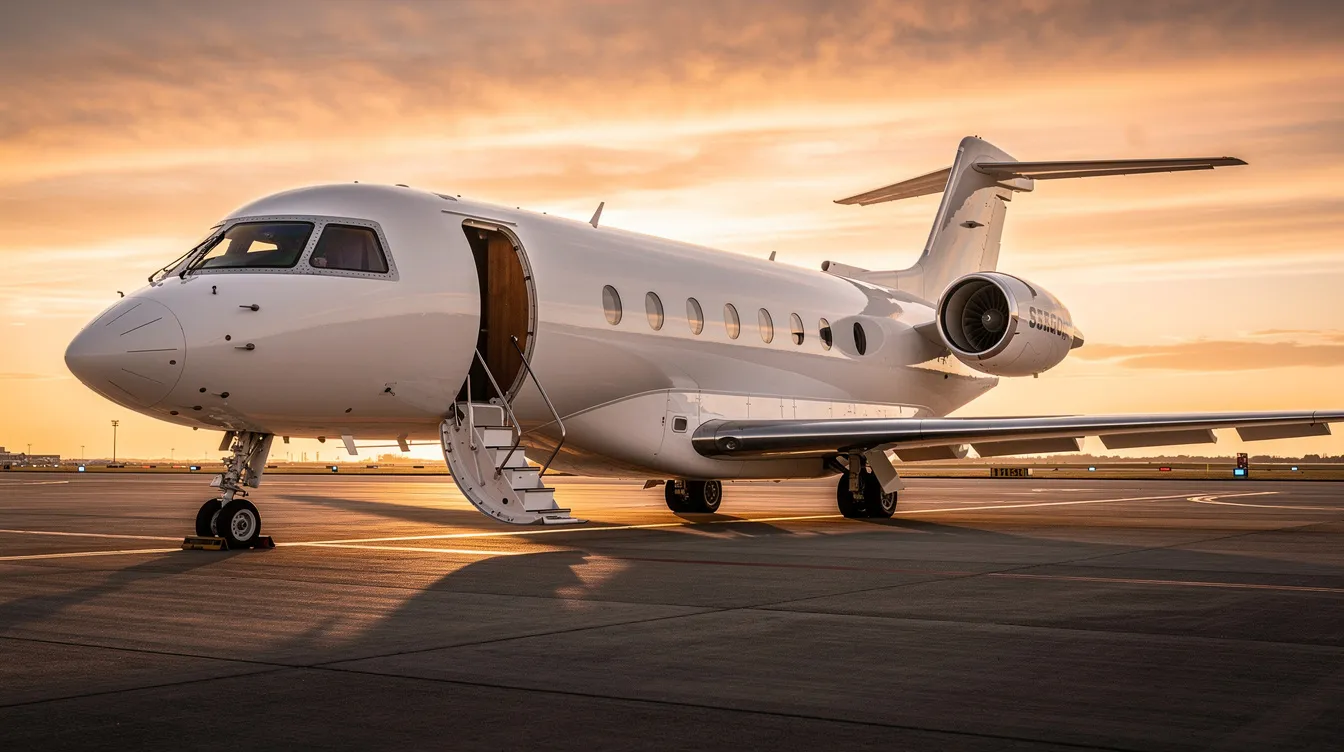
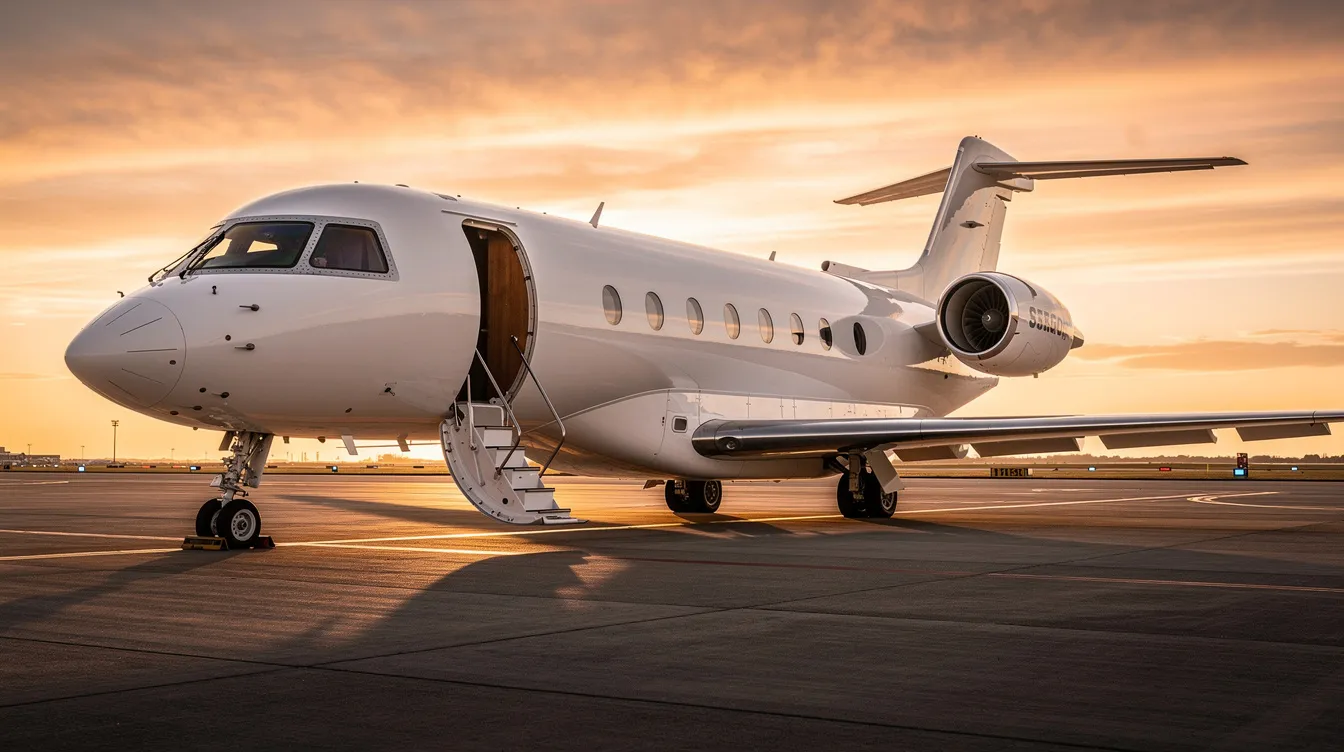
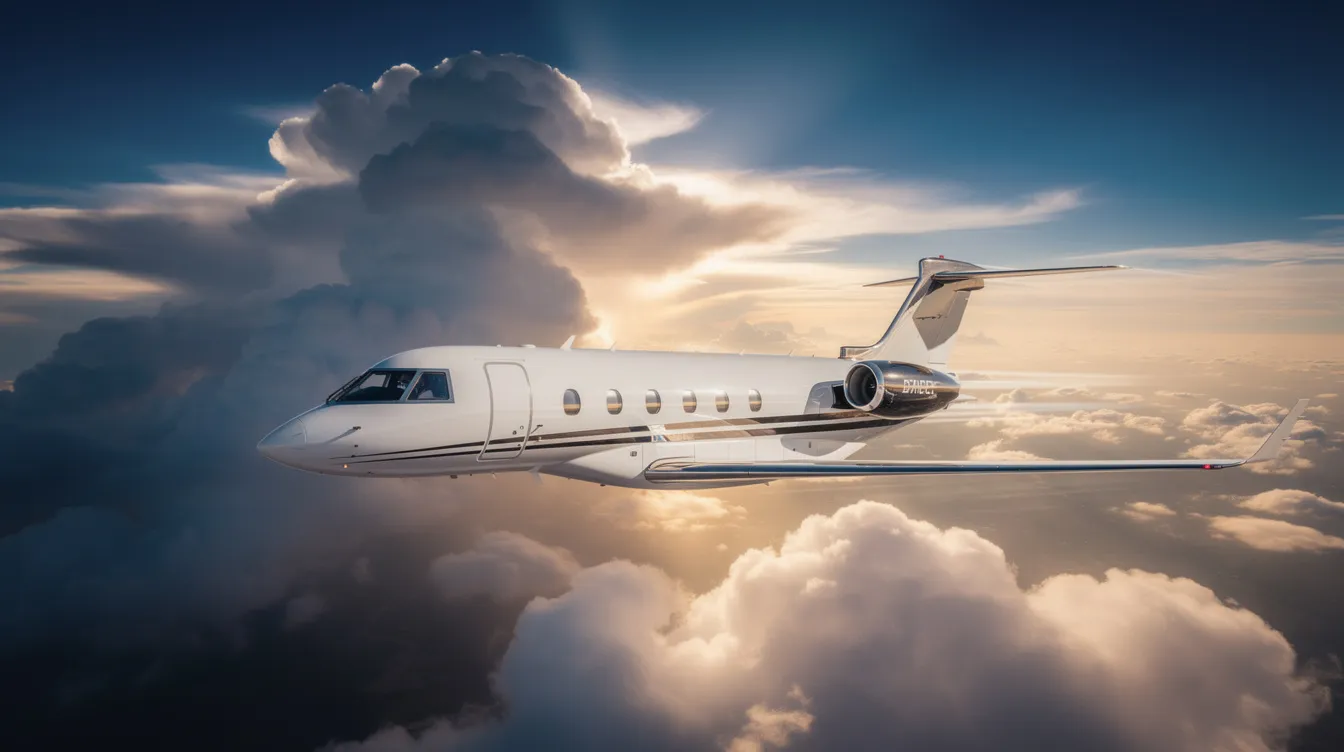
Private Jet in Flight: Inside the Experience, Performance & Advantages
April 8, 2026
Consider a same-day business trip from New York to Chicago. Flying commercial means arriving at O’Hare 90–120 minutes early, navigating long security lines, and enduring a 2-hour flight often plagued by delays. Door-to-door, you’re looking at 6–7 hours consumed—and you’ll arrive exhausted, having spent most of that time in environments hostile to productivity. Now compare the private alternative: board at Teterboro (TEB) with 15 minutes to spare, fly direct at 500 mph, and land at Chicago Executive (PWK) just 1.5 hours later. Total travel time: under 4 hours. That’s not just convenience—it’s 2–3 hours reclaimed for an additional investor meeting, a strategy session, or simply arriving sharp for the presentation that closes the deal.
The same principle applies internationally. London to Geneva via commercial first class demands 60–90 minutes of advance arrival, customs processing, and a 1.5-hour flight. Flying private from Biggin Hill (BQH) to Geneva’s Cointrin (LSGG), you’re airborne within 20 minutes of arrival and touch down in under 3 hours total. For private travel involving sensitive negotiations, the cabin becomes a secure boardroom with encrypted Wi-Fi—something not possible in shared commercial cabins.
This is why a private jet in flight represents far more than luxury. For high-net-worth individuals and corporate teams, the airborne window becomes an extension of the office. IPO roadshows spanning multiple cities in a single day, portfolio company visits across time zones, and back-to-back meetings that would otherwise require overnight stays—all become achievable. The math is compelling: average boarding time on private flights is 15–20 minutes, compared with 60–120 minutes on commercial airlines. Secondary airports sit closer to city centers, eliminating the hour-long ground transfers that bookend most commercial journeys.
Private aviation offers many of the benefits of aircraft ownership without the capital lock-up. Charter companies may own their aircraft or rent them from other owners, providing access to a wide range of planes tailored to your travel needs. Whether through on-demand charter or a structured jet card program, travelers access this strategic advantage while leaving asset management, crew employment, and maintenance oversight to specialized operators.
Booking a private jet typically involves a personal charter specialist who provides quotes and detailed flight information, ensuring a seamless experience from inquiry to takeoff. Flights can be scheduled as early as months in advance or as late as 24 hours before departure, though preparing the aircraft for safe flight may require additional time.
Key Takeaways
A private jet in flight transforms travel into a strategic asset, saving executives 2–4 hours per trip compared to commercial first class through faster boarding, direct routing, and access to more than 5,000 airports in the U.S. alone, compared to roughly 500 served by commercial airlines.
Modern private jets cruise at 400–560 mph, depending on category, with cabin altitudes of 4,000–6,000 feet, which significantly reduces fatigue on transcontinental and international routes.
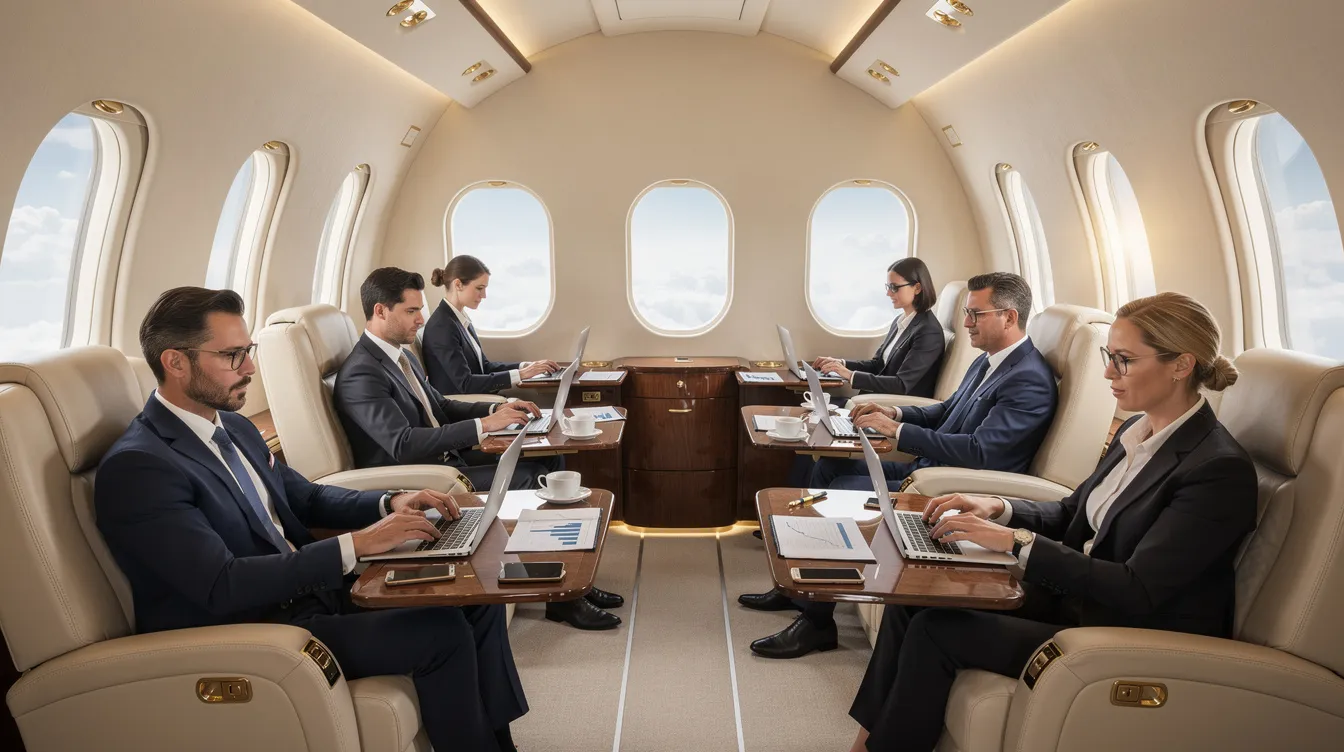
In-flight productivity rivals the office: encrypted Ka-band Wi-Fi delivers 50–100 Mbps, enabling secure video conferences, real-time market monitoring, and confidential deal discussions at 40,000 feet.
Private jets are equipped as mobile headquarters, offering high-speed Wi-Fi and flexible cabin configurations to support work, rest, or relaxation.
Safety standards align with those of major commercial airlines under FAA Part 135 and EASA regulations, with top operators holding ARGUS Platinum or Wyvern Wingman ratings following rigorous audits of maintenance, crew training, and procedures.
Sustainable Aviation Fuel (SAF) and carbon offset programs now make every journey carbon-neutral at no extra cost through offerings from forward-thinking operators, addressing ESG commitments without compromising convenience.
Charter costs for private jets vary widely, generally ranging from approximately $2,000 to more than $17,000 per flight hour, depending on the aircraft type and flight route.
. For example, a short 40-minute flight in a small plane could cost around $2,800, while a 1.5-hour flight in a midsize jet will be closer to $34,500. Chartering a private jet to Florida typically costs between $5,000 for short regional flights and over $80,000 for long-haul or luxury heavy jet missions.
Private jet cheap seats are primarily available through empty-leg flights, which offer significant discounts—often 50–90% off standard charter prices—presenting a cost-effective way to experience private aviation for those willing to adapt their travel plans.
What It Feels Like Onboard: The Private Jet in-Flight Experience
The experience begins at the private terminal—often called an FBO (Fixed Base Operator). Facilities such as Signature Flight Support and Atlantic Aviation offer lounges with complimentary refreshments, but most passengers spend only minutes here before walking directly to their aircraft. There’s no security theater, no crowds, no announcements. You step aboard, the door closes, and within 10–20 minutes of arrival, wheels are up.
Cabin Layouts by Aircraft Category
Cabin layout varies dramatically by aircraft category, and understanding these differences shapes your expectations:
Turboprops: 4–6 passengers, stand-up height 4’6”–5’0”, cost-efficient with regional access
Light Jets: 4–8 passengers, stand-up height 4’9”–5’2”, featuring club seating and compact lavatories
Midsize Jets: 6–9 passengers, full stand-up height 5’8”–5’10”, equipped with divans and worktables
Heavy/Ultra-Long-Range Jets: 12–19 passengers, stand-up height 6’2”–6’4”, featuring zoned cabins with office, lounge, and bedroom areas
Noise levels in private jets range from 50–60 dB—roughly whisper-quiet—compared to 80–85 dB on commercial airliners. More importantly, cabin altitude on modern jets like the Gulfstream G700 or Global 7500 remains 4,000–6,000 feet even at cruise altitude, compared with the 8,000 feet typical on commercial aircraft. This difference dramatically reduces fatigue on longer routes, such as New York to London or Los Angeles to Honolulu. Many modern private jets use medical-grade HEPA filters and provide 100% fresh air replenishment every few minutes, enhancing passenger comfort and health.
Personalized Catering and Service
Catering reflects the personalized service that defines flying private. Passengers can pre-order specific gourmet meals, often prepared by personal chefs and served on Lenox china with Waterford glassware. Specify your preferences in advance—Krug Clos du Mesnil Champagne, plant-based entrées, children’s meals—and find them presented with impeccable attention to detail. Crew members, often at a 1:4 ratio on larger jets, greet you by name, know your dietary restrictions, and adjust lighting, temperature (68–78°F zoned HVAC), and entertainment throughout the flight.
The cabin of a private jet is restricted to your invited group, enhancing privacy for business meetings and personal conversations. Unlike commercial flights, passengers enjoy greater flexibility in luggage weight allowances and fewer restrictions on liquids and carry-ons, supporting flexible travel needs.
Onboard Amenities & Technology at 40,000 Feet
A private jet in flight functions as whatever you need: a secure office, a comfortable lounge, or a restful bedroom, depending on mission profile. The technology available supports each mode seamlessly.
Connectivity and Productivity
Connectivity stands as perhaps the most transformative amenity for business travelers. Most modern private jets offer Ka-band or Ku-band high-speed Wi-Fi through providers like Gogo 5G or Viasat. Typical speeds reach 50–100 Mbps download and 10 Mbps upload—sufficient for:
Video conferences between New York and San Francisco without lag
Real-time Bloomberg terminal monitoring during market hours
Secure VPN-encrypted file transfers for sensitive transactions
Streaming investor presentations or legal documents
Comfort and Entertainment
Cabin technology extends beyond connectivity. Touch-screen cabin management systems control lighting, climate, and window shades. Wireless charging pads, USB-C ports, and HDMI connections support presentations on 24–55” monitors. Entertainment systems offer 4K streaming and noise-canceling audio through integrated Bose systems.
Comfort amenities scale with aircraft size. Light jets offer compact but functional lavatories; midsize jets provide enclosed facilities with luxury toiletries from brands like Asprey or L’Oréal. Heavy jets feature separate crew rest areas, full galleys capable of serving multi-course meals, and lie-flat beds measuring 80–85 inches, with Frette linens, for overnight international flights.
Safety Technology
Safety-related technology operates invisibly but remains crucial. Onboard defibrillators, satellite phones, and 24/7 access to MedAire ground-based medical advisory services support any in-flight medical incident. Dual Honeywell Primus Epic avionics provide redundancy, while enhanced vision systems (infrared cameras) on long-range jets assist during night or low-visibility operations.
Performance in Flight: Speed, Range & Typical Routes
Understanding how a private jet performs in flight—cruise speed, range, optimal passenger load—helps travelers choose the right aircraft for each mission. Performance varies significantly across categories:
Turboprops: Cruise speeds of 220–315 mph, with typical ranges of 600–1,000 nautical miles, ideal for regional California investor tours.
Light Jets: Cruise speeds between 400–480 mph, covering 1,500–2,000 nautical miles, suitable for routes like New York to Miami (approximately 2.2 hours).
Midsize and Super-Midsize Jets: Cruise speeds of 430–520 mph, ranges of 2,500–3,500 nautical miles, perfect for trips such as Los Angeles to Chicago (around 3.5 hours).
Heavy and Ultra-Long-Range Jets: Cruise speeds from 480–560 mph, with ranges exceeding 5,000 to 7,500+ nautical miles, capable of long-haul flights like New York to Tokyo (7.5 hours on a Gulfstream G800).
Example Routes and Aircraft Performance
Light jets like the Citation CJ4 handle domestic routes efficiently—New York to Miami (approximately 1,100 miles) takes just 2.2 hours nonstop. Midsize jets cover longer distances while maintaining more space and amenities; Los Angeles to Chicago (1,750 miles) runs 3.5 hours with full cabin productivity. For global missions, ultra-long-range aircraft such as the Gulfstream G700 or Bombardier Global 7500 can connect New York to Tokyo (6,700 miles) without refueling.
Private jets typically travel faster than commercial aircraft and can fly out of almost any airport, big or small, often saving time on the overall journey. Actual performance depends on several variables: passenger count and baggage weight (500–4,000 lbs, depending on aircraft), winds aloft (a 50 mph tailwind on New York–London can save 30+ minutes), and runway lengths at departure and arrival airports. A knowledgeable aviation advisor models these variables using tools like ForeFlight to recommend the optimal aircraft for each mission.
Safety and Certification: What’s Happening Behind the Scenes in Flight
Private jets in flight operate under regulatory frameworks as stringent as those governing major commercial airlines. In the United States, charter operations fall under FAA Part 135; in Europe, EASA maintains equivalent standards. These regulations govern everything from pilot training and duty limits to aircraft maintenance and operational procedures.
Crew standards reflect this rigor. Captains typically log 1,500+ hours on their specific aircraft type, with both pilots completing annual simulator training at facilities like FlightSafety International or CAE. Regular line checks and Check Airman evaluations ensure proficiency remains current. Many operators exceed minimum requirements, mandating additional currency flights and scenario-based emergency training.
Third-party safety ratings provide transparency for travelers evaluating operators. The hierarchy includes:
ARGUS Platinum: Top 1–2% of operators, auditing 200+ items including Safety Management Systems, drug testing protocols, and maintenance programs
IS-BAO Stage III: International Standard for Business Aircraft Operations, the highest stage certification
Wyvern Wingman: Comprehensive audit of training, maintenance, and operational practices
From the passenger perspective, safety procedures remain largely invisible but ever-present. Personalized briefings cover emergency exits and equipment. Seat belt requirements apply below 10,000 feet and during turbulence. Flight crews coordinate continuously with air traffic control, using onboard weather radar and TCAS (Traffic Collision Avoidance System) to navigate around weather and other aircraft. TAWS (Terrain Awareness and Warning System) provides additional protection during the approach and departure phases.
On long-range jets, synthetic vision systems and enhanced vision (infrared) assist pilots during night operations or low-visibility approaches, maintaining safety margins that equal or exceed commercial aviation standards.
Sustainability in Private Aviation: A Cleaner Private Jet in Flight
Environmental scrutiny of private aviation has intensified, and rightfully so—private flights emit 5–14 times more CO₂ per passenger than commercial alternatives due to smaller passenger loads. For travelers with corporate ESG commitments or personal environmental values, understanding sustainability options has become essential.
Sustainable Aviation Fuel (SAF) represents the most immediate solution. This drop-in biofuel, produced from waste oils and agricultural residues, reduces lifecycle CO₂ emissions by 70–80% compared to conventional Jet-A fuel. SAF is now available at major hubs:
Los Angeles International (LAX)
London Heathrow (LHR)
Amsterdam Schiphol (AMS)
San Francisco International (SFO)
Current regulations permit 10–50% SAF blends, with even a 20% blend reducing flight emissions by approximately 15%. Forward-thinking operators integrate SAF into their fuel supply at no additional cost to travelers.
Carbon offset programs address remaining emissions. Calculations follow the ICAO CORSIA methodology, multiplying fuel burn by established emission factors. A New York-to-Los Angeles flight producing approximately 10 tons of CO₂ can be offset through VERRA-validated projects, such as reforestation, renewable energy development, or methane capture. The result: carbon-neutral travel without operational compromise.
Operational strategies further minimize environmental impact:
Direct routing reduces fuel burn by 10–20% versus commercial hub-and-spoke patterns
Single-engine taxi conserves fuel on the ground
Optimized climb and descent profiles minimize holding time
Right-sizing aircraft to the mission prevents excess fuel consumption
Looking ahead, next-generation engines like the LEAP-1A deliver 15–20% efficiency improvements. Advanced winglets save 4% fuel burn. Hybrid-electric concepts from companies like Ampaire promise 50% reductions in emissions for shorter routes within the decade.
Choosing the Right Aircraft for Your In-Flight Experience
The in-flight experience is directly shaped by aircraft class, making expert guidance essential for travelers new to private aviation. The right aircraft matches your passenger count, route distance, baggage requirements, and productivity needs—not just your budget.
Turboprops
Turboprops excel for regional hops under 800 miles where runway options matter. A California investor touring Napa, Monterey, and Santa Barbara in a single day benefits from turboprop access to smaller airports that jets cannot reach.
Light Jets
Light jets serve 4–8 passengers on flights of 2–3 hours. A founding team touring investors across California or a legal team shuttling between New York and Washington handles these missions efficiently in a Citation CJ4 or Phenom 300.
Midsize and Super-Midsize Jets
Midsize and super-midsize jets bridge regional and transcontinental needs. Six to nine passengers fly coast-to-coast or traverse Europe in a spacious cabin with an enclosed lavatory and full stand-up height. A legal team flying New York–Houston–Denver–New York over two days works securely in-flight, maintaining deal momentum without overnight delays.
Heavy and Ultra-Long-Range Jets
Heavy and ultra-long-range jets serve global missions requiring 10+ hour segments or passenger counts exceeding nine. Zoned cabins separate work areas from rest spaces, enabling productive international flights while arriving refreshed rather than depleted.
Key cabin decisions beyond distance include:
Stand-up height requirements (6’+ passengers need midsize minimum)
Enclosed lavatory necessity (midsize and above)
Sleeping arrangements for overnight flights
Baggage: golf clubs, skis, and trade show equipment fit light-midsize holds; oversized cargo requires heavy jets
A dedicated team or jet card consultant narrows options based on passenger profiles, schedules, and in-flight productivity needs—not just nautical miles.
Access Models: Charter, Jet Cards, and Ownership Compared
How travelers access a private jet in flight varies significantly, and the right model depends on annual flight hours, scheduling flexibility, and capital allocation preferences.
On-Demand Charter
Aircraft charter offers maximum flexibility for occasional travelers. Pay-per-flight pricing ranges from $6,000 to $12,000 per hour, depending on aircraft category. You select the right aircraft for each specific mission without ongoing commitment.
Advantages:
No capital commitment or membership fees
Full aircraft selection flexibility
Ideal for leisure travel or irregular schedules
Private jets can land at almost any airport, providing greater flexibility in travel options.
Private jet charters offer more flexibility in luggage weight allowances than commercial flights.
Considerations:
Pricing varies with demand—late December and major events carry surcharges
Availability may be limited during peak periods
Quality and safety procedures vary by operator
Jet Cards
Jet cards offer prepaid flight hours at fixed hourly rates, typically $5,000–$15,000 depending on aircraft category. This model provides access to a consistent fleet with guaranteed availability within 10–24 hours' notice.
Advantages:
Fixed, transparent pricing regardless of market conditions
Consistent safety standards and service quality
Simplified booking without per-trip negotiations
Ideal for 25–75 hours annually, mixing business and family
Considerations:
Prepayment required (though unused hours typically carry forward)
Geographic service areas may have limitations
Full and Fractional Ownership
Aircraft ownership—whether full or fractional shares—suits travelers exceeding 200 annual flight hours with very specific cabin and scheduling requirements.
Advantages:
Potentially lower marginal cost per hour at high usage
Complete customization of cabin, crew, and scheduling
Asset appreciation potential in favorable markets
Considerations:
$5–50M capital commitment (full ownership) or $500K–$10M (fractional)
$1–2M+ annual fixed costs regardless of usage
Exposure to depreciation, maintenance oversight, and crew management
Requires aviation expertise or a dedicated management company
Annual Usage: 25–75 hours | Primary Purpose: Business + family | Recommended Access: Jet card
Annual Usage: 100–200 hours | Primary Purpose: Frequent business | Recommended Access: Jet card or fractional
Annual Usage: 200+ hours | Primary Purpose: Heavy corporate use | Recommended Access: Fractional or ownership
Frequently Asked Questions About a Private Jet in Flight
How soon before departure do I need to arrive for a private jet flight?
For most domestic private flights, arriving 20–30 minutes before departure suffices. Private terminals eliminate long security lines and commercial airport congestion. You’ll proceed directly from your vehicle to the aircraft, often walking across the ramp rather than through extensive terminals.
International departures typically require 45–60 minutes for customs and immigration processing. Flights involving special handling—pets, firearms, or high-profile passengers requiring additional security coordination—may also warrant earlier arrival. In some cases, airports permit ramp-side arrival where passengers transfer from car to aircraft within minutes, though this requires prior coordination with your operator.
Can I work securely while my private jet is in flight?
Many business travelers treat in-flight time as their most productive hours. Private cabins eliminate the eavesdropping risk inherent in commercial air travel, making board meetings, legal strategy sessions, and investment committee calls viable at 40,000 feet. Encrypted Wi-Fi and VPN connectivity support secure document transfer and real-time collaboration.
Aircraft operators can accommodate specific cybersecurity requirements with advance notice. For highly sensitive transactions or regulatory matters, coordinate your technology needs during booking. Some operators offer dedicated conference-call arrangements and enhanced encryption protocols for clients in finance, law, or government affairs.
What happens if the weather changes while my private jet is in the air?
Your flight crew continuously monitors weather conditions through onboard radar, updated forecasts, and coordination with air traffic control. Modern jets navigate around storm systems rather than through them, adjusting altitude, route, or—in rare cases—destination as safety dictates.
Diversions occur in less than 1% of private flights, but contingency planning begins before departure. Alternate airports are identified, and ground teams stand ready to arrange onward transportation or rebooking. Your personalized service extends to these contingencies: if weather conditions require an overnight stop, your operator coordinates accommodations and revised flight details within hours.
Can I bring my pet with me on a private jet flight?
Most private jets welcome pets in the cabin, where animals travel comfortably near their owners rather than in cargo holds. This remains one of the most valued benefits for pet owners, eliminating the stress and safety concerns of traditional commercial pet transport.
Documentation requirements vary by route. Domestic flights generally require proof of current vaccinations. International flights may mandate microchipping, veterinary health certificates issued within specific timeframes, and compliance with destination quarantine regulations. Confirm pet policies, crate requirements for larger animals, and any cleaning surcharges before booking—especially for multiple pets or breeds requiring special accommodation.
Is there a limit to what I can bring on board during a private flight?
Baggage flexibility significantly exceeds that of commercial airlines, though limits vary by aircraft size and storage configuration. Light jets accommodate approximately 500 pounds total; heavy jets handle 2,000+ pounds across multiple compartments.
Golf clubs, skis, camera equipment, and musical instruments are routinely accommodated with advance notice. Oversized cargo—trade show displays, large artwork, or specialized equipment—may require selecting a different aircraft category with cargo doors and hold dimensions that are appropriate. Note that certain hazardous materials remain prohibited by aviation regulations regardless of whether you’re flying private. Discuss unusual items with your aviation advisor during booking to ensure the right aircraft selection.
Elevate Your Travel Experience
A private jet in flight transforms travel from logistical burden into strategic advantage. Every hour saved on the ground and every productive hour gained in the air compounds into tangible business value—deals closed, relationships built, and energy preserved for what matters most.
Whether you’re evaluating your first private flight or optimizing an existing travel program, understanding the intersection of performance, safety, and sustainability positions you to make informed decisions. The private aviation market continues to evolve, with technological improvements and access models expanding access to an increasingly global network of airports and seamless service.
Elevate your travel—effortlessly. With BlackJet, private flight isn’t reserved for a few—it’s accessible on your terms through our Jet Card programs, complete with rigorous safety standards, carbon-neutral performance, and unmatched flexibility. Explore our offerings and discover how refined, meaningful travel becomes your new standard.
Join BlackJet’s Jet Card program for seamless, premium private travel—safety, sustainability, and flexibility built in.
Conclusion: Discover the BlackJet Advantage
Choosing BlackJet means embracing a private jet in flight experience defined by prestige, precision, and purpose. Backed by a team of aviation experts and supported by proprietary certification processes, BlackJet ensures every journey meets the highest standards of safety and comfort. Our commitment to sustainability, including carbon-neutral flights powered by Sustainable Aviation Fuel (SAF) and verified offset programs, allows you to enjoy the benefits of private aviation responsibly.
With access to more airports, flexible scheduling—including bookings months ahead or on short notice—and tailored cabin classes to suit your needs, BlackJet delivers an unparalleled combination of convenience, efficiency, and luxury. Whether for corporate missions or discerning leisure travel, BlackJet redefines what it means to fly private.
Discover how BlackJet can reshape your travel. Visit www.blackjet.com to explore our Jet Card programs and elevate your journey today.


 Sign up with google
 Sign up with Apple