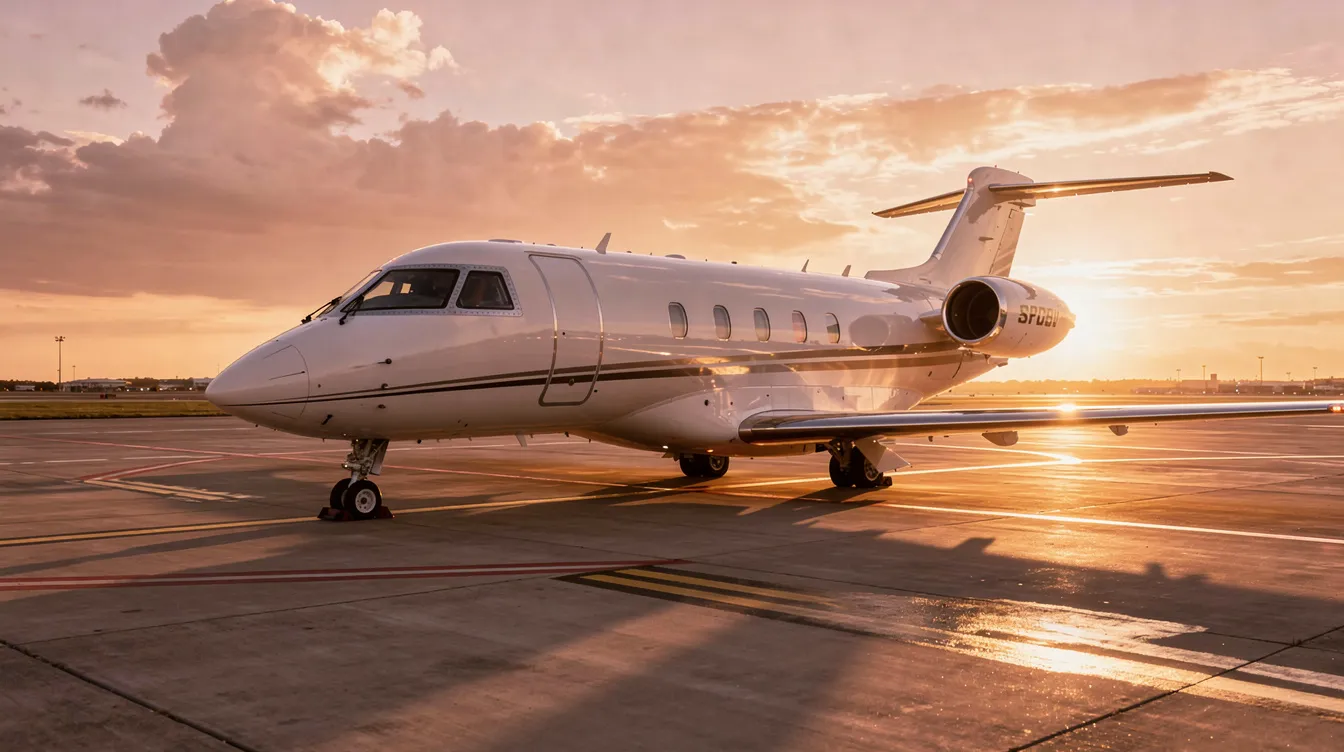
The aircraft you fly shapes everything—from the hours you reclaim to the condition you arrive in. While commercial aviation handles over 45,000 flights and 2.9 million passengers daily through congested hubs, private aviation offers an entirely different equation. The distinction isn’t merely about skipping TSA lines; it’s about matching the right aircraft to your exact mission.
This guide is designed for business travelers, frequent flyers, and anyone considering private jet travel who wants to understand the aircraft options available.
BlackJet Jet Card members don’t need to purchase or manage a single airframe. Instead, they access a vetted portfolio of top private jet makes across every cabin category, from efficient light jets for regional hops to flagship ultra long range aircraft for intercontinental journeys through premium private jet card programs. BlackJet’s portfolio features leading private jet makes recognized around the world for their innovation and reliability. This article answers the essential question—which private jet makes are best for your trips?—then explores each class, manufacturer, safety protocols, and sustainability practices in depth.
The strategic advantage is clear: faster city pairs, private terminals, bespoke schedules, and the precise aircraft type optimized for each leg. Whether you’re closing deals across three cities in one day or flying overnight to London, the right make transforms travel from logistics into leverage.
How Private Jet Makes Shape Your Flight Experience
In private aviation, “make” refers to the manufacturer and model combination—Gulfstream G650, Embraer Phenom 300E, Bombardier Challenger 350. Each brings distinct engineering, performance characteristics, and cabin philosophies to your journey.
Private jets range widely—from very light jets (VLJs) designed for short-range travel with 6–7 passengers and a maximum takeoff weight under 12,500 pounds, to ultra-long-range, luxurious heavy jets like the Gulfstream G650ER that accommodate up to 19 passengers with multiple cabin zones. Light jets typically seat 6–8 passengers and cover ranges around 1,953 nautical miles, while super midsize jets combine transatlantic capability with the speed and comfort of wide-body cabins, accommodating 10–11 passengers over roughly 3,420 nautical miles.
Key models known for performance and luxury include the Gulfstream G650ER and G800, Bombardier Global 7500 and 8000, Dassault Falcon 8X, and Embraer Phenom 300E. Embraer is recognized for modern, disruptive designs and high reliability, with the Phenom 300E frequently cited as the world’s best-selling light jet. Gulfstream is widely considered the gold standard for long-range luxury and performance. Falcon jets are praised for their fuel efficiency and their ability to land on shorter runways inaccessible to other large jets.
The parent company of Cessna and Beechcraft, Textron Aviation, leads the light and midsize jet segments with the Citation family, known for reliability and operational cost efficiency. The top private jet manufacturers include Gulfstream, Bombardier, Dassault Aviation, Embraer, and Textron Aviation.
Key factors that differentiate private jet models include:
Factor | Description |
|---|
Range | Nautical miles the aircraft can travel non-stop (from ~1,100 nm to 8,000+ nm) |
Speed | Maximum cruise speeds varying from 300 knots to 500+ knots |
Passenger capacity | Typically 4–19 passengers, depending on category |
Baggage volume | From compact holds to space for 20+ suitcases |
Runway performance | Access to short strips or only major airports |
Cabin technology | In-flight Wi-Fi, entertainment systems, and climate control sophistication |
Consider the contrast: a Gulfstream G650ER with 8,000+ nm maximum range enables New York–Tokyo non-stop, while an Embraer Phenom 300E (~1,970 nm) perfectly serves LA–Dallas or London–Ibiza segments. BlackJet’s jet cards let members select by mission—quick regional hops, coast-to-coast productivity flights, or overnight intercontinental sectors—without committing to a single aircraft type, drawing on a full spectrum of types of private jets matched to each itinerary.
Very Light & Light Jets: Efficient Private Jet Makes for Short-Haul Trips
For trips carrying two to five passengers under 2,000 nautical miles, very light jets and light jets deliver the ideal balance of speed, comfort, and economy. These aircraft excel at regional business missions and weekend leisure escapes where flight time rarely exceeds three hours, fitting neatly within the landscape of small private aircraft options for short-haul travel.
Embraer Phenom Family
The Embraer Phenom series dominates this segment. The Phenom 100 offers approximately 1,178 nm range—perfect for routes like Boston–Charlotte—while the Phenom 300E extends to roughly 1,970 nm, covering New York–Miami or London–Reykjavik with ease. The Phenom 300E earned recognition as the most-requested jet of 2025 in charter markets and remains the world’s best-selling light jet.
Cessna Citation Light Series
Textron Aviation’s Citation family provides extensive options: the Citation M2 for entry-level access, the CJ3+ and CJ4 for enhanced range and cabin space. These small jets typically seat four to eight passengers, depending on configuration. Textron leads the light and midsize jet segments, with Cessna dominating the "Light Jet" and "Midsize" categories through the reliable Citation series known for lower operational costs than ultra-long-range competitors.
HondaJet
Honda Aircraft Company introduced the HondaJet with its distinctive engines mounted over the wing—a design improving aerodynamic efficiency while reducing cabin noise. This high-performance aircraft optimizes fuel efficiency for operators prioritizing economy on regional missions.
Cabin experience at this level includes 4–8 seats, a compact galley, an enclosed lavatory, and Wi-Fi on most modern aircraft. BlackJet routes Jet Card members on these makes for time-sensitive trips where speed matters more than sprawling cabin space.
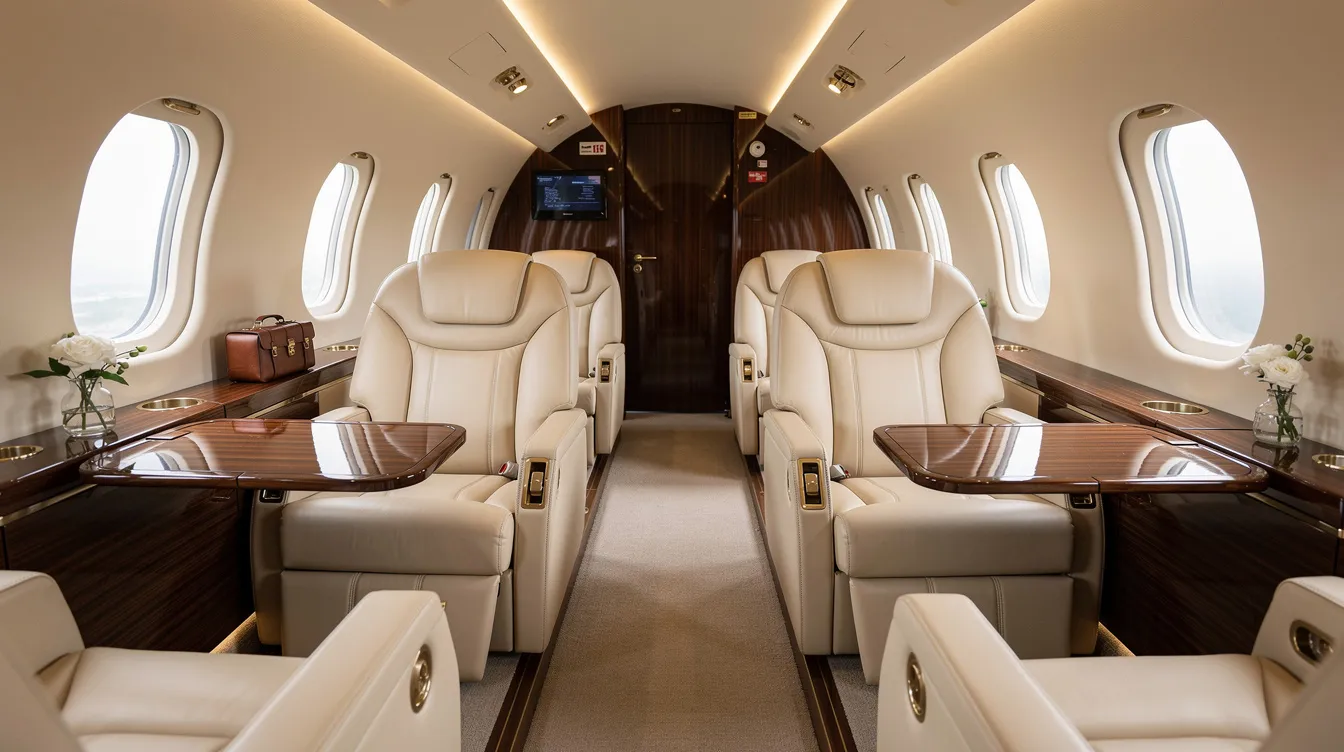
Midsize & Super-Midsize Jets: The Core Private Jet Makes for Business Travelers
Mid-size jets and super mid-size jets serve as the workhorses of business aviation. With stand-up cabins, 2,500–3,400+ nm range, and configurations designed for productivity, these aircraft handle coast-to-coast domestic flights and lighter transcontinental missions with ease.
Cessna Citation Latitude
The Citation Latitude from Textron Aviation delivers approximately 2,850 nm range with an 8-passenger layout and ample storage for 14 suitcases. The stand-up cabin transforms longer flights into productive work sessions, making it ideal for executive teams flying New York–Los Angeles or similar distances.
Bombardier Challenger 300/350
Bombardier’s Challenger series defines the super midsize segment. The Challenger 350 offers approximately 3,400 nm range with a wide cabin renowned for quiet operation during longer flights. Bombardier focuses entirely on business aviation, known for its "Nuage" seating and smooth ride technology. Fortune 500 flight departments consistently choose Challenger aircraft for the winning combination of range, comfort, and business-ready connectivity.
Embraer Praetor 500/600 and Gulfstream G280
Modern alternatives include the Embraer Praetor family with advanced avionics and the Gulfstream G280 with state-of-the-art flight systems. These aircraft serve transcontinental missions like Chicago–San José (Costa Rica) or London–Dubai with contemporary technology throughout
BlackJet frequently recommends these midsize jets for multi-stop roadshows, board meetings spanning multiple cities, and Jet Card members who need to work productively throughout the flight, as they represent a central tier within the broader spectrum of private jet sizes available to travelers.
Heavy & Ultra-Long-Range Jets: Flagship Private Jet Makes for Global Missions
For intercontinental travel carrying 10–19 passengers across distances up to 8,000+ nautical miles, heavy jets and long-range aircraft represent the pinnacle of private aviation. These flagship private aircraft support flights of 17 hours with lie-flat sleeping, full-service galleys, and multiple cabin zones.
Gulfstream Heavy Fleet
Gulfstream Aerospace has built its reputation on long-range capability since 1958. The G550 delivers approximately 6,750 nm—enabling New York–Tokyo non-stop. The G650 and G650ER reach 7,500–8,000+ nm, establishing the ultra-long range benchmark for the industry. The widest cabin in its class and cabin altitude management as low as 4,000 feet reduce fatigue during extended journeys. The G700 features the industry’s tallest, widest, and longest cabin with 20 panoramic windows, representing Gulfstream’s contemporary flagship.
Bombardier Global Series
Bombardier’s Global family includes the Global 5000 (~4,800 nm), Global Express XRS (~6,000 nm), and the flagship Global 7500 (~7,700 nm). The Global 7500 features a four-zone cabin with dedicated bedroom and conference areas—a large cabin jet designed for transoceanic flights without sacrificing comfort. The Global 8000 is the fastest purpose-built business jet, capable of reaching Mach 0.94. This business aircraft consistently ranks among popular private jets for international operations.
Dassault Falcon Line
Dassault Aviation brings French engineering heritage dating to 1929. The Falcon line spans from historic short-range models to the Falcon 7X and 8X, which offer tri-engine designs providing distinctive safety redundancy and steep-approach capability—valuable for London City Airport and similar constrained urban fields. Falcon jets are praised for their fuel efficiency and ability to land on shorter runways that other large jets cannot access. The upcoming Dassault Falcon 10X, set for first flight in the mid-2020s, is anticipated to have the largest cabin cross-section in business aviation, designed for full Sustainable Aviation Fuel (SAF) compatibility and a range of about 7,500 nm.
Modern heavy jets offer advanced soundproofing and high-speed Wi-Fi, enhancing comfort and productivity on long-haul flights, and they are often the best private jets for 15 passengers needing non-stop international capability.
BlackJet Jet Card members reserve these makes for transatlantic and intercontinental travel—LA–London, New York–Dubai—with overnight lie-flat comfort, full connectivity, and luxurious amenities throughout.
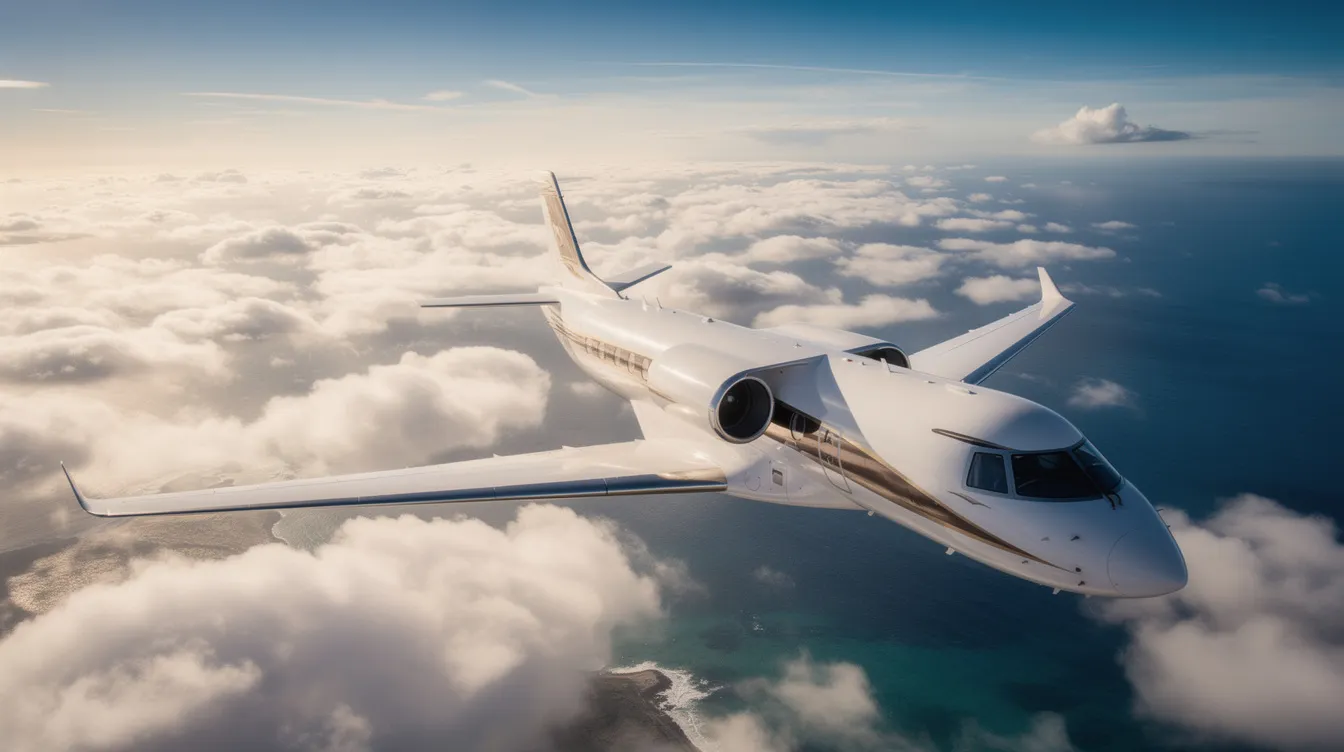
Turboprop & Entry-Level Private Jet Makes: Smart Choices for Short Runways
Not every premium trip requires jet propulsion. Turboprop aircraft access short runways and unprepared strips while maintaining executive comfort—opening destinations that conventional jets simply cannot reach.
Pilatus PC-12
The Pilatus PC-12 stands out among turboprop aircraft: approximately 1,800 nm range, up to nine passengers, and 30–60% lower operating costs compared to comparable jets. Strong short-field performance enables access to runways of 2,500 feet or less.
Beechcraft King Air
The King Air series from Textron’s Beechcraft division has served as the world’s best-known executive turboprop for over 50 years. The King Air 200 and 350 variants offer twin-turboprop reliability with executive cabins for six passengers to nine passengers across ~1,000–1,800 nm range.
Piaggio P.180 Avanti EVO
Italy’s Piaggio Aerospace produces the distinctive P.180 Avanti EVO with its pusher-prop design. This light aircraft delivers approximately 1,737 nm range with a top speed approaching jet-like performance while maintaining turboprop fuel efficiency and illustrating how affordable private jet options can still deliver strong performance for regional missions.
BlackJet may suggest these makes within a Jet Card trip plan for ski resorts with short runways, remote vineyards, island destinations, or last-mile connections after an intercontinental sector on a larger jet.
Iconic Business Jet Manufacturers and Their Signature Makes
Understanding the manufacturers behind the cabin helps contextualize your options. BlackJet’s network spans all top OEMs, ensuring members aren’t locked into a single brand’s strengths or limitations.
Manufacturer | Signature Models & Highlights |
|---|
Gulfstream Aerospace | Based in Savannah, Georgia, exclusive business jet focus since 1958; flagships include G550, G600, G650, G700; pioneers of ultra-long-range category; industry gold standard for luxury and performance. |
Bombardier | Canadian company commanding ~22.4% market share; Challenger series dominates super midsize; Global series leads intercontinental segment; known for smooth ride technology and Nuage seating. |
Dassault Falcon | French heritage since 1929; military tech roots; Falcon 7X/8X/10X tri-engine jets; steep approach capabilities; praised for fuel efficiency and short runway access. |
Embraer & Textron | Embraer leads the light jet segment with Phenom and Praetor; Textron Aviation (Cessna Citation, Beechcraft King Air) covers entry to super midsize; Textron commands 43.9% of active fleet; known for reliability and innovation. |
The industry traces its roots through pioneers like Aero Commander and others in general aviation, though today’s market concentrates among these primary manufacturers serving clients worldwide from South America to Asia, alongside a handful of top private jet companies that manage large, diversified fleets.
Choosing the Right Private Jet for Your Mission
The optimal private jet selection depends on mission profile—distance, passengers, luggage, runway requirements, and schedule—rather than brand prestige alone.
Scenario 1: Weekend Getaway (4 passengers, New York–Miami) A light jet like the Phenom 300E covers the ~1,092 nm efficiently, with cabin comfort appropriate for a 2.5-hour flight. Operating costs remain reasonable, and access to smaller Florida airports adds flexibility.
Scenario 2: Multi-City Roadshow (8 passengers, LA–Chicago–Houston) A super midsize jet such as the Challenger 350 provides the range for each segment, stand-up cabin space for working between meetings, and ample storage for presentation materials.
Scenario 3: Intercontinental Board Meeting (12 passengers, London–Dubai) A heavy jet like the Global 6000 or G650 handles the ~2,900 nm non-stop with separate zones for working, dining, and resting—ensuring executives arrive prepared.
Scenario 4: Mountain Resort Access (6 passengers, Denver–Aspen) A turboprop or very light jet handles the short runway at Aspen while a connecting heavy jet covers the intercontinental leg.
BlackJet advisors map client profiles to specific makes and cabin classes, optimizing comfort and hourly efficiency. The advantage of jet cards over aircraft ownership becomes clear: members can upsize or downsize per trip rather than being locked into single-pilot operation aircraft or larger jets regardless of mission requirements.
The financial breakeven point between whole aircraft ownership and fractional or jet card programs is generally accepted to be around 200 to 250 flight hours annually; below this threshold, fractional access or jet cards may be more economical, especially when you understand the broader private jet price list dynamics across categories and access models.
Safety & Certification: Beyond the Private Jet Brand Name
Aircraft make is only part of the safety equation. Operator standards, maintenance programs, and third-party audits determine actual safety outcomes for every flight.
BlackJet partners exclusively with operators meeting top-tier standards, including ARGUS Platinum, Wyvern Wingman, and IS-BAO certification. ARGUS safety certification is a recognized standard in the private aviation industry, indicating that an operator meets specific safety and operational standards. These independent audits evaluate pilot training, maintenance practices, operational procedures, and safety management systems—regardless of aircraft brand.
Popular private jets like Gulfstream, Bombardier, and Cessna are maintained under manufacturer-approved programs with comprehensive parts support networks, reinforcing why private jets are considered safe when operated under rigorous standards. Modern avionics suites include ADS-B surveillance, Enhanced Vision Systems, and envelope protection technology that prevents pilots from exceeding safe flight parameters, while higher cruising altitudes let private jets fly above commercial traffic for smoother, more efficient routes.
Newer models incorporate additional safety features: the Eclipse 550’s emergency autoland system, advanced avionics in Praetor and G500/G600 families, and redundant flight control systems across most current-production aircraft. Jet Card members benefit from centralized safety oversight while flying different private jet makes tailored to each trip’s requirements.
In the United States, business aircraft may be operated under either FAR 91 as private operations for the business purposes of the owner, or under FAR 135 of the Federal Aviation Regulations as commercial operations for the business purposes of a third party.
A 2010 study by the United States National Business Aviation Association found that small and midsize companies that use private jets produce a 219% higher earnings growth rate than those that strictly use airlines, highlighting the efficiency and safety benefits of private aviation.
Sustainability & the Environmental Footprint of Private Jet Models
Private jets contribute significantly to carbon emissions, with some frequent travelers generating thousands of tons of CO2 annually. Recognizing this impact, the European Commission has set ambitious targets for a 55% net reduction in greenhouse gas emissions by 2030, including specific measures for aviation.
Modern private jets such as the Bombardier Global 7500, Dassault Falcon 8X, and Embraer Praetor 600 incorporate aerodynamic improvements and high-bypass-ratio engines, delivering 15–20% better fuel efficiency than previous generations and forming the backbone of large private jets for 20 passengers and global itineraries. These aircraft are designed for compatibility with Sustainable Aviation Fuel (SAF), which is being developed to reduce aviation’s environmental impact. Some new models, including the upcoming Falcon 10X, are engineered for full SAF capability, supporting blends up to 100%.
BlackJet integrates carbon offset into every Jet Card hour at no additional member cost. Emissions are calculated based on actual flight distance, aircraft type, and fuel consumption, then offset through verified programs meeting Gold Standard or Verified Carbon Standard (VCS) methodologies. For example, a six-hour transcontinental flight on a Challenger 350 might generate approximately 15–20 metric tons of CO₂; BlackJet automatically balances this footprint by funding verified reduction projects such as reforestation and renewable energy.
This approach balances environmental responsibility with the realities that drive business aviation demand—time-critical travel, productivity in flight, and access to destinations commercial carriers cannot serve.
Technology & Onboard Experience Across Private Jet Models
Contemporary private aircraft function as flying offices and lounges, equipped with technology essential for high-net-worth and corporate travelers who expect connectivity throughout every journey.
Connectivity & Communication
Modern makes across all categories feature Ka-band high-speed Wi-Fi supporting secure VPN connections, video conferencing, and streaming. This capability transforms flight time into productive work hours or relaxation for family travel.
Cabin Management
Touchscreen and app-based cabin management systems control lighting, climate, window shades, and entertainment. Bombardier’s Nuage seating system in Challenger 350 and Global 7500 integrates ergonomic design with ambient controls, while Gulfstream’s G650 and G650ER offer approximately 8.5 feet of cabin width, enabling superior comfort during extended flights and scale up into private jets for 50 passengers when configured as VIP airliners.
Environmental Comfort
Ultra-long-range jets maintain cabin altitude as low as 4,000 feet even at 43,000-foot cruise altitude, significantly reducing passenger fatigue. Combined with humidity control, advanced filtration, and oversized windows providing natural light, these systems create an environment substantially superior to commercial first class.
BlackJet matches Jet Card members with aircraft meeting specific requirements—whether that’s secure connectivity for sensitive work, entertainment systems for family leisure, or lie-flat configurations for overnight rest.
Mobile Booking & Real-Time Support: Enhancing Private Jet Access
BlackJet’s mobile booking platform provides members with 24/7 access to digital tools, enabling convenient flight arrangements anytime, anywhere. Real-time support is a key feature, allowing travelers to receive immediate assistance and updates regarding their flights. This platform enhances the private jet travel experience by allowing users to compare different aircraft options and make informed decisions tailored to their specific needs.
Ownership, Charter, Fractional & Jet Card: Access Models and Their Impact on Private Jets
Different access models provide varying levels of control over aircraft selection, with significant implications for flexibility and economics.
Whole Ownership
Aircraft ownership ties operators to one primary make. Purchasing a Gulfstream G550 provides dedicated access to that specific aircraft but requires commitment regardless of mission requirements—using a 6,750 nm aircraft for a 500 nm hop wastes capability and increases per-trip costs. Ownership economics generally justify above 200–250 annual flight hours.
Fractional Ownership
Fractional ownership allows multiple parties to share the costs of owning a private jet, with each purchasing a share that entitles them to a certain number of flight hours per year. This model suits travelers needing consistent access without a full ownership burden, though understanding fractional jet ownership depreciation is essential to evaluating its long-term economics.
Charter Flights
An ad-hoc charter provides access to specific aircraft types through brokers without ownership commitment. Charter offers flexibility but introduces scheduling uncertainty, positioning fees, and premium pricing relative to committed programs.
Jet Cards
Jet card programs typically offer prepaid access to private jets in blocks of hours, allowing users to pay upfront for a set number of flight hours without the responsibilities of ownership. BlackJet’s membership model occupies the optimal middle ground. Members purchase allotments of flight hours at predetermined rates, gaining guaranteed access to specific fleet categories with full flexibility. A member might use a Phenom 300E for one trip, a Challenger 350 the next, and a Global 6000 for an intercontinental journey—all within a single membership relationship, enjoying many of the best jet card benefits for frequent flyers without long-term ownership commitments.
Per-hour costs vary by category: light jets in the $4,000–6,000 range, super midsize jets at $7,000–10,000, and heavy jets at $10,000–15,000+. Jet cards include fuel, crew, maintenance, and insurance in quoted rates, simplifying budgeting compared to ownership’s variable expenses; a detailed guide to jet card cost can help quantify these advantages across providers.
FAQs About Private Jet Models & BlackJet Access
Which private jet models are most popular in 2025–2026 for charter and Jet Cards?
The Embraer Phenom 300E leads the light jet category as the most-requested aircraft of 2025. Super midsize jets, including the Bombardier Challenger 350 and Cessna Citation Latitude, dominate business travel segments. For ultra-long-range missions, the Gulfstream G650ER, Bombardier Global 7500, and Dassault Falcon 8X represent the premium tier. These make balance proven reliability with modern cabin technology, and many travelers evaluate them within the framework of a 50-hour jet card cost to benchmark annual private flying budgets.
Can I request a specific make and model with my BlackJet Jet Card?
Yes. BlackJet advisors work with members to match specific aircraft to trip requirements. While exact tail numbers depend on fleet availability, members can specify category (light, midsize, heavy) and preferred makes. For consistent requirements, BlackJet prioritizes familiar configurations across your travel patterns.
What are the safest private jet models currently in service?
Safety depends more on operator standards than the manufacturer alone. That said, current-production aircraft from Gulfstream, Bombardier, Dassault, and Embraer incorporate advanced safety systems including envelope protection, enhanced vision, and redundant flight controls. BlackJet partners only with operators meeting ARGUS, Wyvern, or equivalent certification—ensuring every flight meets rigorous standards regardless of make.
How do different private jet models affect charter pricing per hour?
Hourly rates correlate with aircraft category: very light jets and light jets operate in the $4,000–6,000 range, midsize jets and super midsize jets at $6,000–10,000, and heavy jets at $10,000–15,000+. Larger aircraft consume more fuel and require additional crew costs. BlackJet’s Jet Card rates are transparent and all-inclusive.
Are older models like Hawker or Learjet still good options?
Legacy makes remain serviceable when properly maintained, though parts availability and avionics modernization present considerations. BlackJet’s fleet partners operate current-generation aircraft with robust manufacturer support, ensuring consistent service levels.
Which private jet models are best for families vs executive teams?
Families often prioritize cabin space and entertainment systems—makes like the Challenger 350 or Citation Latitude offer stand-up cabins and streaming capability. Executive teams typically need connectivity and work surfaces; super midsize and heavy jets with conference seating and secure Wi-Fi serve these requirements.
How does BlackJet ensure every aircraft—regardless of make—is carbon neutral?
BlackJet integrates carbon offset into every Jet Card hour at no additional member cost. Emissions are calculated based on aircraft type, distance, and fuel consumption, then offset through verified programs meeting Gold Standard or VCS methodologies. Every flight, on any make, is carbon neutral.
Conclusion: Elevate Every Trip with the Right Private Jet Make and the Right Partner
The optimal private jet makes depends on your mission—range requirements, passenger count, runway access, and technology needs—not marketing prestige alone. A Phenom 300E perfectly serves regional trips while a Global 7500 transforms intercontinental journeys. The key is matching aircraft capability to actual requirements.
BlackJet curates leading makes across all cabin classes, integrates safety certification and sustainability, and manages complexity so members focus on the journey rather than logistics. With upcoming models like the Falcon 10X, Global 8000, and Gulfstream G700 entering service, BlackJet will continue integrating next-generation aircraft into its access model and refining jet card pricing structures through solutions such as the BlackJet 25+ Hour Jet Card, while travelers comparing ownership and access models should also weigh the tax benefits of fractional jet ownership where appropriate.
Explore BlackJet Jet Card membership to discover how the right aircraft transforms your travel—or speak with a BlackJet advisor about tailoring aircraft makes to your specific travel profile.


 Sign up with google
 Sign up with Apple