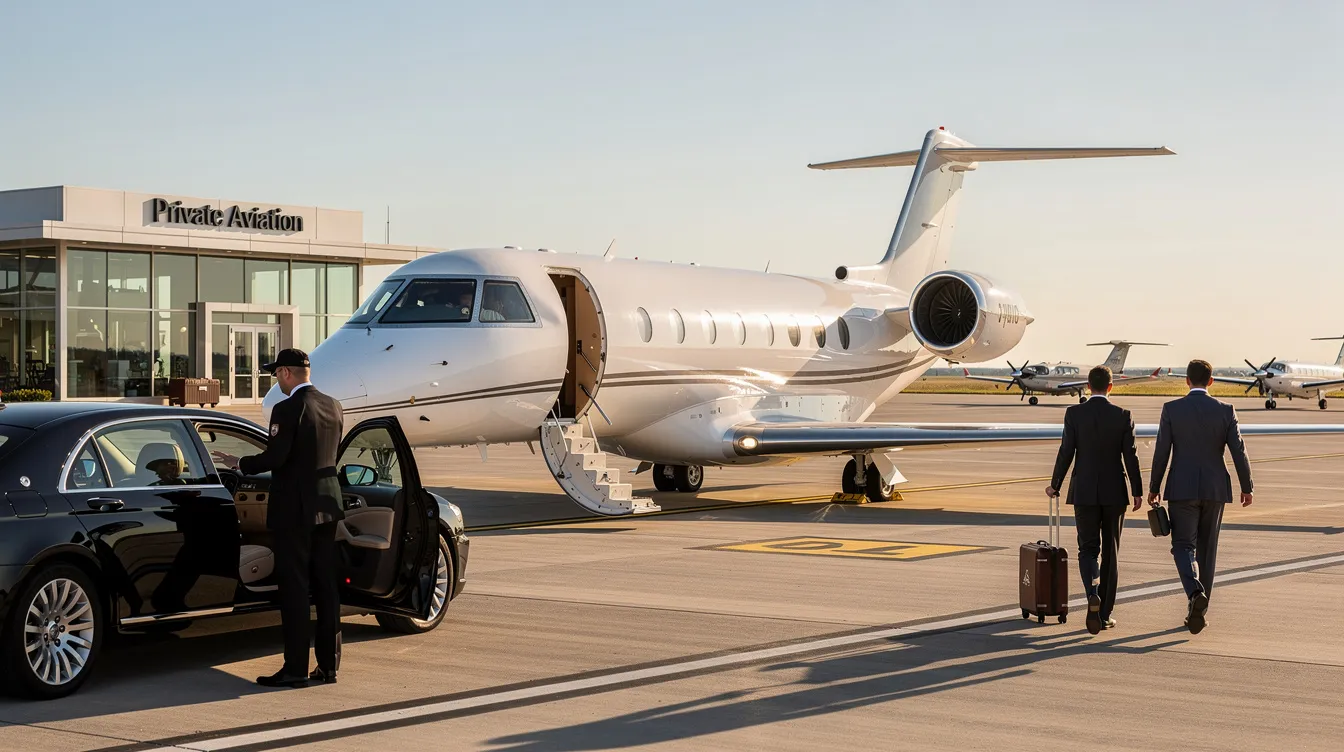
For executives and discerning travelers, time remains the most finite resource. Private jets for hire convert what would otherwise be wasted hours into productive work sessions, confidential conversations, or genuine rest. While commercial aviation funnels millions through congested terminals and rigid schedules, hiring a private plane offers unmatched convenience, comfort, and flexibility—providing an alternative built around your priorities rather than an airline’s operational constraints.
This guide is designed for executives, frequent travelers, and anyone considering private jet hire for business or leisure. Understanding your options can save time, money, and ensure a seamless travel experience.
This guide explores how private jet charter, Jet Card programs, and on-demand booking work in practice—covering business and leisure applications, aircraft options, costs, safety frameworks, and sustainability initiatives. Whether you fly regionally a dozen times per year or cross oceans monthly, understanding these options helps you make informed decisions about when and how private travel makes strategic sense.
Why Hire a Private Jet Instead of Flying Commercial?
The case for flying private often begins with a simple calculation: door-to-door time. Consider a New York to Los Angeles journey. Commercial first class typically demands arrival at JFK or Newark two to three hours before departure, followed by TSA queues, boarding procedures, a five-and-a-half-hour flight, and ground transportation from LAX to your final destination. Total elapsed time: ten to twelve hours.
On a private flight from Teterboro to Van Nuys, you arrive at the fixed base operator terminal fifteen to twenty minutes before departure. There are no long security lines, no boarding groups, and no waiting for connecting passengers. Direct routing and smaller airport proximity mean total door-to-door time shrinks to five or six hours. For executives who fly this route regularly, that time savings compounds into weeks recovered annually.
The strategic advantages extend beyond efficiency. The entire cabin of a private jet is private, making it ideal for sensitive discussions or a workspace. Secure high-speed Wi-Fi enables real-time collaboration with teams worldwide. Multi-city itineraries that would require overnight stays commercially—such as London to Zurich to Milan—become single-day executions on a super midsize jet configuration.
Private jets can access thousands more airports than commercial airlines, enabling closer proximity to final destinations and further reducing ground travel time.
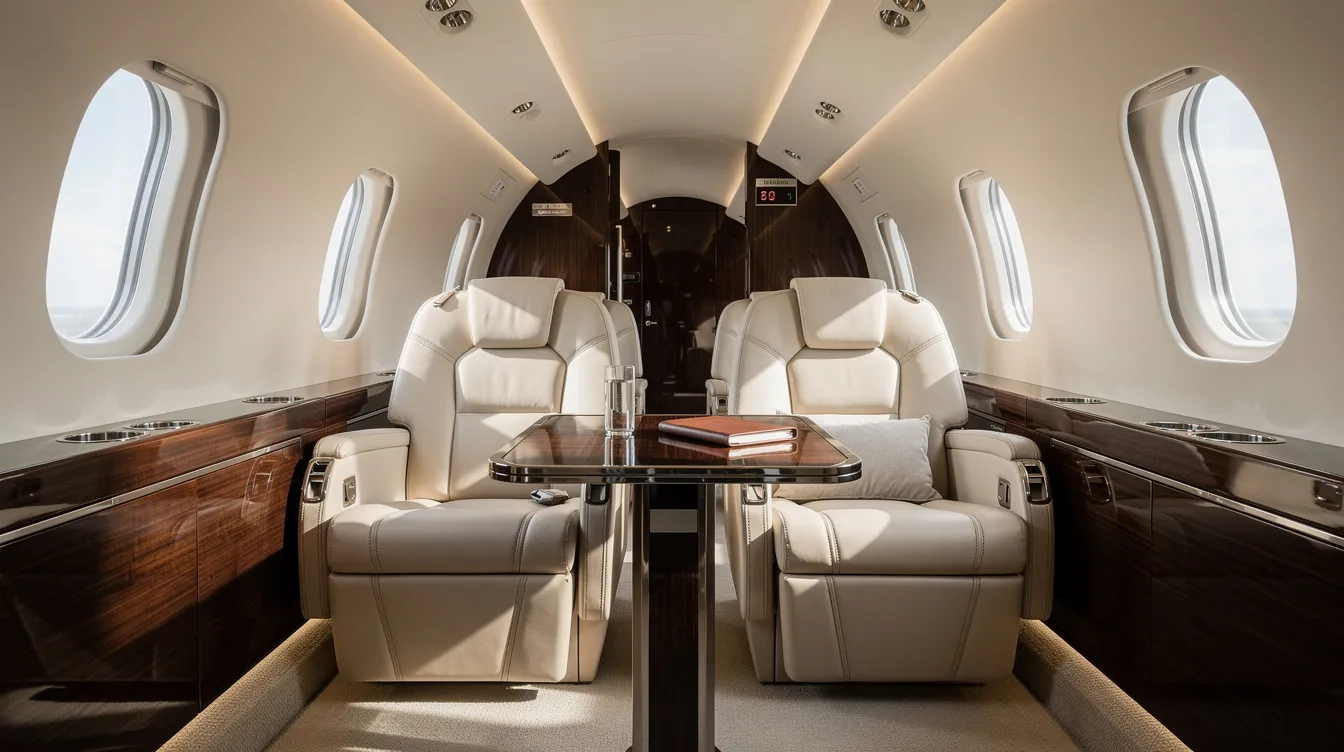
Real-world scenarios illustrate the value proposition:
A CEO departs New York’s Teterboro at 7:30 AM, attends a Chicago board meeting, and returns home by 8:00 PM—impossible via commercial flights without losing the entire day.
A family flies from London to Nice with skis, golf clubs, and two dogs, avoiding the 50-pound baggage limits and pet cargo holds of commercial airlines, reducing stress related to luggage handling.
An investor relations team visits Frankfurt, Amsterdam, and London in a single day, maintaining team cohesion and eliminating the coordination challenges of commercial bookings.
BlackJet operates as a premium private aviation company focused on Jet Card programs and on-demand charter. With 24/7 support, rigorous safety certification, and carbon-neutral flights standard on every journey, BlackJet positions private jet hire as a strategic tool rather than a mere luxury indulgence. The emphasis on transparent pricing, digital booking efficiency, and multi-cabin flexibility reflects what modern frequent flyers actually require.
Private aviation serves approximately the top fraction of earners globally, but for those within that segment, the question shifts from “can I afford it?” to “can I afford not to?” When missed meetings cost deals, when exhaustion compromises decision-making, and when schedule flexibility determines competitive advantage, private jets for hire become less about prestige and more about pragmatic resource allocation.
How Private Jets for Hire Work
The private aviation market presents several distinct access models, each tailored to different travel habits and preferences. Understanding these mechanics helps you select the approach that matches your requirements.
What “Private Jets for Hire” Actually Covers:
On-demand charter: Individual flights booked as needed, with dynamic pricing influenced by current market demand, based on route, aircraft type, date, and operator availability. An on-demand charter is ideal for infrequent travelers flying under 25 hours a year. This model is best for those who need flexibility and do not want to commit to prepaid hours or ownership.
Jet Card programs: Jet cards provide prepaid access to private jets, allowing travelers to book flights without the long-term commitment of ownership. Pre-purchased blocks of flight hours (typically 25 or 50 hours) across various cabin classes, providing fixed hourly rates, guaranteed aircraft availability, 24/7 digital booking tools, real-time support, and safety certifications for the aircraft used. The flexibility of jet cards appeals to frequent travelers who prefer the convenience of prepaid jet time without the responsibilities of ownership.
By-the-seat shuttles: Less common shared flights on specific high-demand routes, though limited in scope.
Empty leg flights: Repositioning flights are offered at significant discounts, sometimes up to 75% off, providing cost-effective options for flexible travelers, as part of broader ways to buy a seat on a private jet.
Fractional ownership: Fractional ownership provides guaranteed access to an aircraft but requires high upfront capital and is suitable for those flying over 200 hours yearly. This model is ideal for travelers who need consistent access to a specific aircraft type and are prepared for the responsibilities and costs associated with partial ownership.
Clarifying the Relationships and When Each Model is Most Appropriate:
Hiring a private jet involves choosing between on-demand charters, jet cards, or membership programs based on travel frequency and budget. On-demand charter is best for infrequent travelers (under 25 hours per year) who value flexibility and pay-as-you-go convenience. Jet Card programs are designed for frequent travelers (typically 50-200 hours per year) who want predictable pricing, guaranteed availability, and the ability to book flights without the long-term commitment or administrative burden of ownership. Fractional ownership is most appropriate for those flying over 200 hours annually, offering guaranteed access but requiring significant upfront investment and ongoing management.
The Typical Journey Process:
Request: Submit trip details via app, web platform, or phone—departure city, destination, dates, passenger count, and any special requirements (pets, oversized luggage, catering preferences).
Aircraft matching: BlackJet aviation specialists identify appropriate aircraft options based on mission parameters, operator availability, and stringent safety standards, ensuring operators hold certifications from recognized organizations like ARGUS, Wyvern, or IS-BAO.
Quote and confirmation: Receive pricing options with all potential fees included—such as fuel surcharges and landing fees—to ensure transparency. Select your preferred aircraft and confirm booking with payment.
Pre-flight coordination: Receive FBO details, ground transportation arrangements, and any customs or immigration guidance for international travel.
Departure: Arrive at the private terminal fifteen to thirty minutes before departure, complete brief security procedures, and board directly from your vehicle in many cases.
Parties Involved:
BlackJet serves as your aviation partner, coordinating between you and certified Part 135 (US) or equivalent (EASA in Europe) operators who own and operate the aircraft. BlackJet vets all operators for safety standards, pilot qualifications, and aircraft condition—providing access to thousands of private aircraft globally without requiring you to evaluate each operator independently.
Global Route Examples:
London to New York (transatlantic on large cabin or ultra long-range jets)
New York to Miami (light jets or midsize jet configurations)
Dubai to Malé (super-midsize for island resort access)
Paris to Ibiza (light jet for summer weekend escapes)
The experience at private terminals differs fundamentally from commercial airports. FBOs offer calm lounges, direct aircraft boarding from your car, expedited security, and personalized service. Customization extends to catering, ground transfers, and in-flight preferences stored in your traveler profile.
Mobile booking platforms often include features like instant pricing, availability tracking, and the ability to book flights within minutes, making private aviation more accessible to a broader audience and helping travelers evaluate when chartering a private jet is truly worth it.
Business Jet Hire: For Executives, Teams & Roadshows
Private jet travel transforms business aviation from a scheduling constraint into a productivity multiplier. When deals require presence in multiple cities, when confidentiality matters, and when commercial delays cannot be tolerated, private charter becomes a business tool rather than a perk.
Common Business Use Cases:
Multi-city roadshows: A three-city investor tour—Frankfurt to Amsterdam to London—totals approximately four hours of flight time on a Challenger 350 or similar super-midsize aircraft. The team remains together throughout, working in conference seating with Starlink connectivity delivering 100-350 Mbps for secure VPN access.
Board meetings: Same-day roundtrips between New York and Chicago allow executives to attend morning meetings and return home for dinner, saving eight to ten hours compared to commercial alternatives.
Site inspections: Manufacturing, construction, or facility visits often require access to executive airport locations near facilities rather than major hubs—private aircraft access runways unavailable to commercial airlines.
Emergency travel: Crisis situations demand immediate mobility. Private charter enables last-minute flights to headquarters or critical locations without waiting for next-day commercial availability.
Event shuttles: Corporate retreats, conferences, and team-building activities benefit from coordinated group transport that maintains team cohesion.
Advantages Over Commercial First Class:
Factor | Private Jet | Commercial First Class |
|---|
Departure time | Your schedule | Airline schedule |
Airport access | 5,000+ airports, including secondary locations | Major hubs only |
Same-day changes | Standard flexibility | Complex rebooking, fees |
Team coordination | The entire group travels together | Individual bookings, potential separation |
Confidentiality | Private cabin, secure communications | Shared cabin, limited privacy |
Productivity | Conference seating, full connectivity | Limited workspace |
BlackJet Jet Cards for Business Travel:
For executives flying fifty to two hundred hours annually, Jet Cards provide predictability that on-demand charter cannot match. Pre-purchased hours at fixed hourly rates eliminate market rate fluctuations during peak business periods. Guaranteed availability ensures aircraft access when needed most. Centralized invoicing simplifies expense management for finance teams tracking multiple travelers.
The flexibility to switch cabin classes per trip—light jets for short hops, heavy jet configurations for transcontinental flights—maximizes value across varying mission requirements, especially for frequent flyers comparing the best jet cards.
Leisure Private Jet Hire: Families, Holidays & Events
Leisure travel on private aircraft removes the stress that commercial flying introduces to holidays, celebrations, and family retreats. When traveling, it should feel like the vacation has already begun. Private flying delivers an experience fundamentally different from crowded terminals and rigid schedules.

Popular Leisure Routes:
London to Malaga: Summer escapes to the Costa del Sol, departing on your schedule, with children and grandparents accommodated together.
New York to Aspen: Ski season access with equipment transported in aircraft holds without damage concerns or airline restrictions.
Los Angeles to Cabo San Lucas: Weekend getaways that maximize time at the destination rather than in transit.
Dubai to Mykonos: Destination weddings, anniversary celebrations, and milestone events with family and friends.
Convenience Factors That Matter:
Flexible departures: Adjust timing around children’s nap schedules, morning activities, or evening events without rebooking penalties.
No baggage limits: Aircraft hold capacity determines what you bring—skis, golf clubs, diving equipment, oversized gifts—rather than 50-pound commercial restrictions.
Pet travel: Dogs and cats travel in the cabin with you, subject to vaccination records, health certificates, and microchipping requirements for US, UK, and EU entry.
The Private Terminal Experience:
The contrast with commercial holiday airports is stark. Rather than queuing among thousands of stressed travelers during peak seasons, you arrive at an FBO fifteen to twenty minutes before departure. Calm lounges, direct aircraft boarding from your vehicle, and minimal security procedures create an environment where relaxation begins before takeoff.
BlackJet Jet Cards for Repeat Leisure Travelers:
Peak travel seasons—Christmas, Easter, August holidays, and major events like Art Basel or Monaco Grand Prix—see charter prices surge fifty percent or more above normal rates, which is where structured programs like the BlackJet 25+ Hour Jet Card help lock in value. Jet Card holders lock in fixed hourly rates regardless of market conditions, providing access and predictable pricing when aircraft availability tightens significantly.
In-Flight Personalization:
Private charter enables customization impossible on commercial flights:
Favorite champagne brands stocked in advance
Children’s menus prepared by FBO caterers
Curated playlists on cabin entertainment systems
Surprise birthday decorations awaiting arrival
These details transform transport into experience.
Jet Cards vs On-Demand Charter vs Ownership
Three primary models provide access to private aircraft, each suited to different travel frequencies, patterns, and preferences. Understanding the distinctions helps identify which approach aligns with your requirements.
Jet Cards (BlackJet’s Primary Offering):
Jet Cards involve pre-purchasing blocks of flight time—typically 25 or 50 hours—across multiple cabin classes, and understanding Jet Card pricing structures helps align these blocks with your budget. BlackJet’s program features:
Feature | Jet Card Program Details |
|---|
Hourly rates | Fixed by cabin category (light, midsize, super-midsize, large) |
Aircraft availability | Guaranteed, even during peak demand periods |
Repositioning fees | None on standard bookings |
Cabin flexibility | Multi-cabin, switch aircraft size per trip |
Carbon-neutral flights | Included at no additional cost |
Billing | Centralized, with stored traveler preferences |
Booking tools | 24/7 digital booking and real-time support |
Ideal for: Travelers flying 50-200 hours annually with regular patterns requiring predictable access and pricing.
On-Demand Charter:
Traditional charters involve booking individual flights as needed, with pricing varying dynamically based on:
Factor | On-Demand Charter Details |
|---|
Route distance | Pricing varies by distance and complexity |
Aircraft type | Pricing varies by type and availability |
Date | Peak seasons command premiums |
Repositioning | Fees apply when the aircraft must relocate for your flight |
Ideal for: Occasional flyers with irregular patterns, or highly variable routes where specific trip requirements change significantly.
Aircraft Ownership and Fractional Ownership:
Full ownership requires substantial capital—$5 million for entry-level light jets to $110 million for flagship ultra-long-range aircraft—plus $1-2 million annually in fixed costs, including, as outlined in a broader private jet price list overview:
Cost Component | Ownership Details |
|---|
Upfront capital | $5M-$110M+ |
Annual fixed costs | $1-2M |
Crew salaries | Included in annual costs |
Hangar fees | Included in annual costs |
Maintenance | Included in annual costs |
Insurance | Included in annual costs |
Management fees | Included in annual costs |
Fractional ownership reduces capital requirements by purchasing a share (typically 1/16 to 1/4) of an aircraft, but still involves high fixed costs and long-term commitments. Fractional ownership provides guaranteed access to an aircraft but requires high upfront capital and is suitable for those flying over 200 hours yearly.
Ideal for: Those flying 200+ hours annually who require specific aircraft availability and are prepared to manage ownership responsibilities.
Comparison Summary:
Factor | Jet Card | On-Demand Charter | Ownership |
|---|
Upfront cost | Hours purchased | None | $5M-$110M+ |
Annual fixed costs | None | None | $1-2M |
Pricing predictability | Fixed rates | Market-dependent | Variable operating costs |
Availability guarantee | Yes | Subject to market | Your aircraft |
Flexibility | High | Highest | Limited to owned aircraft |
Administrative burden | Minimal | Per-booking | Significant |
Why BlackJet Jet Cards Over Alternatives:
BlackJet’s approach combines Jet Card predictability with providing access to a curated global network of certified operators. Transparent pricing eliminates hidden fees common with some competitors. Carbon-neutral flights reflect modern sustainability expectations. Digital booking backed by 24/7 human support delivers efficiency without sacrificing personalized service. For travelers seeking 80-90% of ownership benefits without ownership burdens, Jet Cards represent the practical middle ground.
Choosing the Right Aircraft When You Hire a Private Jet
Selecting the right aircraft balances mission requirements, passenger comfort, budget, and route characteristics. Aircraft types span from regional turboprops to intercontinental flagships, and understanding private jet sizes and categories clarifies how each is optimized for specific use cases.
Aircraft Categories Overview:
Category | Example Aircraft | Seats | Typical Range | Hourly Rate Range |
|---|
Turboprop | Pilatus PC-12 | 4-8 | 300-800 nm | $2,000-$3,000 |
Light Jet | Citation CJ3+ | 6-7 | ~1,500 nm | $3,000-$5,000 |
Midsize | Hawker 800XP | ~8 | ~2,000 nm | $5,000-$7,000 |
Super-Midsize | Challenger 350, Praetor 500 | 9-10 | ~3,000 nm | $7,000-$9,000 |
Large/Ultra-Long-Range | Gulfstream G600, Global 6500 | 12-19 | 6,000+ nm | $10,000-$14,000 |
Route-Specific Recommendations:
Route | Recommended Aircraft Type | Flight Time / Notes |
|---|
New York to Boston | Light jet or turboprop | 45 minutes, access to smaller airports like Bedford |
New York to Miami | Light jets or midsize jets | 2.5 hours, comfortable for 6-8 passengers |
London to Marrakesh | Midsize | ~3 hours, stand-up cabin comfort |
New York to Los Angeles | Super midsize jets | 5.5 hours nonstop, conference seating, lie-flat |
New York to London | Large cabin or ultra-long-range | Transatlantic range, full sleeping accommodations |
Dubai to Malé | Super-midsize or large cabin | Island runway access with appropriate range |
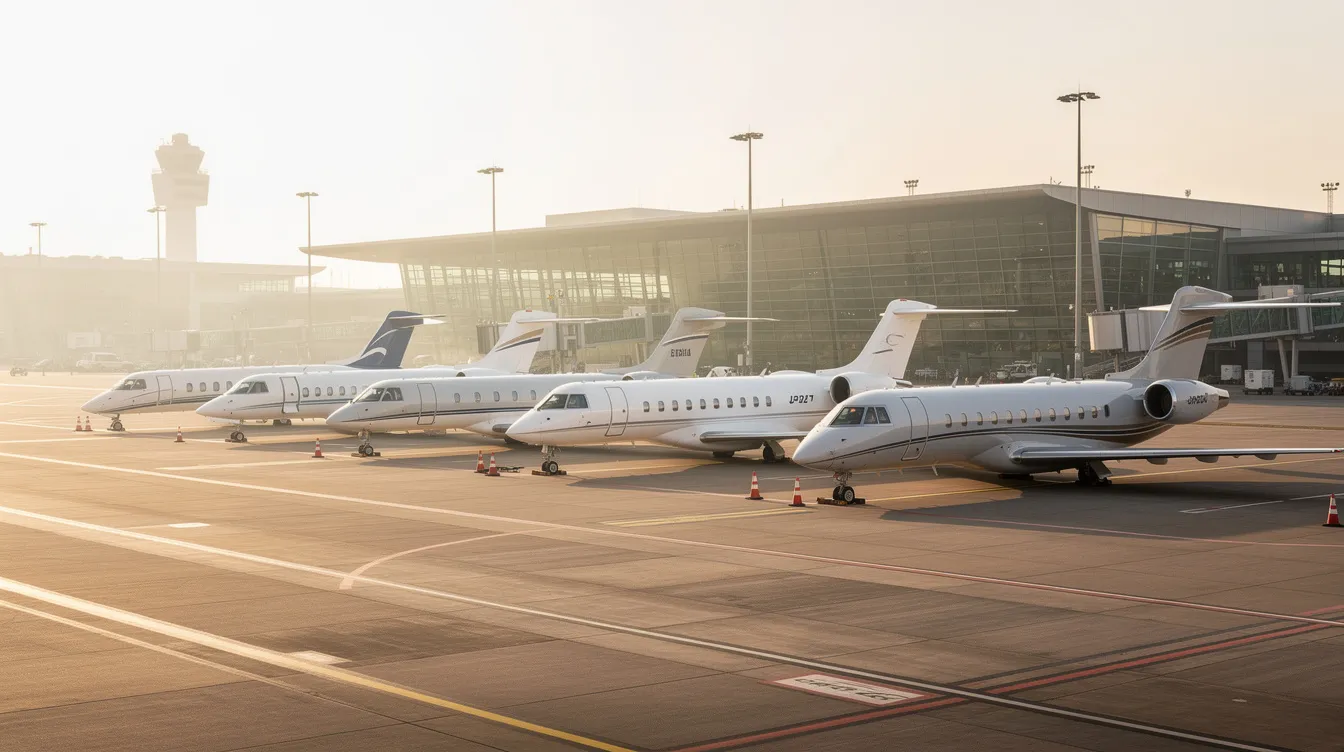
Factors Beyond Distance:
Factor | Considerations |
|---|
Passenger capacity | Ten golfers with clubs require a midsize or larger aircraft for space |
Luggage requirements | Skis, golf bags, and diving equipment need to hold volume—verify before booking |
Runway requirements | Turboprops access 5,000-foot strips; heavy jets need 8,000+ feet |
Cabin height | Stand-up height begins in midsize class (~6 feet); more in super-midsize+ |
Cabin comfort | Lie-flat beds, enclosed lavatories, and separate crew areas in large cabins |
BlackJet Aircraft Matching:
BlackJet aviation specialists recommend aircraft options for each specific trip, balancing passenger needs, budget considerations, and performance requirements. All recommendations prioritize safety and operator standards. Jet Card members can switch cabin classes per trip—using light jets for quick regional flights and large jets for longer distances requiring greater cabin comfort—maximizing value across varying missions.
Understanding Private Jet Hire Costs
Private jet hire costs vary significantly based on aircraft category, route, date, and market conditions. Understanding pricing structures helps you budget effectively and identify when Jet Cards provide cost efficiency advantages over charter flights.
Hourly Rate Ranges by Aircraft Category:
Aircraft Category | Hourly Rate Range |
|---|
Turboprops | $2,000-$3,000 |
Light jets | $3,000-$5,000 |
Midsize jets | $5,000-$7,000 |
Super-midsize jets | $7,000-$9,000 |
Large cabin/ultra-long | $10,000-$14,000 |
VIP airliners | $14,000+ |
Consistent with broader guides on how much it costs to rent a private jet.
Example Route Pricing (Indicative):
Route | Aircraft Class | Approx. Flight Hours | Estimated Cost |
|---|
New York-Boston round trip | Light jet | 3 hours billable | $15,000-$20,000 |
New York-Miami one-way | Midsize | 2.5 hours | $12,500-$17,500 |
New York-Los Angeles one-way | Super-midsize | 5.5 hours | $50,000-$70,000 |
London-Nice one-way | Light jet | 2 hours | $6,000-$10,000 |
Note: These figures are indicative and vary with date, aircraft availability, and specific aircraft selected.
What’s Typically Included in Hourly Rates:
Included in Hourly Rate | Details |
|---|
Aircraft and crew | Yes |
Standard fuel | Yes |
Basic catering | Yes |
Insurance | Yes |
Standard handling/fees | Yes |
Potential Additional Costs:
Additional Cost | Typical Range / Notes |
|---|
De-icing | $1,000-$5,000 depending on aircraft size and conditions |
Repositioning/ferry fees | $3,000-$10,000 if the aircraft must relocate for your flight |
Peak event surcharges | 20-50% during events like Monaco GP, Art Basel, and major holidays |
International handling | Varies |
Enhanced catering | Varies |
Extended ground time | Varies |
Customers should ensure quotes for private jet services include all potential fees, such as fuel surcharges and landing fees, to avoid surprises.
How Jet Cards Simplify Pricing:
BlackJet’s Jet Card programs compress complexity into a single, all-in hourly rate by cabin category, and travelers can benchmark these against market norms using a 50-hour Jet Card cost comparison. Members avoid:
Market rate fluctuations during peak demand.
Repositioning fee surprises.
Variable fuel surcharges.
Complex quote negotiations for each trip.
For frequent flyers booking ten to fifteen trips annually, Jet Cards typically save $50,000 or more compared to on-demand charter at market rates, and a detailed 100-hour Jet Card cost guide illustrates how these savings scale with usage. The predictability enables accurate travel budgeting without per-trip negotiations.
Getting Accurate Quotes:
BlackJet’s digital platform and aviation specialists provide real-time, all-inclusive estimates tailored to exact dates, routes, and passenger counts. Flight details, including aircraft options, estimated times, and transparent pricing, appear within minutes of inquiry—eliminating the opaque quote processes that characterize some traditional brokers.
Many private aviation platforms offer instant pricing and booking options, enabling travelers to secure flights quickly and efficiently, which is a key aspect of real-time support.
Private Aviation Safety & Certification
Safety represents BlackJet’s non-negotiable foundation, preceding convenience, luxury travel amenities, or cost considerations. The private aviation industry operates under rigorous regulatory frameworks, and BlackJet applies additional vetting standards to ensure every flight meets the highest safety thresholds.
Regulatory Frameworks:
FAA Part 135 (United States): Certification for commercial air charter operators, requiring two-pilot operations, minimum 1,200 pilot flight hours, recurrent simulator training every six months, and maintenance at specified intervals.
EASA (Europe): Equivalent regulatory standards for European operations.
National regulators: Country-specific requirements for international operations.
Third-Party Audit Standards:
BlackJet requires partner operators to maintain industry-leading safety certifications where applicable:
ARGUS Platinum: Top 1% of operators meeting the most stringent safety criteria.
WYVERN Wingman: Comprehensive safety audits including risk assessments, SMS (Safety Management Systems) verification, and operational reviews.
Operator Vetting Criteria:
BlackJet’s operator screening examines:
Pilot minimum flight hours and recurrent training records.
Simulator check completion and currency.
Maintenance history and compliance.
Aircraft age and condition (older aircraft excluded unless comprehensively refurbished).
Insurance coverage adequacy.
Operational history and incident records.
Accident Causes and Safety Insights:
The majority of private aviation accidents stem from pilot error, mechanical failure, and adverse weather, with landing accidents being the most common. Digital platforms enhance safety by connecting travelers with vetted operators that adhere to stricter regulatory standards, thereby reducing risks associated with private flying.
Pre-Flight Risk Assessment:
Every BlackJet mission receives an individualized risk evaluation covering:
Route analysis and alternates.
Weather conditions and forecasts.
Crew rest and duty time limitations.
Runway performance calculations.
Any special considerations (high-altitude airports, challenging approaches).
Safety Protocols in Practice:
When conditions are marginal, safety protocols dictate conservative decisions: selecting longer runway alternatives, delaying departure for weather improvement, or rescheduling rather than accepting elevated risk. These decisions reflect BlackJet’s operational philosophy that no flight is worth compromising safety standards.
BlackJet’s operations team monitors flights in real time, maintaining 24/7 availability to manage any changes proactively. Passengers receive immediate communication regarding weather impacts, routing adjustments, or schedule modifications—with safety remaining the decisive factor.
Industry data indicates private aviation’s fatality rate of 0.04 per 100,000 flight hours compares favorably with commercial aviation, bolstered by modern jets featuring advanced avionics, rigorous pilot training, and comprehensive maintenance programs, supporting broader findings that private jets are a very safe way to fly.
Sustainable & Carbon-Neutral Private Jet Hire
Environmental responsibility and private aviation have historically seemed incompatible. Aviation contributes approximately 2-3% of global CO2 emissions, with private aircraft representing a fraction of that total. BlackJet addresses sustainability directly through structured programs that make every flight carbon-neutral.

Carbon-Neutral Flights Standard:
All BlackJet flights are made carbon-neutral through verified offset programs at no extra cost to members. Here’s how it works:
Each flight’s carbon footprint is calculated based on aircraft type, distance, and fuel consumption.
BlackJet purchases verified carbon offsets equivalent to (or exceeding) those emissions.
Offset credits fund projects that reduce or capture emissions—reforestation, methane capture, and renewable energy development.
Offset verification through recognized frameworks (Gold Standard, VCS) ensures environmental integrity.
Carbon offset programs are becoming a standard practice in the aviation sector, allowing travelers to compensate for their flight emissions by investing in environmental projects that reduce greenhouse gases.
For example, a New York to Los Angeles flight produces approximately 5-7 tons of CO2. Offset costs at $10-20 per ton fund equivalent emissions reductions through certified projects, which becomes particularly relevant when selecting the best private jet for 20 passengers, where group size amplifies total emissions.
Sustainable Aviation Fuel (SAF):
SAF represents the industry’s pathway to significantly lower lifecycle emissions—70-90% reduction compared to conventional jet fuel. While SAF currently comprises only about 0.1% of global jet fuel supply, availability is expanding:
Select BlackJet partner operators offer SAF uplift on routes in North America and Europe.
Industry projections estimate 5-10% SAF penetration by 2030.
BlackJet actively supports SAF adoption as supply scales.
Responsible Trip Planning:
Beyond offsets and SAF, trip planning choices significantly impact environmental footprint:
Consolidating multiple client meetings into single multi-city itineraries.
Selecting efficient aircraft types (turboprops for short hops burn 30% less fuel per gallon than larger jets).
Avoiding unnecessary repositioning through coordinated scheduling.
Choosing modern jets with more efficient engines and aerodynamics.
Sustainability as Modern Luxury:
Contemporary luxury travel increasingly incorporates environmental responsibility. BlackJet clients can enjoy private aviation’s benefits—time savings, privacy, flexibility—while actively minimizing and compensating their carbon footprint. This approach reflects evolving expectations among sophisticated travelers who understand that luxury and responsibility are not mutually exclusive.
Technology: Booking Private Jets for Hire with BlackJet
BlackJet’s technology platform makes private jet access as straightforward as booking a luxury hotel, while preserving the high-touch service that private aviation demands. Digital efficiency complements rather than replaces personalized service.
Digital Booking Experience:
Web and mobile platform: Input departure, destination, dates, and passenger count to view aircraft options with estimated flight times and pricing.
Multi-leg itinerary support: Build complex trips across different regions with connected segments and optimized routing.
Real-time availability: See current aircraft options reflecting actual market conditions and compare them with established providers by reviewing NetJets Jet Card costs and structures.
Instant confirmations: Popular routes under the Jet Card program confirm immediately without lengthy back-and-forth.
Instant pricing and booking: Many private aviation platforms offer instant pricing and booking options, enabling travelers to secure flights quickly and efficiently, which is a key aspect of real-time support.
Platform Capabilities:
Feature | Description |
|---|
Quote generation | Real-time pricing within minutes of inquiry |
Aircraft comparison | Side-by-side options showing aircraft size, cabin features, and rates |
Traveler profiles | Stored preferences for catering, ground transportation, and seating |
Itinerary management | In-app access to flight details, FBO information, and crew contacts |
Notifications | Real-time updates for schedule changes or weather impacts |
Secure contracts | Digital signature and payment processing |
24/7 Human Support:
Technology enables efficiency, but complex requests require experienced aviation advisors. BlackJet integrates live support throughout the platform, whether coordinating a local itinerary like private jet charters in Karachi or managing intercontinental routes:
Chat, phone, and email access to aviation specialists.
Aircraft recommendations refined for passenger needs and preferences.
Special request coordination (pets, oversized equipment, specific catering).
International travel documentation guidance.
Last-minute change management.
Modern Alternative to Legacy Brokers:
Traditional jet rental through brokers often involves phone tag, delayed quotes, and opaque pricing. BlackJet’s digital-first approach delivers transparent pricing and rapid confirmation while maintaining the concierge service level that discerning travelers expect. The technology does not replace service—it amplifies it.
Frequently Asked Questions About Hiring a Private Jet
How do I book a private jet with BlackJet?
The process involves four simple steps:
Inquiry: Submit trip details online or by phone—route, dates, passenger count, special requirements.
Options and quote: Receive aircraft options with transparent pricing within minutes.
Confirmation: Select preferred aircraft, complete payment, and receive confirmation.
Pre-flight details: Receive FBO location, arrival instructions, and crew information.
How early do I need to arrive at the airport?
Most private terminals require arrival fifteen to thirty minutes before departure. This varies slightly based on airport, security requirements, and whether international customs processing is needed. Your BlackJet itinerary will specify the recommended arrival time.
Can I bring my pet on a private jet?
Yes. Pets typically travel in the cabin rather than cargo. Requirements include:
Current vaccination records.
Health certificate (often within 10 days of travel).
Microchip (required for EU entry).
Country-specific entry documentation (varies by destination).
BlackJet assists with documentation verification before departure.
What are the luggage limits?
Limits depend on aircraft hold size rather than arbitrary weight restrictions:
Light jets accommodate 4-6 bags plus personal items; skis require advance planning.
Midsize and larger aircraft easily handle golf bags, ski equipment, and multiple oversized items.
Large-cabin jets accommodate virtually any luggage requirement.
Discuss specific equipment needs when booking to ensure appropriate aircraft selection.
How does international travel work on private flights?
Passports and visas remain required for international flights. However, processing occurs through private terminals with expedited procedures:
Customs and immigration are handled at FBOs or dedicated private facilities.
BlackJet assists with documentation verification before departure.
Many routes offer pre-clearance or arrival processing that minimizes wait times.
Conclusion: Why Choose BlackJet for Private Jets for Hire?
BlackJet delivers what sophisticated travelers actually require from private aviation: reliable access, predictable pricing, rigorous safety, and seamless service. The combination of Jet Card flexibility with modern digital tools creates an experience optimized for frequent business and luxury travel.
Core Differentiators:
Jet Card programs: 25- and 50-hour options across all cabin types, from light jets to ultra-long-range configurations.
Carbon-neutral flights: Verified offsets on every journey at no additional cost.
Safety standards: Part 135 certification, ARGUS/WYVERN requirements, and comprehensive operator vetting.
Digital efficiency: Web and mobile booking with real-time availability and transparent pricing.
24/7 expertise: Aviation specialists available around the clock for complex requests and support.
Global reach: Access to thousands of certified aircraft worldwide, covering more airports than any airline network.
Compared to Alternatives:
Versus ownership: No $5M+ capital requirement, no $1-2M annual fixed costs, no management burden.
Versus traditional brokers: Transparent pricing, faster confirmations, no hidden fees.
Versus competitors: Multi-cabin flexibility, carbon-neutral standard, genuine cost-effective travel focus.
BlackJet serves travelers who fly several times annually and value reliable, high-touch service without the complexity of managing their own aircraft. For those measuring time in opportunities rather than hours, private jets for hire represent intelligent logistics rather than mere indulgence.
Your Next Journey:
Explore BlackJet’s Jet Card programs to discover how prepaid jet time aligns with your travel patterns. Speak with an aviation advisor about upcoming itineraries—whether a single transcontinental trip or a multi-city roadshow. Request a tailored proposal to see how BlackJet can reshape your approach to personalized service in the air.
The world moves faster for those who move freely. BlackJet exists to ensure that you do.


 Sign up with google
 Sign up with Apple