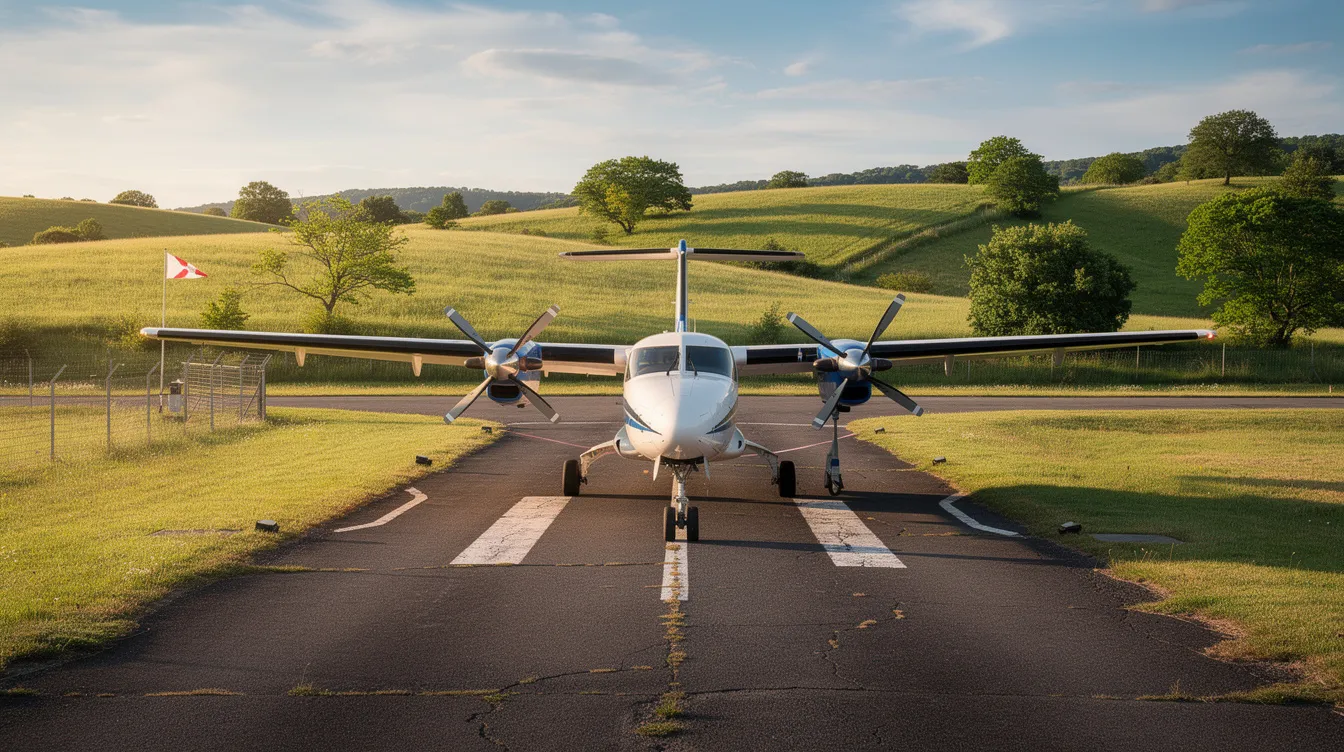
For most travelers asking about the smallest commercial plane, the answer is usually a 19-seat turboprop such as the Beechcraft 1900D or Jetstream 31 in regular scheduled service, with even smaller aircraft like the Britten-Norman Islander carrying up to 9 passengers in niche markets. This guide is for travelers, aviation enthusiasts, and private flyers interested in understanding the smallest commercial planes and their alternatives. Knowing the smallest commercial planes helps travelers make informed choices about regional travel and private aviation options. For frequent business travelers and high-net-worth leisure flyers weighing those regional options against private aviation, understanding how these aircraft operate helps explain the trade-offs in cabin space, routing, scheduling, and onboard experience. This guide looks at the smallest commercial planes, the regional networks they serve, how they compare with private jets of similar size, and the practical issues that shape a better trip today, from aircraft categories and cabin classes to safety, sustainability, carbon offsetting, mobile booking, and real-time flight support.
Fast answer: What is the smallest commercial airliner in regular service today?
The smallest commercial aircraft in regular scheduled service today are 19-seat turboprops such as the Beechcraft 1900D and Jetstream 31, built to connect smaller cities to major hubs and serve a specific regional market. Even smaller types, like the Britten-Norman Islander (up to 9 passengers), still fly in niche island and rural markets. Small planes generally fall into two categories: regional jets and turboprops.
Regional jets are small jet-powered aircraft designed for short to medium-haul scheduled airline service, typically seating 30–50 passengers.
Turboprops are propeller-driven aircraft powered by turbine engines, optimized for short-haul routes and capable of operating from shorter runways, usually seating 9–30 passengers.
The term "smallest commercial airliner" in the modern sense usually refers to purpose-built aircraft for paid, scheduled passenger service, as opposed to charter or private operations.
Key Smallest Commercial Aircraft Comparison
Aircraft | Type | Passenger Capacity | Range (nm) | Notes |
|---|
Beechcraft 1900D | Turboprop | 19 | 1,279 | Common on regional routes |
Jetstream 31 | Turboprop | 19 | ~775 | Used on thin regional routes |
Britten-Norman Islander | Turboprop | 9 | ~620 | Niche, island/rural markets |
Embraer ERJ-135 | Regional Jet | 30 | 1,750 | Smallest US commercial jet |
Embraer ERJ-145 | Regional Jet | 50 | 1,550 | Widely used regional jet |
Bombardier CRJ-200 | Regional Jet | 50 | 1,700 | 2-2 seating, being retired in the US |
Airlines use small aircraft to connect smaller cities to major hubs, maintaining network connectivity where larger aircraft would fly half-empty.
The 19-seat count marks a regulatory threshold in many jurisdictions; crossing it triggers additional crew, certification, and maintenance requirements, often alongside higher maximum takeoff weight limits.
This post connects what "smallest commercial" means in airline operations to how BlackJet uses similar or smaller private aircraft to give clients a superior passenger experience without the constraints of scheduled carriers.
The many meanings of "smallest commercial plane"
"Smallest commercial plane" carries different answers depending on the category. A pilot in Scotland picturing a 9-seat Islander and an executive in Connecticut picturing a 50-seat jet are both correct within their own context, for instance,e when “smallest” means a commuter turboprop in one case and a regional jet in another. Here are the key definitions:
Smallest Turboprops and Piston Twins
Smallest Regional Jets
Smallest Airbus Commercial Aircraft
Airbus A220-100: Seats 100–135; range of 3,600 nm; customizable cabin, wide seats, and reduced CO2 emissions.
Airbus A318 Elite: Up to 18 passengers in two layouts; over six meters shorter than the A320.
Regional markets and Essential Air Service programs around the world rely on these smallest commercial aircraft to maintain connectivity between remote communities and larger hubs. Many BlackJet missions use aircraft in the same size class as the smallest commercial airliner but carry far fewer passengers, with privacy and comfort that no two class configuration on a scheduled carrier can match.
Smallest commercial jets in the US: ERJ-135, ERJ-145 and CRJ-200
The Embraer ERJ family and Bombardier CRJ-200 defined regional jet flying in America for decades. Regional jets carry 30 to 50 passengers and were developed to bring jet speed to routes too thin for Boeing or Airbus narrow-bodies. Both the ERJ-145 and CRJ-200 entered service in the 1990s and became workhorses for operators like American Eagle, United Express, and SkyWest.
Smallest Regional Jets
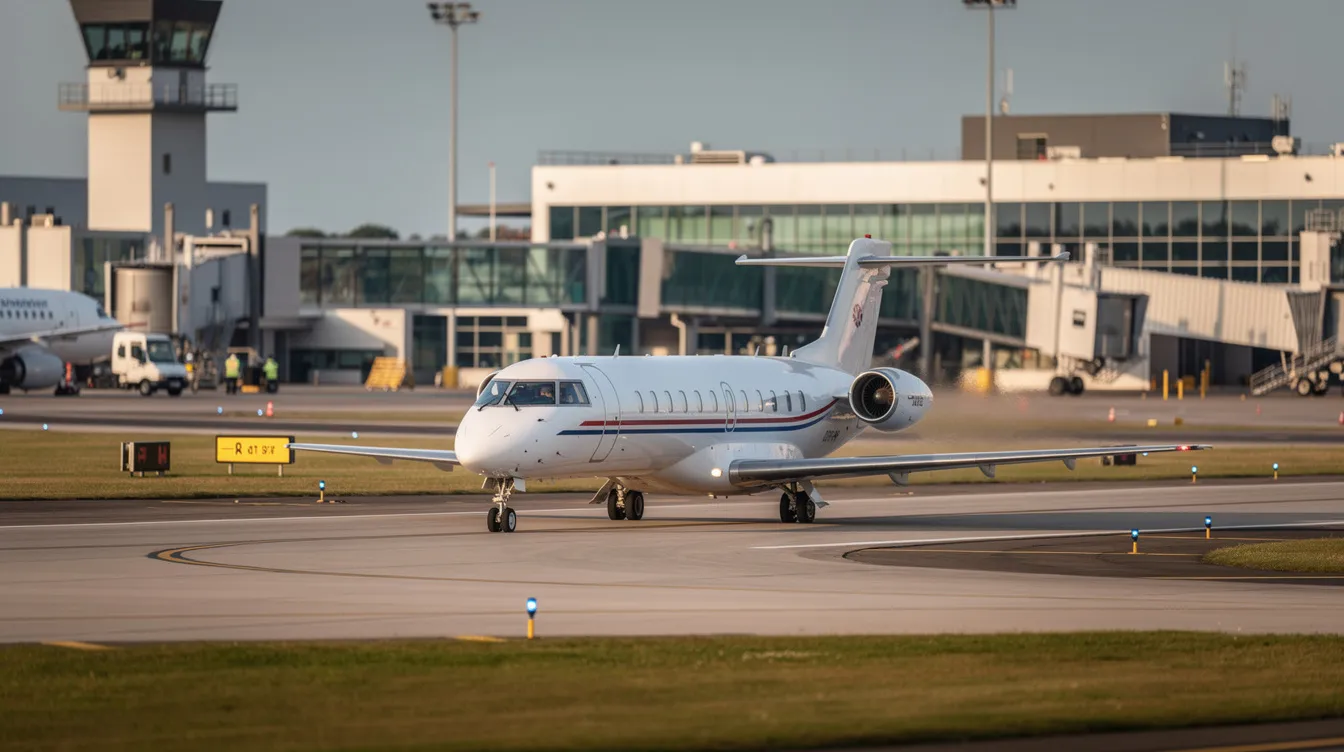
Embraer ERJ-135: 30-seat regional jet, range near 1,750 nm, Mach 0.78 cruise speed.
Embraer ERJ-145: 50-seat capacity, 98 feet long, 1-2 seating layout, Pratt & Whitney turbofan engines.
Bombardier CRJ-200: 50 seats, 87 feet long, 2-2 seating, derived from the Challenger business jet, being retired from U.S. commercial service.
Cabin Reality
Less overhead cabin space for luggage, tight pitch, basic service, and narrow cabin width compared to Airbus or Boeing narrow-bodies.
Second Life
The smallest aircraft still flying scheduled commercial routes
Outside major hubs, the picture shifts to turboprops and piston twins carrying 6 to 19 passengers on short or remote sectors. Some airlines still use very small aircraft in remote areas where no other transport exists. Turboprop aircraft are vital for very short rural runways or island-hopping, and turboprop aircraft are economical for short-haul travel compared to regional jets.
Smallest Turboprops and Piston Twins
Loganair in Scotland: Operates Britten-Norman Islanders on inter-island flights in Orkney. The Westray to Papa Westray route covers 1.7 miles with a scheduled flight time of roughly 90 seconds.
Southern Airways Express (US): Runs Cessna Grand Caravans on commuter routes, serving communities that would otherwise lose air service.
ATR 42: Used for connecting remote communities due to short runway suitability and low operating costs.
Short-Field Performance and Safety
Short-field performance allows small turboprops to operate on unpaved airstrips. High-mounted wings and dual-engine configurations provide redundancy and safety. Low operating costs make them viable where demand is low.
These aircraft serve routes sometimes under 30 minutes, seldom reaching cruising altitude, maintaining essential travel for medical, education, and business needs in remote regions.
A simple table would show how these aircraft keep remote communities linked and make short scheduled routes worth operating.
The contrast with BlackJet is straightforward: same scale of aircraft, same runway capability, but the cabin is reserved for a family, executive team, or small group rather than scheduled ticketed passengers.

From smallest commercial airliners to private jets: what changes for the passenger experience?
The gap between the smallest commercial airliner and a private jet is narrower than most travelers assume. The aircraft are often similar in size, especially when you compare regional turboprops with small private jets for luxury travel. The experience is not.
Boarding: Commercial regional flights require standard terminal check-in and TSA screening. Private flights depart from fixed-base operators (FBOs) with minimal wait, direct aircraft access, and no boarding queue.
Scheduling: Airlines operate fixed slots. BlackJet members fly on their own timetable, or even consider unlimited private jet flight memberships; cancel or adjust without airline penalties.
Cabin design: Commercial 19-seat aircraft display forward-facing economy seats with reduced legroom. Private aircraft in the same size class offer club seating, facing seats, and custom lighting, with many travelers benchmarking options using jet card cost per hour comparisons.
Engines and speed: Turbofan engines on regional jets deliver higher cruise speeds and quieter cabins at altitude, as opposed to turboprop engines on commuter aircraft. Light jets like the Phenom 300 or Citation CJ series carry a similar or smaller number of passengers than the smallest commercial aircraft but with far greater comfort, making them natural fits for 25 hour jet card programs. Small aircraft provide access to destinations without the infrastructure for larger jets.
BlackJet's Jet Card model: Members prepay hours across cabin categories (light, midsize, large) and choose the aircraft that fits each trip, drawing on BlackJet's premium private jet card programs. Mobile booking is available 24/7 with real-time flight support.
Safety and sustainability: BlackJet selects operators meeting top-tier audit standards (ARG/US, Wyvern, IS-BAO). Every flight is carbon neutral through verified offsets or sustainable aviation fuel contributions, which is increasingly factored into jet card pricing and value comparisons.
Why airlines still need the smallest commercial airliners in regional markets
Despite the push toward larger, more efficient planes like the Airbus A220-100 or Embraer E175, airlines still depend on small aircraft to keep thin routes alive, and they remain necessary in this part of the regional air transport network. High-frequency service is sometimes more valuable than larger aircraft capacity; a community with 12 daily travelers needs three flights on a 9-seat Caravan, not one flight on a 50-seat jet.
Small regional jets are used for thin routes between smaller airports. Lower fuel consumption makes small aircraft viable on low-volume routes, and economic efficiency and low operating costs are major considerations for small aircraft, just as travelers weighing the cheapest private jet and entry-level options compare hourly and operating costs against commercial fares.
Frequent schedules can be maintained with fewer passengers per flight using small planes, and some types can use shorter runways for takeoff. Economic flexibility allows airlines to test new routes without large aircraft costs, while larger groups may instead compare the best private jets for 20 passengers when commercial schedules no longer fit. Capacity of small aircraft can vary greatly, affecting their operational use.
Government programs like Essential Air Service in the US subsidize flights to airports in places like rural Germany or remote Alaska that would otherwise lose all direct service. Small jets connect smaller airports to major hubs efficiently, while large groups needing nonstop point-to-point service often evaluate charter plane costs for 100 passengers as an alternative.
Fleet evolution is real: older 50-seat jets are giving way to variants like the A220-100 and E175, which deliver better fuel burn and improved passenger experience, while private charters using the best private jets for 50 passengers compete for high-yield group traffic. But they do not serve the shortest, thinnest routes.
As airlines retire the smallest types and move to larger aircraft, affluent travelers and companies increasingly rely on private jet charter to maintain flexible, direct links between secondary cities, often comparing jet card costs and membership pricing against traditional first-class fares. BlackJet's Jet Card programs fill precisely this gap.
How BlackJet uses "smallest commercial" insights to design better private journeys
Understanding how airlines deploy the smallest commercial airliners helps BlackJet optimize aircraft selection and routing for members who fly similar distances but expect far higher standards. A 400 to 700 mile business trip that a commercial airline would serve with a 50-seat jet is instead flown privately on a light jet for 4 to 6 passengers, one of several types of private jets for different travelers.
Aircraft categories: BlackJet maps light, midsize, super-midsize, and large cabin jets to typical regional missions, matching the right aircraft to each route length and passenger count, using detailed insights into different private jet sizes and categories.
Technology: 24/7 digital booking, real-time support, and mobile access replace the rigid scheduling of commercial flights, especially for members using the BlackJet 25+ Hour Jet Card. No visit to a crowded terminal required.
Safety: BlackJet selects operators that meet or exceed audit standards from ARG/US, Wyvern, and IS-BAO, surpassing regulatory minimums for small commercial operators.
Sustainability: Every BlackJet flight is carbon neutral through automatic offsets, a crucial complement to the growing interest in the cheapest private aircraft and budget-friendly options. On short regional sectors where per-passenger emissions on commercial aircraft run high due to low load factors, this matters.
The practical case: An executive flying regularly from a mid-size coastal city to London or Washington can convert a cramped, connection-heavy commercial itinerary into a direct, private, carbon-neutral flight, often after reviewing the best jet cards for frequent flyers to choose the right structure. Explore BlackJet's Jet Card programs to see how prepaid hours across cabin classes reshape regional and long-range travel on your terms, and use this page as a quick resource when comparing commercial and private options.


 Sign up with google
 Sign up with Apple