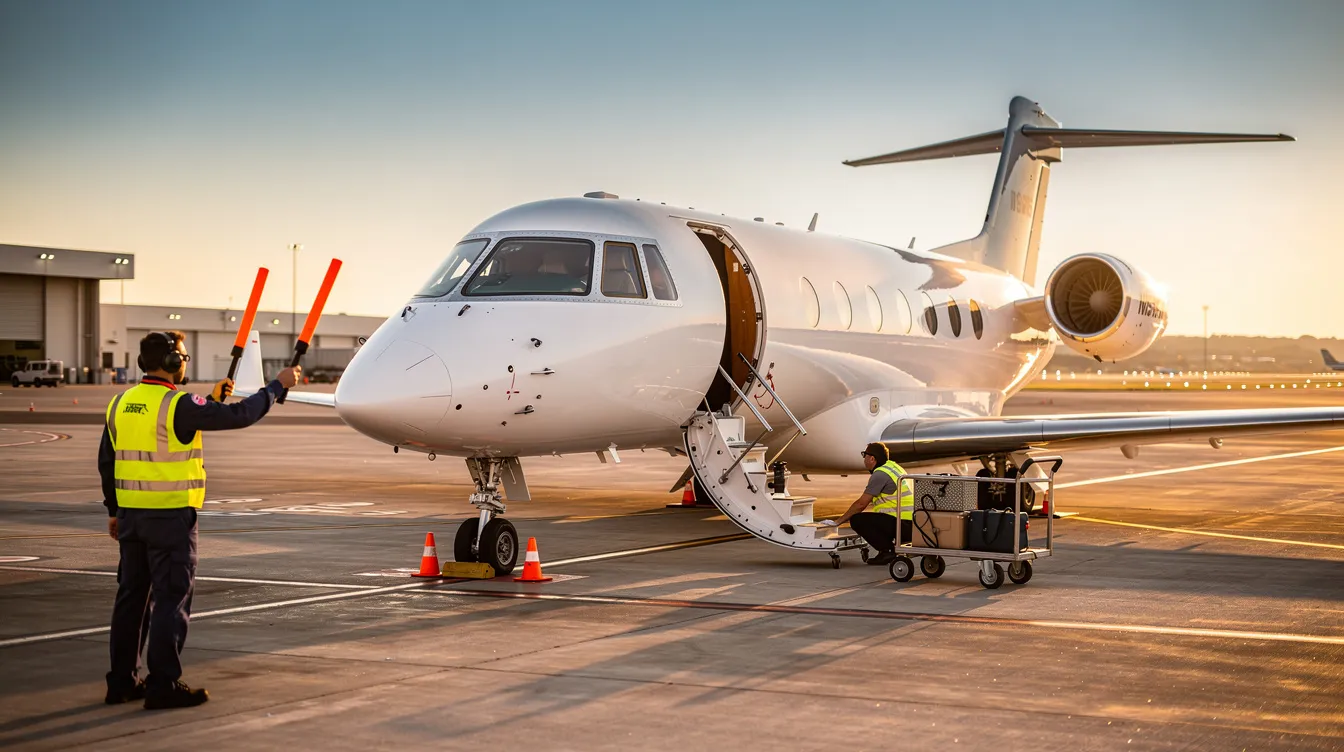
Tennessee’s airport system serves as a critical infrastructure backbone for one of America’s fastest-growing states. For executives and discerning travelers, understanding how to leverage these airports strategically transforms routine trips into seamless experiences.
Why Tennessee Airports Matter for High-End & Business Travel
Tennessee has emerged as a powerhouse for business and leisure travel. Nashville welcomes over 22 million visitors annually, drawn by the music industry, healthcare headquarters, and a booming hospitality scene. Memphis anchors global logistics as FedEx’s worldwide hub, while the Great Smoky Mountains attract 12 million visitors yearly to luxury resorts and outdoor escapes in East Tennessee.
The difference between private jet access and commercial service at Tennessee airports is stark. At Nashville International Airport, a BlackJet member can drive directly to an FBO, board their aircraft, and be wheels-up in under 30 minutes. Compare that to commercial first class, where TSA checkpoint lines, gate walks, and boarding processes often consume 90 minutes or more during peak periods. Tennessee airports offer a wide variety of flight options for both commercial and private travelers, with multiple destinations and airline partnerships providing comprehensive choices. This time savings—often 80-90% compared to commercial—represents the core strategic advantage of private aviation, especially when paired with smart strategies to fly private more affordably through cards, memberships, and optimized routing.
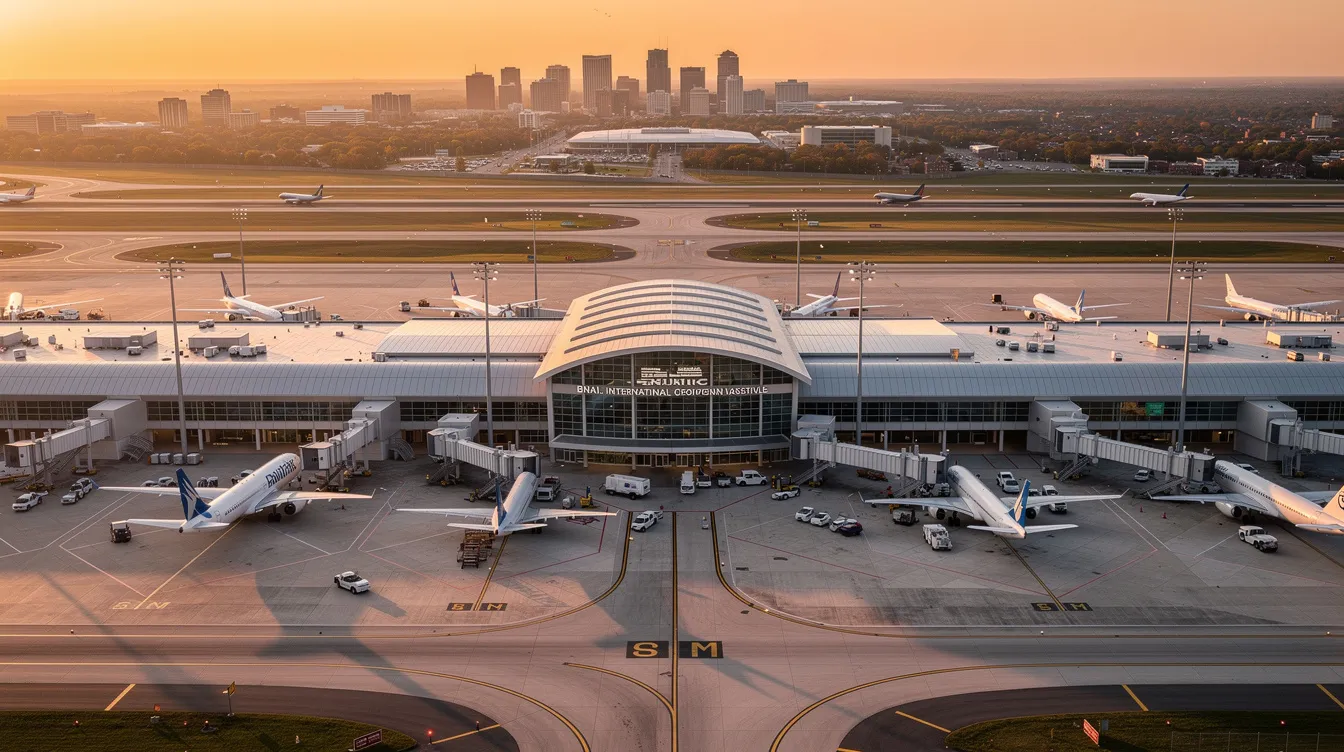
BlackJet Jet Card members use Tennessee airports as launching points for both regional hops and coast-to-coast journeys, boarding their plane for seamless travel, whether they start with a flexible 25-hour jet card program or commit to larger hour blocks. A 45-minute midsize jet flight from Nashville to Atlanta replaces a half-day of commercial connections. A light jet from Memphis to Los Angeles covers the distance in 3-4 hours with zero layovers. These aren’t luxury splurges—they’re calculated decisions by travelers who understand the value of their time and who closely analyze jet card cost per hour to benchmark value against commercial alternatives.
Overview of Tennessee’s Key Commercial & General Aviation Airports
Tennessee’s aviation infrastructure centers on five primary commercial airports: Nashville (airport code BNA), Memphis (MEM), Knoxville’s McGhie Tyson Airport (TYS), Chattanooga (CHA), and Tri-Cities (TRI). Together, these facilities generated $10.7 billion in economic output and supported 67,550 jobs according to the TAACA 2025 Economic Impact Study, creating an ideal backdrop for travelers evaluating overall jet card cost and membership pricing. The state continues to advance its comprehensive plan for airport development and infrastructure improvements, ensuring long-term growth and enhanced connectivity, which in turn enhances the accuracy and utility of advanced private jet flight time planning tools for high-frequency users.
Beyond the primary airports, Tennessee hosts over 50 public-use general aviation facilities. Fields like Cleveland Regional Jetport, Upper Cumberland Regional, and Everett-Stewart Regional provide dispersed landing options that reduce congestion at major hubs and support private jet repositioning.
The mix of airline service, world-class cargo operations, and robust general aviation infrastructure makes Tennessee ideal for premium private jet card users. BNA and MEM handle high-volume commercial and cargo traffic, while smaller airports offer efficiency for regional flights and private operations.
The sections that follow detail how BlackJet members actually use each airport—practical insights rather than generic terminal information.
Nashville International Airport (BNA): Private Gateway to Music City
Nashville International Airport stands as Tennessee’s busiest facility, processing over 8 million passengers annually—more boardings and arrivals than all other airports in the state combined. Located approximately 8 miles southeast of downtown Nashville, BNA traces its origins to Berry Field, established in 1937, and has evolved into a modern gateway serving Music City’s explosive growth.
Multi-billion-dollar expansion programs are reshaping the airport. The BNA Vision and New Horizon programs, initiated by the Metro Nashville Airport Authority, focus on concourse expansions, baggage handling system upgrades, and new terminal construction. The BNA Vision upgrades, mostly completed in 2023, included expanded concourses and a new international arrivals facility. The New Horizon plan is a $3 billion initiative aiming to increase capacity to serve 40 million annual passengers by the early 2030s. For private travelers, these improvements translate to better airfield efficiency and upgraded support services.
BNA maintains extensive general aviation and FBO facilities on the airfield. BlackJet members access these dedicated terminals to bypass the main commercial terminal entirely. Executives arrive for music industry meetings, touring artists land with discretion for CMA Fest events, and leisure travelers connect to the Nashville hotel and restaurant scene without navigating crowds, often relying on private jet flight time calculators for accurate planning when coordinating tight schedules.
BNA also demonstrates a commitment to inclusivity through the BNA® Cares program, which offers services and facilities designed to support travelers with special needs, ensuring an accessible and welcoming experience for all.
Ground access at BNA is straightforward and comprehensive. The airport is served by I-40 and Donelson Pike for quick road access. All major Tennessee airports, including BNA, provide standard ground transportation options such as rideshare services like Uber and Lyft, taxis, and rental cars. At BNA, ride-sharing companies operate from designated pick-up zones, while taxis offer flat rates to downtown Nashville starting around $30 plus fees. Rental car facilities are available on-site, often connected to terminals by shuttle services. Public transit options include WeGo Public Transit buses operating from the Ground Transportation Center, complementing private transport choices. Additionally, many hotels near BNA provide complimentary shuttle services, enhancing convenience for travelers.
Nashville International Airport (BNA) at a Glance
Feature | Details |
|---|
Location | 8 miles southeast of downtown Nashville |
Annual Passengers | Over 8 million |
Expansion Programs | BNA Vision (completed 2023), New Horizon ($3 billion, ongoing) |
Ground Access | I-40, Donelson Pike, rideshare, taxis, rental cars, public transit (WeGo buses) |
Parking Options | Six parking garages, economy lots, and valet service |
Special Programs | BNA® Cares for travelers with special needs |
FBO Access | Dedicated general aviation terminals for private jet travelers |
Time Savings vs Commercial | Private jet: 20-30 min curb-to-wheels-up; Commercial: 90+ min including TSA and boarding |
Parking, Terminals & Navigation at BNA
BNA offers multiple parking structures, including six garages, economy lots, and valet service accessible via Exit 216B from I-40. However, most BlackJet members bypass parking entirely, using car service directly to the FBO or premium valet for occasional commercial terminal use.
For members flying commercial, BNA’s interactive terminal maps help passengers easily navigate the airport, allowing them to confidently find shops, gates, restaurants, and lounges such as the Delta Sky Club. The Music City–themed concourses feature clear signage, and walking distances remain manageable, though peak periods see significant crowds.
Tennessee airports typically feature a variety of dining and shopping options, and BNA’s commercial terminal showcases Music City’s culture through live performances, local-brand shopping, and Tennessee-themed dining. These amenities serve as pleasant diversions for early arrivals or commercial segments. Free Wi-Fi throughout the terminal supports connectivity for all travelers, including those with special needs.
Private flights operate from separate general aviation facilities, delivering faster curb-to-wheels-up times. Members typically arrive 20-30 minutes before departure rather than the 90+ minutes commercial passengers budget. Long-term parking becomes irrelevant when your car service handles the logistics.
Shopping, Dining & Lounge Experience at BNA
The main terminal houses airline lounges and quiet work areas, though they pale compared to the privacy of FBO lounges. BlackJet travelers enjoy dedicated spaces with catered meals, locally roasted coffee, and meeting facilities—all without competing for seating.
A typical Jet Card member experience: arrive 25 minutes before departure, spend ten minutes in the FBO lounge reviewing documents, board the aircraft, and enjoy a meal prepared to your preferences while airborne. The contrast with navigating crowded terminal restaurants is substantial.
Future Growth: BNA’s New Horizon & Private Aviation
The new horizon expansion adds 25 new gates, expanded international arrivals facilities, and new concourses designed to accommodate Nashville’s tourism surge. These developments position BNA as a model for new airport infrastructure in the region, setting a benchmark for future airport projects. International destinations become more accessible, improving connectivity for travelers, combining commercial international flights with private domestic segments, and choosing among the best small private aircraft for regional hops.
These infrastructure improvements indirectly benefit business aviation. Enhanced airfield capacity means better slot availability, while upgraded support services streamline FBO operations. BlackJet monitors development timelines to anticipate peak-period congestion and identify opportunities for members.
Memphis International Airport (MEM): FedEx Hub & Business Aviation Asset
Memphis International Airport serves western Tennessee from a location roughly 7 miles southeast of downtown. Recognized globally as FedEx Express’s SuperHub, MEM processes over 4 million metric tons of cargo annually, making it one of the world’s busiest cargo airports. It is also a major passenger airport with daily flights to many destinations across the United States, frequently used by executives considering a 100-hour jet card and its total cost profile for regular Tennessee access.
While cargo dominates nighttime operations, daytime patterns favor business jets. Runway availability remains strong, and professionally managed airspace ensures efficient arrivals and departures for private aircraft, an important factor for travelers assessing 50-hour jet card pricing and value. Airlines, including American Airlines and Delta, serve passengers, though most of MEM’s 2.2 million annual enplanements represent local originating traffic.
Popular BlackJet member profiles at MEM include executives visiting corporate headquarters for FedEx, AutoZone, and other Memphis-based companies. Medical specialists fly in for St. Jude consultations, while high-net-worth travelers blend business with cultural visits to Beale Street or Graceland—a 20-minute drive from the airport.
Memphis International Airport (MEM) at a Glance
Feature | Details |
|---|
Location | 7 miles southeast of downtown Memphis |
Cargo Volume | Over 4 million metric tons annually (FedEx SuperHub) |
Annual Passengers | Approximately 2.2 million |
Airlines | American Airlines, Delta, and others |
Ground Access | Consolidated Ground Transportation Center, rideshare, taxis, rental cars |
FBO Services | Full-service with hangars, maintenance, fuel, and executive lounges |
Time Savings vs Commercial | Private flights avoid terminal congestion and security lines |
FBOs, General Aviation, and Ground Access at MEM
Fixed-base operators at MEM provide full-service facilities including hangars, maintenance, fuel, and executive lounges. Signature Flight Support and similar providers handle BlackJet arrivals with pre-arranged ground logistics and meeting spaces.
Memphis features a consolidated Ground Transportation Center for rental cars and parking, simplifying transfers. All major Tennessee airports, including MEM, offer standard ground transportation options such as rideshare services, taxis, and rental cars with on-site facilities often connected by shuttles. Pre-booked sedans and SUVs wait planeside for immediate departure toward downtown or the Mississippi Riverfront. Hotel shuttles serve properties like The Peabody and Hilton for travelers preferring that option, while premium rental vehicles accommodate those requiring flexibility.
The contrast with commercial terminal navigation is significant. Landing at an FBO means minimal walking, no security queues, and private meeting space available immediately. Baggage appears beside the aircraft rather than on a carousel twenty minutes post-landing.
Knoxville’s McGhee Tyson Airport (TYS): Gateway to East Tennessee & The Smokies
McGhee Tyson Airport serves as the primary gateway for Knoxville and East Tennessee, situated about 12 miles south of downtown Knoxville. Six airlines currently provide nonstop service to over 30 U.S. destinations, with Southwest adding routes to Nashville, Baltimore, Dallas, and Orlando beginning in March 2026.
TYS draws travelers headed to University of Tennessee events, Oak Ridge National Laboratory research facilities, and luxury resorts near the Great Smoky Mountains. Gatlinburg sits 45 minutes away; Pigeon Forge is about 40 minutes. For these destinations, TYS offers a calm, efficient alternative to routing through Atlanta—a 2-hour drive south, and is increasingly attractive for travelers using private plane rideshare options to reach the Smokies more economically.
The airport blends commercial service, cargo, military (with an adjacent Air National Guard facility), and general aviation. This versatility makes TYS valuable for BlackJet repositioning flights and regional hops, with lower congestion yielding quick turnarounds compared to BNA’s peak periods and accommodating a wide range of private jet sizes tailored to each mission.
Knoxville’s McGhee Tyson Airport (TYS) at a Glance
Feature | Details |
|---|
Location | 12 miles south of downtown Knoxville |
Airlines | Six carriers with nonstop service to 30+ U.S. destinations |
Ground Access | Rideshare, taxis, rental cars, hotel shuttles |
Parking Options | Main garage, Terminal Lots A & B, Economy Lot C, Phone & Wait Lot |
Amenities | Free Wi-Fi, plug-in charging stations, service animal relief area |
Time Savings vs Commercial | Less congestion, faster turnarounds for private flights |
Parking, Amenities & Real-Time Capacity at TYS
Parking at TYS includes a main garage (often near capacity), Terminal Lots A and B, and Economy Lot C, with typically better availability. A Phone & Wait Lot behind the airport hotel accommodates those meeting commercial arrivals.
McGhee Tyson Airport is committed to providing exceptional services for travelers with accessibility and mobility requirements, ensuring a seamless experience for all customers. Free Wi-Fi throughout the terminal and convenient plug-in stations support connectivity and device charging.
Ground transportation at TYS aligns with statewide standards: rideshare services like Uber and Lyft operate with designated pick-up zones, taxis and rental cars are available with on-site facilities often connected by shuttle, and many nearby hotels provide complimentary shuttle services.
BlackJet clients are usually met planeside or at small reserved curb zones, bypassing parking considerations entirely. For travelers spending time at the terminal, passenger amenities include quiet seating areas and a dedicated service-animal relief location.
Onward Ground Transportation and Regional Access from TYS
Driving times from TYS demonstrate its value: downtown Knoxville in 20 minutes, Pigeon Forge in 40, Gatlinburg in 45. For high-end leisure travelers and executives visiting manufacturing facilities in the region, TYS eliminates hours of driving from distant hubs.

Chattanooga Metropolitan Airport (CHA) & Tri-Cities Airport (TRI): Regional Powerhouses
CHA and TRI function as compact, efficient airports providing southeastern and northeastern Tennessee with fast access to national networks. Neither carries the congestion of major hubs, making both attractive for time-sensitive travelers.
Lovell Field (CHA) serves the 600,000-population Chattanooga metro with a modern terminal and business-focused environment. TRI covers the Appalachian Highlands, including Johnson City, Kingsport, and Bristol. Both processed significant passenger volumes in 2024—over 504,000 at CHA and 200,000 at TRI.
Nonstop flights connect both airports to key hubs: Atlanta, Charlotte, Dallas/Fort Worth, Orlando Sanford, St. Pete-Clearwater, and Washington via carriers including Breeze and legacy airlines. TRI adds new 3x-daily Chicago O’Hare service beginning June 2026, expanding connectivity further and making Washington one of the important destinations accessible from these regional airports—particularly relevant for executives leveraging the best jet cards for frequent flyers to link multiple hubs efficiently.
BlackJet members use these airports as convenient entry points to manufacturing centers (Volkswagen’s Chattanooga plant), outdoor destinations (Chickamauga Lake), and motorsport events (Bristol Motor Speedway). The efficiency gains over routing through Atlanta prove substantial.
Chattanooga Metropolitan Airport (CHA) & Tri-Cities Airport (TRI) at a Glance
Feature | CHA (Lovell Field) | TRI (Tri-Cities Airport) |
|---|
Location | Chattanooga metro area (600,000 population) | Northeast Tennessee (Johnson City, Kingsport, Bristol) |
Passenger Volume (2024) | Over 504,000 | Approximately 200,000 |
Runway Length | Over 9,000 feet | Suitable for light to midsize jets |
Airlines | Breeze, legacy carriers | Breeze, United, new Chicago O’Hare service (June 2026) |
Ground Access | Rental cars, taxis, rideshare | Rental cars, taxis, rideshare |
Private Jet Facilities | Smaller FBOs, quick turnaround | Smaller FBOs, quick turnaround |
Private Jet Operations & Community Impact at CHA and TRI

General aviation infrastructure at CHA and TRI includes smaller FBOs offering quick turnaround times. Runway lengths exceed 9,000 feet at CHA, accommodating everything from light jets to super-midsize aircraft comfortably.
Flying private into these regional airports often means shorter drives to final destinations. Industrial parks, distribution centers, and lakeside properties sit 20-30 minutes away rather than the 1-2 hours required from Atlanta.
Choosing regional fields supports local economies while delivering the discretion and flexibility Jet Card travelers expect. The community benefits from aviation traffic that might otherwise bypass Tennessee entirely, and business users can often enhance their overall ROI by strategically maximizing jet card tax deductions associated with these trips.
Using a Jet Card Across Tennessee: How BlackJet Simplifies Multi-City Trips
A BlackJet 25+ Hour Jet Card provides prepaid hourly access across multiple aircraft categories—light, midsize, super-midsize, and large cabin—with guaranteed availability and fixed-rate pricing. This structure outperforms both aircraft ownership (capital-intensive with $500K+ annual operating costs) and one-off charters (variable pricing, inconsistent availability), a conclusion that becomes clear once you review a comprehensive private jet price list explaining costs and options.
Consider a three-day business roadshow: Nashville to Memphis to Knoxville, covering meetings across the state. Total flying time runs approximately 2.5 hours versus 6+ hours driving or navigating commercial connections with layovers. A weekend trip combining Nashville, Tri-Cities, and Charlotte for golf and motorsports becomes seamless rather than logistically complex.
BlackJet’s digital booking tools and real-time support enable adjustments as circumstances evolve. Departure times shift when meetings run long. Departure airports change when weather affects one field. Aircraft size scales up when additional passengers join, all within a transparent jet card pricing structure that clarifies costs and benefits. This flexibility defines the Jet Card advantage.
Safety, Certification & Carbon-Neutral Flights in Tennessee Skies
BlackJet’s safety commitments matter particularly for Tennessee operations. All flights utilize operators meeting or exceeding ARGUS and Wyvern certification standards. Two-pilot crews staff applicable aircraft, and rigorous maintenance oversight ensures mechanical reliability.
Carbon-neutral flights come standard for members—not as an optional add-on. Carbon offset programs match fuel burn through verified forestry and environmental projects. Customers fly with environmental responsibility built into every journey, even when they are exploring the cheapest private jet options and entry-level aircraft to control overall budgets.
Tennessee’s terrain demands experienced pilots and robust flight planning. The Smokies present mountainous approaches, while busy air corridors near BNA and MEM require precise navigation. Certified crews and professional operations planning address these challenges systematically.
Ground Transportation, Transfers & Technology-Enabled Travel
BlackJet coordinates door-to-door experiences across Tennessee airports. Chauffeured cars arrive planeside at FBOs. Hotel concierges in Nashville and Memphis receive advance notice of arrivals. Specialty vehicles accommodate golf clubs, ski equipment, or executive groups.
The mobile and web platforms allow members to review airport options—comparing BNA against smaller nearby fields like Clarksville Regional—request flights, and receive real-time updates on schedules and weather conditions across Tennessee routes.
Hybrid itineraries work smoothly: an international arrival at BNA through the commercial terminal followed by a private hop from BNA’s FBO to TRI or TYS, with synchronized pickups and baggage handling coordinated throughout, a pattern often compared against NetJets jet card costs and structures by experienced private flyers.
FAQ: Tennessee Airports & Private Jet Travel with BlackJet
How many commercial airports does Tennessee have, and which are best for private jets?
Tennessee operates five primary commercial airports: BNA, MEM, TYS, CHA, and TRI. BNA offers the most extensive FBO options, while MEM provides excellent daytime availability. Regional airports like TYS and CHA deliver efficiency with less congestion.
Which is the best airport to fly into Nashville on a private jet?
BNA serves most Nashville-bound travelers with multiple FBOs and quick access to downtown. For meetings west of the city, smaller general aviation fields may offer even faster ground times.
Can BlackJet arrange flights into smaller Tennessee airports beyond BNA and MEM?
Yes. BlackJet accesses Tennessee’s network of 50+ public-use aviation facilities, including fields near Clarksville, Tullahoma, and Morristown, for strategic positioning.
Are private flights within Tennessee carbon-neutral with BlackJet?
All BlackJet flights include carbon offsets matched to fuel consumption through verified environmental projects—included as standard, not an add-on.
How far in advance should I book a private jet into Tennessee during peak seasons?
During college football weekends, music festivals like Bonnaroo, and major holidays, booking 48-72 hours in advance ensures availability. Off-peak periods typically require only 24 hours' notice.
Conclusion: Elevating Your Tennessee Airport Experience with BlackJet
Tennessee’s network of airports—from Nashville International Airport and Memphis International Airport to regional powerhouses like TRI and CHA—becomes a strategic asset when paired with Jet Card access. The infrastructure exists to support sophisticated travel needs; BlackJet provides the mechanism to leverage it fully.
The advantages compound: time reclaimed from commercial hassles, privacy maintained throughout the journey, flexible scheduling that adapts to your demands rather than airline timetables, and safety plus carbon-neutral commitments built into every flight.
Discover how BlackJet can reshape your approach to Tennessee airports for business and leisure. Explore premium jet access tailored to your specific travel patterns across the Volunteer State.


 Sign up with google
 Sign up with Apple