The main differences between grades 100 and 100LL fuel are lead content, color, availability, and typical use: Avgas 100 contains more tetraethyl lead and is dyed green, while 100LL contains less lead, is dyed blue, and is the standard, more widely available option today; in practice, both deliver equivalent octane and similar performance. For aircraft owners, operators, private aviation clients, and other stakeholders managing piston-engine aircraft—as well as frequent business or leisure travelers who want safer, more informed private flying—that distinction affects fuel compatibility, maintenance, compliance, and sustainability.
Quick Answer: The Key Differences Between Avgas 100 and 100LL
Explicit Definitions:
Grade 100 aviation gasoline contains up to 3.0 mL of tetraethyl lead (TEL) per gallon and is dyed green. It has a minimum octane rating of 100 but is now rarely produced and is considered virtually obsolete.
Grade 100LL (Low Lead) aviation gasoline contains up to 2.0 mL of TEL per gallon and is dyed blue. It also has a minimum octane rating of 100 and is the most common avgas used in general aviation, having largely replaced Grade 100.
Both Avgas 100 and Avgas 100LL are high-octane aviation gasoline formulated for spark-ignition piston engines in general aviation aircraft, and understanding their distinction helps readers better understand the difference between the two fuels. They share a minimum octane rating of 100, and both are produced from refined crude oil with specialized additives formulated to ensure reliable operation in these aircraft engines. Yet the main differences between grades 100 and 100LL fuel are how the fuels meet different practical needs in chemistry, visual identification, and real-world availability — not in power output.
Feature | Grade 100 | Grade 100LL (Low Lead) |
|---|
Lead Content | Up to 3.0 mL TEL/gal | Up to 2.0 mL TEL/gal |
Color | Green | Blue |
Availability | Rarely produced, obsolete | Most common, widely used |
Performance | 100/130 octane rating | 100/130 octane rating |
At most FBOs serving business and private flight operations — including those used by BlackJet partner operators - 100LL is the standard piston aviation fuel on the ramp.
What Avgas 100 and 100LL Aviation Gasoline Actually Are
Aviation gasoline is a highly refined, high-octane fuel designed specifically for spark-ignition piston aircraft engines. Avgas is fundamentally distinct from kerosene-based jet fuel like Jet A, which powers the turbine engines found in most private jets and commercial airliners.
Avgas grades are identified by octane number and letter designations. Various types exist — Avgas 80 was designed for low-compression piston engines, while 100 and 100LL target higher compression ratios common in modern general aviation powerplants. Automotive gasoline and aviation gasoline have different properties, including stricter specifications for vapor pressure, water tolerance, and thermal stability that make avgas suitable for flight at altitude.
These two main types of aviation fuel - gasoline for piston engines and jet fuel for turbine aircraft engines — coexist across the airport ecosystem. While BlackJet clients primarily fly on turbine-powered aircraft burning Jet A (which has a lower freezing point of −40°C), understanding avgas grades matters for anyone who owns or invests in smaller, budget-friendly private aircraft as part of a broader fleet mix.
Chemical & Lead Content Differences
Role of Lead in Aviation Gasoline
Tetraethyl lead is the legacy additive at the heart of the difference between Avgas 100 and 100LL. Lead is used as an anti-knock additive in aviation gasoline, suppressing detonation in high-compression piston engines and providing a measure of exhaust valve seat lubrication.
Lead Content Specifications
Avgas 100 was historically formulated with roughly double the TEL concentration of 100LL. Grade 100 contains up to 3.0 mL of tetraethyl lead per gallon, whereas Grade 100LL aviation gasoline contains up to 2.0 mL per gallon—translating to a maximum of 0.56 grams of lead per liter. Both fuels still achieve the same octane rating through different additive balances and refinery blending, so the fuel's ability to resist detonating under compression remains equivalent.
Both are leaded gasoline. The difference is more lead versus less lead, not leaded versus unleaded. AVGAS 100LL is the last leaded fuel for transportation in the U.S., making it a transitional product as the industry charts a path toward unleaded alternatives.
Industry Transition to Unleaded Fuels
As of the current date, regulators in the U.S. and Europe still signal a phase-out of leaded avgas by the early 2030s, aligning with broader advancements in sustainable aviation.
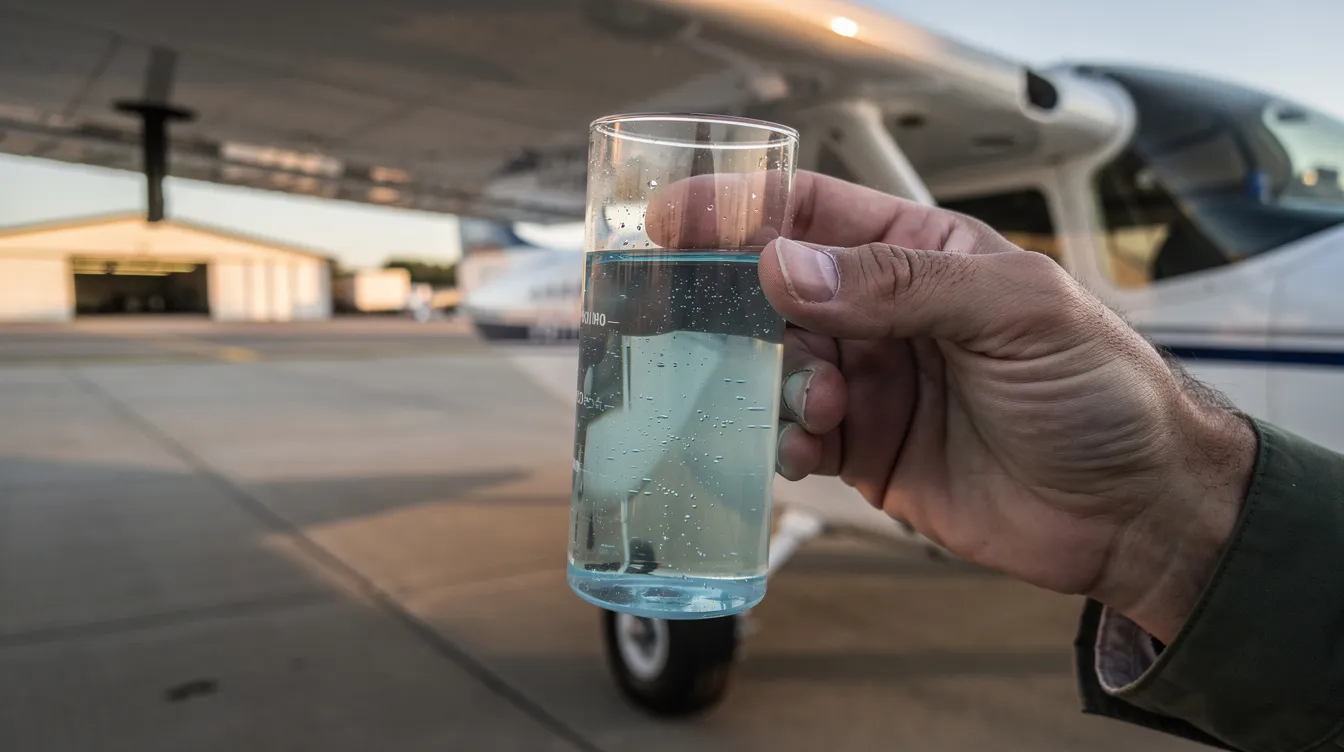
Color, Identification, and Misfueling Prevention
Avgas grades and jet fuel grades are dyed or labeled distinctly to prevent misfueling — a risk that can cause catastrophic damage to aircraft engines.
Grade 100: Dyed green
Grade 100LL: Dyed blue
Jet A and Jet A-1: Clear to straw-colored kerosene, used by turbine aircraft, including the light jets, super-mids, and large-cabin jets commonly chartered through BlackJet. Jet fuel should never be mixed with aviation gasoline in piston engines, and operators should verify compatibility before mixing Grade 100 with 100LL.
FBOs: Use color-coded nozzles (blue for avgas, black for Jet A), clear placards, and signage. Pilots are trained to check fuel lines, verify labeling, and sample fuel color before every flight - a discipline that remains easier with standardized dye specifications.
At most modern airports, especially those serving business and private aviation, 100LL is the only leaded gasoline stocked. Blue fuel samples are the norm today; green avgas is identified so rarely it has become a curiosity.
Engine Performance, Aircraft Engines Compatibility, and Operational Use
For most certified piston aircraft engines approved for high-octane avgas, Avgas 100 and 100LL deliver comparable performance. AVGAS 100LL has an octane rating of 100—identical to Grade 100 — meaning both resist detonation under high compression and advanced ignition timing.
Aircraft and engine documentation (the Pilot's Operating Handbook and Type Certificate Data Sheet) specifies approved fuel grades. Many engines originally designed for Avgas 100 have been routinely operated on 100LL since the 1980s without modification. Grade 100 was historically used for high-output military aircraft engines, where maximum detonation margins were critical, but today Grade 100 is virtually obsolete and rarely produced.
The operational trade-off with respect to higher lead content is maintenance: Grade 100 leaves significantly more lead deposits than Grade 100LL on spark plugs, piston crowns, and exhaust systems. This burden increases at lower power settings or with poor leaning technique — something flight schools and owners of older propeller planes monitor closely.
A common real-world example: a Cessna 172's POH lists both 100 and 100LL as approved fuel. Of course, at virtually every airport today, operators default to 100LL because it is widely stocked, lower in lead deposits, and meets all certification requirements.
Aviation Fuel Availability, Cost, and Environmental Considerations
Current Market Availability
In today's market, the biggest practical difference pilots encounter is availability. Avgas 100 has largely disappeared from FBOs across countries in North America and Europe, with 100LL becoming the standard from roughly the 1980s onward. Shell, ExxonMobil, and other producers provide little green-dyed Grade 100 in today's market.
Cost Factors
Pricing differences where both grades exist are minor — driven more by local refinery logistics and transport demand than by the number of grams of TEL per liter. Both remain more expensive than automotive gasoline and less widely produced than Jet A, which is why many travelers exploring the cheapest private jet options also pay close attention to fuel type and efficiency when comparing aircraft.
Environmental Regulations
The environmental postscript is significant. 100LL is heavily regulated by aviation authorities due to lead emissions around busy general aviation airports. The FAA is actively transitioning toward unleaded high-octane aviation fuels, targeting a phase-out of leaded avgas by January 2031. G100UL is a newly approved unleaded aviation fuel already available at select U.S. fields, and Swift Fuels' 100R covers over 1,200 engine models via STC. Operators should monitor manufacturer service bulletins and regulatory guidance as these unleaded alternatives gain ground.
How Fuel Choice Fits into Modern Private Aviation (BlackJet Perspective)
For affluent travelers, business leaders, and aircraft stakeholders, aviation fuel is more than a line item—it is a factor in safety, sustainability, and portfolio strategy, particularly when comparing 10 million dollar private jet options, evaluating features of a 15 million dollar private jet, planning large-group private jet travel for up to 50 passengers, or selecting among top private jet companies for luxury travel. Understanding the difference between Avgas 100 and 100LL matters when evaluating hangar assets, training aircraft, or regional connections flown with piston aircraft, even if your primary mode of travel is a turbine-powered jet.
Most BlackJet flights use turbine aircraft and Jet A, a kind of kerosene-based fuel with entirely different combustion characteristics from aviation gasoline, whether a traveler is buying out an entire aircraft or simply purchasing a seat on a private jet. BlackJet's premium private jet card and membership solutions ensure that partner operators always follow manufacturer-specified fuel grades for every aircraft type — whether Jet A for jets or 100LL for any piston aircraft in support roles.
On the sustainability front, BlackJet prioritizes carbon-neutral flights through carbon offsets and, where available, sustainable aviation fuel blends - a commitment that parallels the industry's broader effort to eliminate lead from avgas without compromising engine reliability.
Consider a scenario: a client uses a BlackJet Jet Card or 25+ Hour Jet Card program for a midsize jet flight from New York to Miami on Jet A, while also owning a piston single at a local airfield that runs on Avgas 100LL. Both fuels coexist in a modern private aviation lifestyle — and understanding each one is part of making informed, safer travel decisions.
Explore BlackJet's Jet Card programs—including options like a 100-hour jet card cost guide, a 25 hour jet card features and costs overview, and a 50-hour jet card pricing breakdown—and use resources on comparing jet card cost per hour, Flexjet jet card pricing, overall jet card membership pricing, and the best jet cards for frequent flyers. You can also learn how to maximize your jet card tax deductions, evaluate NetJets jet card costs, understand a broader private jet price list and access models, and dive deeper into jet card pricing structures and benefits to discover how carbon-neutral private jet access can elevate every dimension of your travel.
FAQs About the Main Differences Between Grades 100 and 100LL Aviation Fuel
What are the fuel tanks used for in piston-engine aircraft?
Fuel tanks in piston-engine aircraft store aviation gasoline like Avgas 100 or 100LL, ensuring a steady, clean supply of fuel to the engine while maintaining safety and performance standards.
Why is the composition of 100LL fuel important?
The composition, including the reduced tetraethyl lead content and specialized additives in 100LL fuel, helps protect engine components, reduce lead deposits, and comply with environmental regulations.
Can I use Grade 100 fuel instead of 100LL?
While both have the same octane rating and can sometimes be used interchangeably, Grade 100 is rarely produced and contains more lead, which can increase maintenance needs. Always check your aircraft's manual before using Grade 100.
What is the future of leaded aviation fuels like 100LL?
The aviation industry is transitioning toward unleaded alternatives such as G100UL, aiming to phase out leaded avgas by the early 2030s to improve environmental and health outcomes.
How do the color differences help pilots?
The green dye in Grade 100 and blue dye in 100LL provide quick visual identification to prevent misfueling, which can cause serious engine damage.
What additional considerations are there for sustainability?
Operators and travelers should consider the environmental impact of leaded fuels and explore options like carbon offsets and sustainable aviation fuels as part of a broader commitment to sustainable private aviation.
Are there any operational differences in aircraft performance between the two fuels?
Both fuels deliver equivalent octane ratings and performance, but 100LL's lower lead content results in fewer lead deposits and reduced engine maintenance.
How does lead content affect engine maintenance?
Higher lead content in Grade 100 leads to more lead deposits on spark plugs and valves, increasing maintenance frequency compared to 100LL.
What words should pilots remember regarding these fuels?
Remember "Lead content," "Color coding," "Octane rating," and "Compatibility" as keywords to ensure safe and compliant fuel use.
Is the addition of lead in avgas still necessary?
Lead additives remain important for preventing engine knock and valve wear in piston engines, but efforts are ongoing to find unleaded alternatives that maintain engine safety and performance.
Conclusion
Understanding the main differences between grades 100 and 100LL aviation fuel is essential for anyone involved in piston-engine aircraft operations or private aviation. While both fuels share the same high octane rating and deliver comparable performance, the distinction lies primarily in lead content, color coding, availability, and maintenance implications. Grade 100, with its higher lead content and green dye, has largely been phased out in favor of the more environmentally conscious and widely available 100LL, which carries a blue dye and reduced lead levels to minimize engine deposits and environmental impact.
As the aviation industry advances towards sustainability, the transition to unleaded alternatives like G100UL signals a future where safety, performance, and environmental responsibility coexist. For private jet travelers and aircraft operators, making informed fuel choices supports not only optimal engine health but also aligns with broader commitments to sustainable and responsible aviation practices.
BlackJet ensures that every flight is fueled with the appropriate grade, maintaining the highest standards of safety, compliance, and environmental stewardship. Explore how BlackJet’s premium private jet services and Jet Card programs can elevate your travel experience with seamless access to the right fuel, aircraft, and support for every journey. Learn more about carbon-neutral flights, discover our Jet Card programs, understand the types of private jets, and read about private aviation safety to enhance your knowledge and travel decisions.


 Sign up with google
 Sign up with Apple